
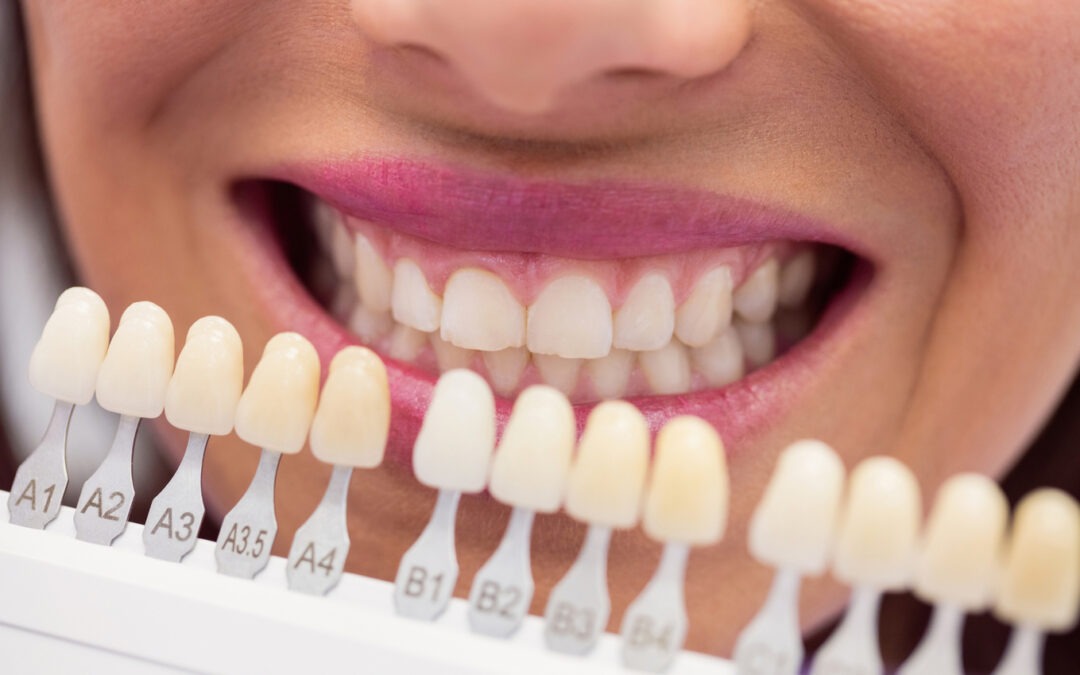
Veneers and crowns can both improve the look of your smile, but they are used for different reasons. Veneers are thin shells bonded to the front surface of teeth to improve appearance, while crowns are full-coverage caps placed over the entire visible tooth to restore strength, function, and appearance.
Choose veneers when the tooth is mostly healthy and the goal is cosmetic improvement, such as changing color, shape, size, minor spacing, or small chips. Choose crowns when a tooth is cracked, weakened, heavily filled, badly worn, decayed, or needs protection after root canal treatment.
At Vaksman Dental Group in South San Francisco, the right choice depends on your tooth structure, enamel, bite, gum health, smile goals, budget, and whether the tooth needs cosmetic enhancement or structural protection.
Key Takeaways
- Veneers cover the front surface of a tooth; crowns cover the entire visible tooth.
- Veneers are usually best for cosmetic changes on otherwise healthy front teeth.
- Crowns are usually best for damaged, weak, cracked, heavily filled, or root canal-treated teeth.
- Veneers usually require less tooth reshaping than crowns, but porcelain veneers still involve permanent enamel removal.
- Crowns often have a better chance of insurance coverage when they are medically necessary.
- Veneers and crowns can be combined in the same smile makeover when different teeth need different solutions.
Veneers vs. Crowns: Quick Comparison
| Feature | Veneers | Crowns |
| Coverage | Front surface of the tooth | Entire visible tooth |
| Main purpose | Cosmetic enhancement | Restore, protect, and strengthen |
| Best for | Stains, small chips, minor gaps, uneven front teeth | Cracks, decay, large fillings, root canal-treated teeth |
| Tooth preparation | Usually less enamel removal | More tooth reshaping |
| Strength | Good for cosmetic front-tooth changes | Stronger structural protection |
| Typical location | Front teeth | Front or back teeth |
| Insurance | Usually not covered if cosmetic | May be partially covered if medically necessary |
| Longevity | Often 10–15 years with good care | Often 10–15 years or longer with good care |
| Cost range | Often about $925–$2,500 per tooth | Often about $800–$3,000 per tooth |
These are general cost ranges, not a guaranteed quote. Actual cost depends on material, tooth condition, number of teeth treated, insurance benefits, location, and whether additional dental treatment is needed first.
What Is the Main Difference Between Veneers and Crowns?
The main difference is how much of the tooth they cover and why they are used.
A veneer is a thin layer of porcelain or composite material placed on the front of a tooth. It changes how the tooth looks while keeping more of the natural tooth structure intact. Veneers are usually chosen for cosmetic concerns.
A crown is a cap that covers the entire visible part of the tooth above the gumline. It is used when a tooth needs more strength, protection, or rebuilding than a veneer or filling can provide.
In simple terms:
- Veneers improve how a tooth looks.
- Crowns improve how a tooth works and looks.
When Are Veneers the Better Choice?
Veneers may be the better choice when your teeth are healthy enough but you want to improve the appearance of your smile.
Veneers may help with:
- Stains or discoloration that do not respond well to whitening
- Small chips on front teeth
- Slightly worn or uneven tooth edges
- Minor gaps between teeth
- Teeth that look too small or out of proportion
- Mild asymmetry
- A desire for a brighter, more even smile
- Cosmetic changes across several visible front teeth
Veneers are usually not the best first step if you have untreated cavities, gum disease, severe tooth wear, major cracks, or weak tooth structure. Those problems need to be addressed before cosmetic treatment.
When Are Crowns the Better Choice?
Crowns may be the better choice when a tooth needs strength, protection, or structural restoration.
A crown may be recommended for:
- A large cavity
- A cracked or broken tooth
- A tooth with a large or failing filling
- A tooth that has had root canal treatment
- A severely worn-down tooth
- A weak tooth at risk of breaking
- A dental implant restoration
- A tooth that needs both cosmetic improvement and structural support
Crowns are often selected when there is not enough healthy tooth structure for a veneer, filling, inlay, or onlay to provide lasting support.
Veneers vs. Crowns for Front Teeth
For healthy front teeth that mainly need cosmetic improvement, veneers are often preferred because they cover the visible front surface and can preserve more natural tooth structure.
Veneers may be appropriate for front teeth when the concern is:
- Color
- Shape
- Size
- Minor chips
- Small gaps
- Smile symmetry
- Mild unevenness
Crowns may be better for front teeth when the tooth is:
- Broken
- Structurally weak
- Heavily filled
- Decayed
- Root canal-treated
- Cracked
- Severely worn
If a front tooth needs strength and protection, a crown may be more predictable than a veneer.
Veneers vs. Crowns for Back Teeth
Back teeth usually handle more chewing pressure than front teeth. For that reason, crowns are more commonly used on molars and premolars when a tooth is damaged or weakened.
Veneers are rarely the right solution for back teeth because they are designed mainly for visible cosmetic improvement. Crowns are often better for back teeth that need chewing strength, crack protection, or restoration after decay or root canal treatment.
Tooth Preparation: Veneers vs. Crowns
Both veneers and crowns usually require some tooth preparation, but the amount is different.
For veneers, the dentist usually removes a thin layer of enamel from the front surface of the tooth so the veneer can fit naturally and not look bulky. Composite veneers may require less preparation than porcelain veneers in some cases.
For crowns, the dentist reshapes the tooth around all sides so the crown can fit over it like a protective cap. Because crowns cover the entire tooth, they usually require more tooth reduction than veneers.
This is one reason diagnosis matters. If a tooth only needs cosmetic improvement, a veneer may be more conservative. If the tooth needs protection, a crown may be more appropriate.
Porcelain Veneers vs. Composite Veneers
Veneers can be made from porcelain or composite resin.
| Feature | Porcelain Veneers | Composite Veneers |
| Appearance | Very natural, enamel-like appearance | Natural-looking but may not match porcelain translucency |
| Stain resistance | Highly stain resistant | Can stain more over time |
| Visits | Usually two or more visits | Often completed in one visit |
| Durability | Often longer lasting | Usually shorter lifespan |
| Repair | Usually replaced if damaged | Often repairable in office |
| Cost | Usually higher | Usually lower |
Porcelain veneers may be preferred for long-term cosmetic smile design. Composite veneers may be a good option for smaller repairs, lower budgets, or patients who want a more conservative or same-day approach.
Types of Dental Crowns
Crowns can be made from different materials depending on the tooth location, bite forces, cosmetic goals, and budget.
Common crown materials include:
- Porcelain or ceramic crowns: Often chosen for a natural appearance, especially on front teeth.
- Zirconia crowns: Strong and natural-looking, often used for back teeth or heavy bite pressure.
- Porcelain-fused-to-metal crowns: Combine a tooth-colored surface with metal strength.
- Gold or metal crowns: Very durable, sometimes used for molars.
- CEREC same-day crowns: Designed and created digitally in the dental office when appropriate.
Vaksman Dental Group offers dental crowns in South San Francisco and may recommend the crown material based on the tooth location, bite, cosmetic goals, and long-term function.
How Long Do Veneers and Crowns Last?
Both veneers and crowns can last many years with good care. Many porcelain veneers and crowns last around 10–15 years, and some crowns may last longer depending on material, bite, oral hygiene, and daily habits.
Longevity depends on:
- Brushing and flossing
- Regular dental checkups
- Bite pressure
- Teeth grinding or clenching
- Avoiding hard objects
- Gum health
- Material choice
- Tooth condition underneath the restoration
- Whether a nightguard is recommended
Neither veneers nor crowns are permanent for life. They may eventually need repair or replacement.
How Much Do Veneers and Crowns Cost?
Cost varies by case, material, location, number of teeth treated, insurance benefits, and whether additional treatment is needed first.
General U.S. cost ranges:
- Veneers: about $925–$2,500 per tooth
- Crowns: about $800–$3,000 per tooth
- Full smile makeover with multiple veneers: often several thousand dollars depending on the number of teeth
These are general educational ranges, not office-specific pricing. The most accurate estimate comes from a consultation, exam, and treatment plan.
Does Insurance Cover Veneers or Crowns?
Insurance coverage depends on why the treatment is being done.
Veneers are usually considered cosmetic, so they are often not covered by dental insurance. If a veneer is being used to restore a damaged tooth, partial coverage may sometimes apply, but this depends on the plan.
Crowns are more likely to receive partial insurance coverage when they are medically necessary, such as when a tooth is cracked, decayed, structurally weak, or needs protection after a root canal.
Before treatment, ask the dental office to check your benefits and provide a written estimate.
Are Veneers or Crowns Painful?
Both veneer and crown procedures are designed to be comfortable. Local anesthesia may be used when tooth preparation is needed. Some patients notice temporary sensitivity after treatment, especially to cold, but this usually improves.
Call your dentist if pain is severe, lasts longer than expected, affects your bite, or gets worse after treatment.
Can You Get Veneers and Crowns at the Same Time?
Yes. Some smile makeovers combine veneers and crowns because different teeth may have different needs.
For example:
- Healthy front teeth may receive veneers for cosmetic balance.
- A cracked or heavily filled tooth may need a crown for protection.
- A root canal-treated tooth may need a crown while nearby healthy teeth receive veneers.
- Teeth with different levels of wear may need a mixed treatment plan.
A combination approach can create a uniform smile while still choosing the most appropriate restoration for each tooth.
Veneers vs. Crowns: Which Looks More Natural?
Both veneers and crowns can look natural when they are carefully planned, shaped, and color-matched.
Veneers often create a highly aesthetic result for front teeth because they are thin and designed to blend with the natural smile. Crowns can also look very natural, especially when made from ceramic, porcelain, or zirconia.
The final result depends on:
- Material selection
- Shade matching
- Tooth shape
- Gumline position
- Bite alignment
- Number of teeth treated
- Lab or digital design quality
- Dentist’s planning and placement
The goal should be a smile that looks healthy, balanced, and natural, not bulky or overly white.
Veneers vs. Crowns: Pros and Cons
| Option | Pros | Cons |
| Veneers | Conservative cosmetic option, natural-looking, good for stains and small chips, can improve several front teeth | Usually cosmetic, often not covered by insurance, enamel removal is usually permanent, not ideal for weak teeth |
| Crowns | Strong protection, restores damaged teeth, can improve function and appearance, may be covered when medically needed | More tooth reshaping, usually less conservative than veneers, can require replacement over time |
How to Choose Between Veneers and Crowns
The right choice depends on whether the tooth needs cosmetic improvement or structural support.
Ask yourself:
- Is the tooth healthy, or is it cracked, decayed, weak, or heavily filled?
- Is the main concern appearance or function?
- Is the tooth in the front or back of the mouth?
- Do I grind or clench my teeth?
- Do I have gum disease or untreated cavities?
- Do I want to change one tooth or several teeth?
- Am I looking for a full smile makeover?
- Is insurance coverage important?
- Do I want the most conservative option possible?
- Do I need same-day treatment if available?
A dentist can evaluate your tooth structure, bite, enamel, gum health, and X-rays before recommending the right option.
Veneers and Crowns in South San Francisco
If you are deciding between veneers and crowns in South San Francisco, Vaksman Dental Group can evaluate your teeth and explain which option fits your goals.
Veneers may be recommended if your teeth are healthy and you want to improve color, shape, size, or smile balance. Crowns may be recommended if a tooth is damaged, weak, cracked, decayed, or needs protection after root canal treatment.
Vaksman Dental Group is located at:
1241 Mission Road
South San Francisco, CA 94080
The office serves patients in South San Francisco and nearby Bay Area communities, including San Bruno, Daly City, Brisbane, Colma, Pacifica, Millbrae, and Burlingame.
Frequently Asked Questions
Are veneers or crowns better?
Neither is always better. Veneers are usually better for cosmetic changes on healthy front teeth, while crowns are usually better for teeth that are damaged, weak, cracked, heavily filled, or need protection.
What is the difference between veneers and crowns?
A veneer covers only the front surface of a tooth to improve appearance. A crown covers the entire visible tooth to restore strength, function, and appearance.
Are veneers or crowns better for front teeth?
For healthy front teeth with cosmetic concerns, veneers are often preferred because they are more conservative. If a front tooth is damaged, cracked, weak, or root canal-treated, a crown may be the better option.
Do veneers or crowns last longer?
Both can last many years with good care. Porcelain veneers often last around 10–15 years, while crowns often last 10–15 years or longer depending on material, bite, habits, and oral hygiene.
Are crowns more expensive than veneers?
Not always. Costs vary by material, tooth condition, provider, and location. Veneers often range from about $925–$2,500 per tooth, while crowns may range from about $800–$3,000 per tooth.
Does insurance cover veneers or crowns?
Veneers are usually considered cosmetic and often are not covered. Crowns may be partially covered when they are medically necessary to restore or protect a damaged tooth.
Can veneers fix crooked teeth?
Veneers can make mildly uneven or slightly crooked teeth look straighter, but they do not physically move teeth. For more significant alignment problems, Invisalign or orthodontic treatment may be recommended.
Can crowns be used for cosmetic reasons?
Yes. Crowns can improve tooth color, shape, and appearance, but they are most often recommended when a tooth also needs structural support.
Do crowns damage your teeth?
Crowns require reshaping the tooth so the crown can fit properly. This preparation is permanent, but it may be necessary when the tooth is already too damaged or weak for a filling or veneer.
Do veneers damage your natural teeth?
Porcelain veneers usually require removing a thin layer of enamel, which is permanent. Veneers should be planned carefully and placed by a dentist after confirming the teeth and gums are healthy enough.
Can you replace veneers with crowns later?
In some cases, yes. If a tooth with a veneer later becomes damaged or weakened, a crown may be recommended. A dentist must evaluate how much healthy tooth structure remains.
Can you get cavities under veneers or crowns?
Yes. Veneers and crowns do not make teeth cavity-proof. The natural tooth can still develop decay around the edges if plaque builds up, so brushing, flossing, and regular dental checkups are still important.
Medical Disclaimer
This article is for educational purposes only and does not replace a dental diagnosis or personalized treatment plan. The right choice between veneers and crowns depends on your oral health, tooth structure, bite, symptoms, goals, and exam findings.