Key Takeaways

  • A dental implant is a small titanium post placed in the jawbone to replace a missing tooth’s root, then topped with a custom crown that looks and works like a natural tooth.
  • Implants can restore a single tooth, several teeth, or a full arch, and they help keep the jawbone healthy where a tooth is missing.
  • The full process usually spans a few months because the bone needs time to bond securely to the post.
  • With good daily care and regular checkups, implants often last many years.
  • Our dentists at Vaksman Dental Group on Mission Road in South San Francisco can help you decide whether an implant is right for you.

A dental implant is a small titanium post that a dentist places in the jawbone to replace the root of a missing tooth, topped with a custom crown that looks and works like a natural tooth. At Vaksman Dental Group on Mission Road in South San Francisco, our dentists use implants to restore single teeth, multiple teeth, and full arches, giving you one of the most stable, long-lasting ways to fill a gap left by decay, gum disease, or injury. Patients from South San Francisco, San Bruno, Daly City, and the wider Peninsula come to us to rebuild a confident, comfortable smile.

What Is a Dental Implant?

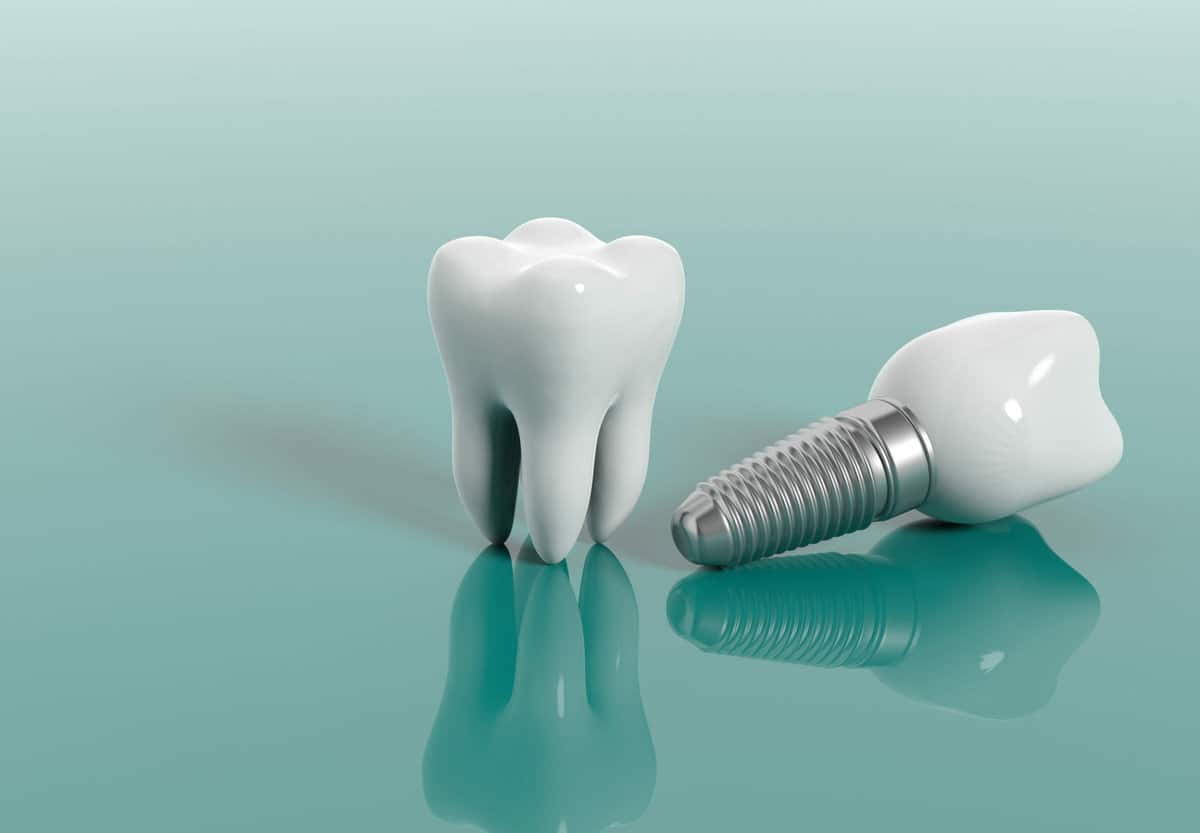
A dental implant has three main parts that work together to replace a missing tooth from the root up:

  • The implant post — a small titanium screw that acts like a tooth root. Titanium is well-tolerated by the body and can fuse with bone in a natural process called osseointegration.
  • The abutment — a connector that attaches to the post and holds the crown in place.
  • The crown — a custom-made replacement tooth, shaped and shaded to blend in with your natural teeth.

Because the post anchors into the jaw, an implant stays put on its own. It does not rely on neighboring teeth for support the way some other options do. You can learn more about the basics from the American Dental Association’s patient site, MouthHealthy.

Who Can Benefit From Implants?

Implants may be a good fit if you have one or more missing teeth and want a stable, natural-looking replacement. People often consider them after tooth loss from decay, gum disease, or an injury. Implants can also support a bridge or secure a loose denture.

A successful implant typically depends on healthy gums and enough jawbone to hold the post. If bone has shrunk over time, a bone graft may be recommended first. Our dentists review your overall health, your gums, and a set of digital X-rays before suggesting any treatment, so the plan fits your situation rather than a one-size-fits-all approach.

What to Expect During Treatment

Getting an implant usually happens in stages over a few months, with healing time built in. A typical path looks like this:

  • Consultation and imaging. We examine your mouth and take digital X-rays to map the bone and nearby structures. Our office uses Pearl AI, an FDA-cleared tool that helps our dentists review X-rays carefully.
  • Placing the post. The implant is placed into the jawbone using local anesthetic to keep you comfortable. Many patients are surprised by how manageable this step feels.
  • Healing. Over the next several weeks to a few months, the bone bonds to the post to create a sturdy foundation.
  • Crown placement. Once healing is complete, we attach the abutment and a custom crown to finish your new tooth.

Every timeline is a little different, and our team will walk you through yours at each visit.

Benefits of Dental Implants

Implants offer advantages that many patients value over other tooth-replacement options:

  • They look and function much like natural teeth, so you can eat and speak comfortably.
  • They are fixed in place and do not slip or need to be removed for cleaning.
  • They help preserve the jawbone in the area of the missing tooth, since the post stimulates the bone the way a natural root does.
  • They do not require grinding down healthy neighboring teeth, as some bridges do.
  • With proper care, they often last many years.

How Much Do Dental Implants Cost?

Implant pricing depends on how many teeth you are replacing, whether you need a bone graft, and the materials used. As a national reference, a single implant with an abutment and crown often falls somewhere in the range of about $3,000 to $5,000 (these are general figures, not our office’s prices). Full-arch solutions cost more.

Dental insurance may cover part of the treatment, and many offices offer payment options. The clearest way to understand your investment is a consultation, where our team can review your specific needs and discuss what to expect.

Caring for Your Implant

One of the nicest things about an implant is that caring for it is a lot like caring for a natural tooth. To help it last:

  • Brush twice a day and clean between your teeth daily.
  • Keep up with regular checkups and professional cleanings.
  • Avoid using your teeth to open packages or chew very hard objects.
  • Tell your dentist if you notice looseness, soreness, or swelling around the implant.

Routine visits let our dentists monitor the implant and the gum tissue around it so small concerns can be caught early. You can read more general guidance through the American Dental Association.

Explore Related Treatments

Implants are one of several ways to restore your smile. If you are weighing your options, you may also want to read about dental bridges as a way to fill a gap using neighboring teeth, or dentures for replacing several teeth at once. If a damaged-but-savable tooth is the concern, our page on dental crowns explains how we protect and rebuild it.

Book Your Appointment

Frequently Asked Questions

Is getting a dental implant painful?

The procedure is done with local anesthetic, so the area is numb during placement and most patients are comfortable. Some mild soreness or swelling afterward is normal and can typically be managed with the aftercare guidance our team provides.

How long do dental implants last?

With good daily care and regular dental visits, implants often last many years. The crown on top may eventually need replacement due to normal wear, while the post itself can last a very long time when the surrounding gum and bone stay healthy.

How long does the whole process take?

Because the jawbone needs time to bond securely to the implant post, the full process usually takes a few months from placement to the final crown. Timelines vary based on healing and whether any preparatory work, such as a bone graft, is needed.

Am I a candidate for dental implants?

Many adults with one or more missing teeth are candidates, especially with healthy gums and enough jawbone to support the post. The best way to know is a consultation with our dentists in South San Francisco, who will examine your mouth, review your X-rays, and discuss your options.

Written by the Vaksman Dental Group team and medically reviewed by Dr. Irena Vaksman, DDS — South San Francisco.
What Is a Dental Implant?

A dental implant is an artificial tooth root, usually made of titanium, that is surgically placed into the jawbone to support a replacement tooth, bridge, or denture. Once the bone heals around the post, it forms a stable anchor that holds the new tooth securely and helps preserve the surrounding bone.

Unlike removable options, an implant becomes a permanent part of your mouth and is cared for like a natural tooth. You can learn more about dental implants from the American Dental Association’s consumer resource.

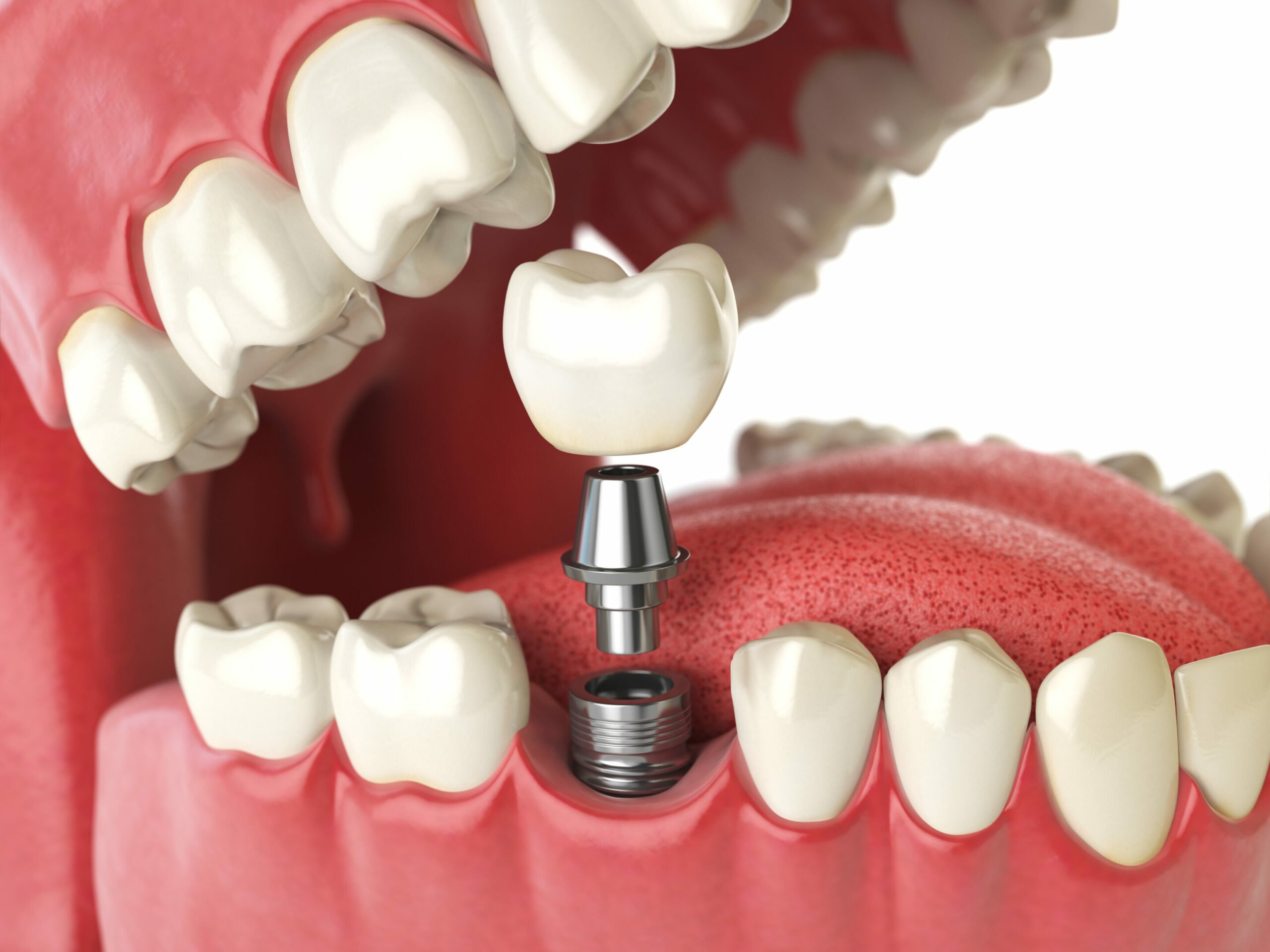
Tooth dental implant. Dental concept.
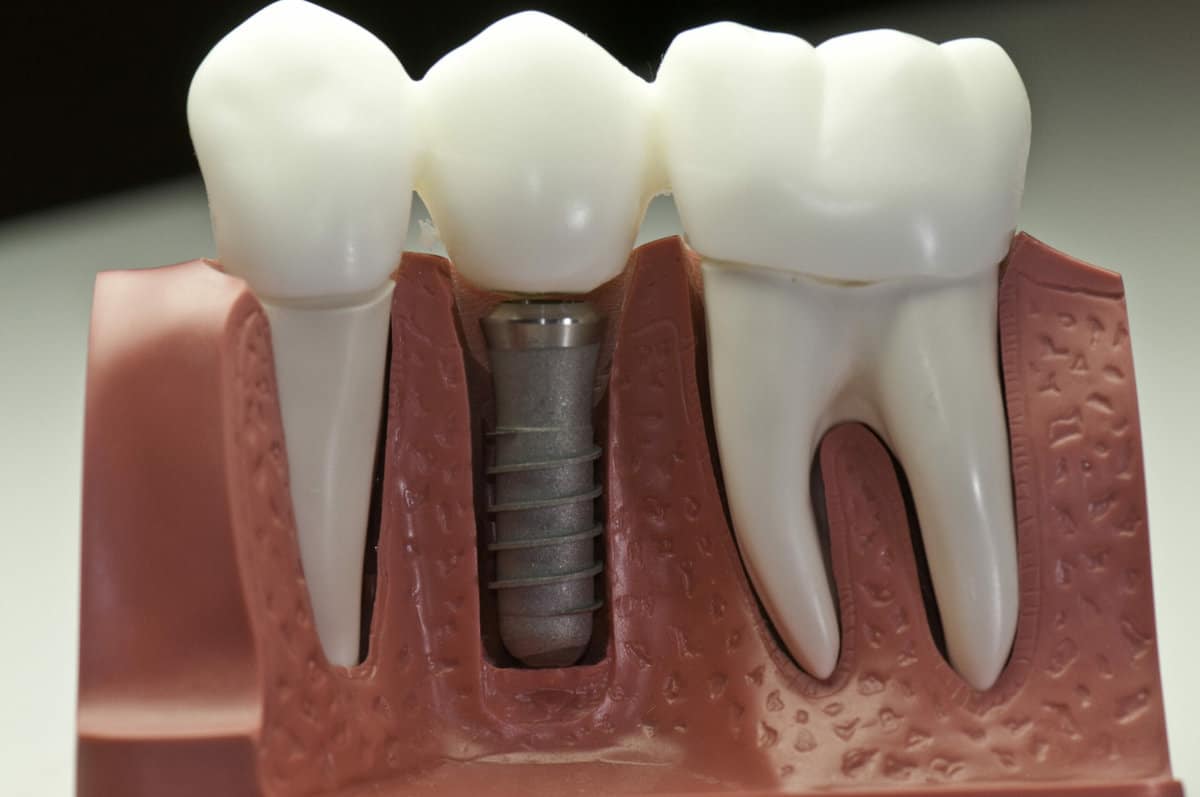
Capped Dental Implant Model

What Are the Parts of a Dental Implant?

A complete implant restoration has three main components that work together:

  • The implant post — the titanium screw placed in the jawbone that acts as the new tooth root.
  • The abutment — a connector piece that attaches to the post above the gumline.
  • The crown — the visible, custom-made tooth that is color-matched to blend with your smile.

How Does the Dental Implant Procedure Work?

Getting an implant is a staged process completed over several visits so the bone can heal properly. At our South San Francisco office, the typical steps are:

  1. Consultation and imaging — our dentists examine your mouth, take X-rays or a 3D scan, and confirm you have enough healthy bone.
  2. Treatment planning — we map out the implant position and discuss sedation, timing, and any preparatory care such as a bone graft.
  3. Implant placement — the titanium post is placed into the jawbone during a minor surgical procedure under local anesthesia.
  4. Healing and osseointegration — over a few months the bone fuses to the post, creating a solid foundation.
  5. Abutment and impression — once healed, the connector is attached and an impression is taken for your custom crown.
  6. Crown placement — the final crown is secured, completing your new tooth.
Dental implant model showing post, abutment, and crown at a South San Francisco dentist

Implant vs. Bridge vs. Denture: Which Is Right for You?

Implants, bridges, and dentures all replace missing teeth, but they differ in how they’re anchored, how long they last, and how they affect nearby teeth. This comparison can help you talk through options with our team:

Feature Dental Implant Dental Bridge Denture
How it’s anchored Titanium post in the jawbone Crowns on adjacent teeth Rests on gums (removable)
Affects neighboring teeth? No Yes — they must be reshaped No
Helps preserve jawbone? Yes No No
Removable? No No Yes
Typical longevity Many years with good care Several years Several years; may need relining

For patients missing all the teeth in an arch, All-on-4 dental implants can support a full set of teeth on as few as four posts.

What Are the Benefits of Dental Implants?

Implants are often considered the closest thing to natural teeth. Common benefits include:

  • Stability — they don’t slip or shift when you eat or speak.
  • Bone preservation — the post stimulates the jaw and helps prevent the bone loss that follows tooth loss.
  • Protects healthy teeth — neighboring teeth don’t need to be ground down as they do for a traditional bridge.
  • Easy care — you brush and floss an implant just like a natural tooth.
  • Natural appearance — the crown is matched to your existing teeth.

Why Choose Vaksman Dental Group for Dental Implants?

Replacing a tooth well takes careful planning from diagnosis through the final crown. When you choose our South San Francisco practice for implants, you get:

  • Start-to-finish implant care — our dentists handle the planning, placement, and crown so your treatment stays coordinated under one roof.
  • Imaging-guided planning — we use diagnostic imaging to position each implant precisely around your bone and nerves.
  • Restorative options in-house — from a single implant to full-arch solutions, we tailor the plan to your mouth.
  • A convenient Peninsula location — we’re on Mission Road near El Camino Real, easy to reach from San Bruno, Daly City, Brisbane, Colma, and San Francisco.

Dental Implants FAQ

The cost of a dental implant varies by case. Factors include how many teeth you're replacing, whether you need a bone graft or extraction first, the type of crown, and your sedation needs. We offer flexible financing and accept most insurance — contact us for a personalized estimate after your consultation.

Coverage varies by plan. Some dental insurance helps with parts of implant treatment, such as the crown or any extractions, while others have limits on implants specifically. Our team accepts most insurance and will help you understand your benefits before treatment begins.

Vaksman Dental Group is located at 1241 Mission Road in South San Francisco, near El Camino Real and the South San Francisco BART station. We welcome implant patients from San Bruno, Daly City, Brisbane, Colma, Pacifica, and San Francisco.

The procedure is performed under local anesthesia, so most patients feel little to nothing during placement. Mild soreness or swelling afterward is normal and usually managed with over-the-counter pain relief. Our dentists will review comfort and sedation options with you in advance.

With good oral hygiene and regular dental visits, implants can last many years and often a lifetime. The crown on top may eventually need replacement due to normal wear, but the implant post itself is designed to be a long-term solution.

Most healthy adults with enough jawbone to support a post are good candidates. Our dentists will check your bone, gums, and overall health during your consultation. If bone has been lost, a bone graft can sometimes rebuild the area so an implant can be placed.

From placement to final crown, the process often spans a few months, mostly to allow the bone to fuse with the implant. Timing depends on healing, whether preparatory procedures are needed, and your individual case.

Not everyone does. If you have enough healthy bone, a graft isn't necessary. If bone has shrunk after tooth loss, a graft can rebuild the area first. Imaging during your consultation tells our dentists whether grafting is needed.

Care for an implant just as you would a natural tooth — brush twice a day, floss daily, and keep up with regular cleanings and checkups at our South San Francisco office. Good hygiene is the key to a long-lasting implant.

Yes. Implants can replace a single tooth, support an implant bridge for several missing teeth, or anchor a full arch with options like All-on-4. Our team will recommend the right approach based on how many teeth you're missing.

Cost & Financing

The cost of Dental Implants varies with each patient’s needs and treatment plan. We keep care affordable with flexible financing, accept most dental insurance, and offer an in-house membership plan. Contact us for a personalized estimate.

Visit Vaksman Dental Group in South San Francisco

Vaksman Dental Group
1241 Mission Road
South San Francisco, CA 94080
Phone: (650) 588-3710
Hours: Monday–Friday, 8:00 AM – 5:00 PM

Conveniently located near El Camino Real and the South San Francisco BART station, serving San Bruno, Daly City, Brisbane, Colma, Pacifica, Millbrae, and Burlingame.

Schedule an Appointment with a
South San Francisco Dentist!