Key Takeaways

  • A cavity is a small hole in a tooth caused by decay, and it tends to grow larger if it is not treated.
  • Early cavities often cause no pain, so regular exams and X-rays are the most reliable way to catch them.
  • Treatment is matched to the size of the decay, from a simple filling to a crown or, in deeper cases, a root canal.
  • Daily brushing with fluoride, flossing, and limiting sugary or acidic drinks can lower your risk.
  • Our dentists serve South San Francisco and nearby cities and aim to treat cavities while they are still small.

A cavity is a permanently damaged area in a tooth caused by decay, creating a small hole that grows if untreated. At Vaksman Dental Group in South San Francisco, our dentists catch cavities early and treat them with gentle, lasting restorations chosen to fit the size and location of the decay.

What Is a Cavity?

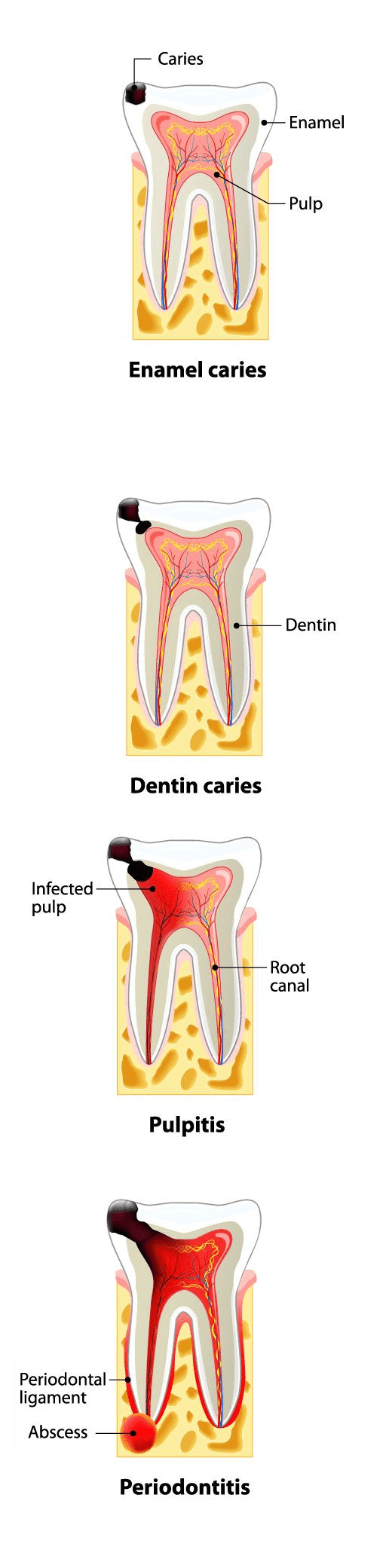
A cavity, also called tooth decay or dental caries, happens when bacteria in the mouth feed on sugars and produce acids. Over time those acids wear away the hard outer layer of the tooth, called enamel, and create a hole. If decay reaches the softer layers underneath, it can spread faster and reach the nerve.

Cavities are one of the most common chronic conditions, and they affect children and adults alike. According to the Centers for Disease Control and Prevention, untreated tooth decay remains widespread, which is why routine dental visits matter so much.

What Causes Cavities and Who Is at Risk?

Decay is driven by a mix of bacteria, frequent sugar, and time. Anyone can develop a cavity, but some people face higher risk.

  • Frequent snacking or sipping sugary and acidic drinks
  • Brushing or flossing less often than recommended
  • Dry mouth, which can be linked to certain medications
  • Deep grooves in back teeth that trap food
  • Existing fillings or crowns with worn edges
  • Receding gums that expose softer root surfaces

The American Dental Association’s MouthHealthy resource notes that saliva, fluoride, and good daily habits all help protect enamel between visits.

Signs You May Have a Cavity

Small cavities often cause no symptoms at all, which is why they can be easy to miss. As decay grows, you may notice:

  • Sensitivity to hot, cold, or sweet foods and drinks
  • A toothache or pain when biting down
  • A visible pit, hole, or dark spot on a tooth
  • Staining on the surface of a tooth
  • Food that keeps getting caught in the same spot

Because early decay is usually silent, regular checkups are the most dependable way to find it. If you are already having pain or notice a hole, our emergency dental care team can help you get seen promptly.

How We Treat Cavities

Treatment depends on how far the decay has progressed. Our dentists confirm the diagnosis with an exam and digital images, then talk through your options before any work begins. Common approaches include:

  • Fillings for small to moderate cavities. The decayed area is gently cleaned out and the space is filled with a tooth-colored material that restores the tooth’s shape.
  • Crowns when decay is large and the tooth needs full coverage for strength. With CEREC technology, a crown can often be designed and placed in a single visit.
  • Root canal therapy when decay reaches the nerve. This removes the infected tissue and saves the natural tooth. The American Association of Endodontists explains how modern root canal treatment relieves pain rather than causing it.
  • Extraction only when a tooth is too damaged to save, followed by a conversation about replacement options.

Where it adds value, our office uses Pearl AI, an FDA-cleared system that helps our dentists review X-rays for areas of concern, supporting an accurate diagnosis. If you would like a deeper look at our restorative options, see our pages on dental fillings and dental crowns.

What Cavity Treatment Typically Costs

Costs vary widely based on the tooth, the size of the decay, your insurance, and the material used. The figures below are general national ranges to help you plan and are not our office’s prices:

  • Tooth-colored filling: roughly $150 to $450 per tooth
  • Dental crown: roughly $1,000 to $2,500 per tooth
  • Root canal: roughly $700 to $1,800, depending on the tooth

Many dental plans cover a portion of cavity treatment, especially when it is caught early. Our team is glad to review your specific situation and explain your estimate before treatment.

Aftercare and Preventing Future Cavities

Most people return to normal eating soon after a filling, though a numb area should be protected until sensation returns. Mild sensitivity for a few days is common and typically fades. To help keep new cavities from forming:

  • Brush twice a day with a fluoride toothpaste and floss daily
  • Limit sugary and acidic snacks and drinks, and sip water through the day
  • Keep up with routine cleanings and exams
  • Ask whether dental sealants or fluoride treatments are right for you

Prevention is the heart of what we do. A regular professional cleaning removes the buildup that brushing alone can miss and gives our team a chance to spot small problems early. Patients from South San Francisco, San Bruno, Daly City, Brisbane, Colma, Pacifica, Millbrae, Burlingame, and across San Francisco are always welcome.

Book Your Appointment

Frequently Asked Questions

Can a cavity heal on its own?

Very early enamel weakening can sometimes be slowed or remineralized with fluoride and good habits, but once a true hole has formed in the tooth, it cannot heal on its own and needs to be treated by a dentist. The sooner it is addressed, the smaller and simpler the treatment usually is.

Does getting a cavity filled hurt?

Our dentists use local anesthetic to keep the area comfortable, so most people feel little or nothing during a filling. Some mild sensitivity afterward is normal and typically settles within a few days. If you feel anxious about treatment, let us know and we can talk through ways to help you feel at ease.

How do I know if I have a cavity if it does not hurt?

Many cavities cause no pain in the early stages, which is exactly why regular exams and X-rays matter. During a checkup, our dentists can find decay long before you would notice it, often while it is still small enough for a simple filling.

What happens if I leave a cavity untreated?

An untreated cavity tends to grow, and decay can reach the nerve and lead to infection, pain, or the loss of the tooth. Treating it early usually means a smaller, less costly fix, while waiting can turn a simple filling into a crown, root canal, or extraction.

Written by the Vaksman Dental Group team and medically reviewed by Dr. Irena Vaksman, DDS — South San Francisco.

What is a cavity?

A cavity is a permanently damaged area in the hard surface of a tooth that develops into a tiny hole or opening, caused by tooth decay. It forms when acids produced by mouth bacteria gradually erode enamel, and if left untreated, it grows deeper toward the sensitive inner tooth.

Cavities, also called dental caries, are one of the most common health problems worldwide. The good news is that they are highly treatable, and the earlier they’re caught, the simpler the treatment. Regular checkups at our South San Francisco office near El Camino Real let our dentists find and treat decay before it becomes painful or costly.

caries
Dental hygienist polishing a patient's teeth with a soft rubber cup

What causes cavities?

Cavities form through a gradual process. Bacteria in the mouth feed on sugars and starches from food, producing acids that attack tooth enamel. Over time, this erodes the surface and creates decay. Key contributors include:

  • Frequent sugary or starchy foods and drinks
  • Inconsistent brushing and flossing
  • Plaque buildup that isn’t removed regularly
  • Dry mouth, since saliva helps neutralize acids
  • Deep grooves in back teeth that trap food
  • Sipping sugary drinks throughout the day

According to MouthHealthy.org, good daily oral hygiene and routine dental visits are the most effective ways to prevent decay.

What are the signs and symptoms of a cavity?

Early cavities often cause no symptoms at all, which is why regular exams matter so much. As decay progresses, you may notice:

  • Tooth sensitivity to sweets, hot, or cold
  • A toothache or spontaneous pain
  • Visible holes or pits in a tooth
  • Brown, black, or white staining on the surface
  • Pain when biting down
  • Bad breath or an unpleasant taste

If you notice any of these, don’t wait. Early treatment is simpler and helps you keep more of your natural tooth.

stages of cavities vertical
dental clinic treating cavities

How are cavities treated?

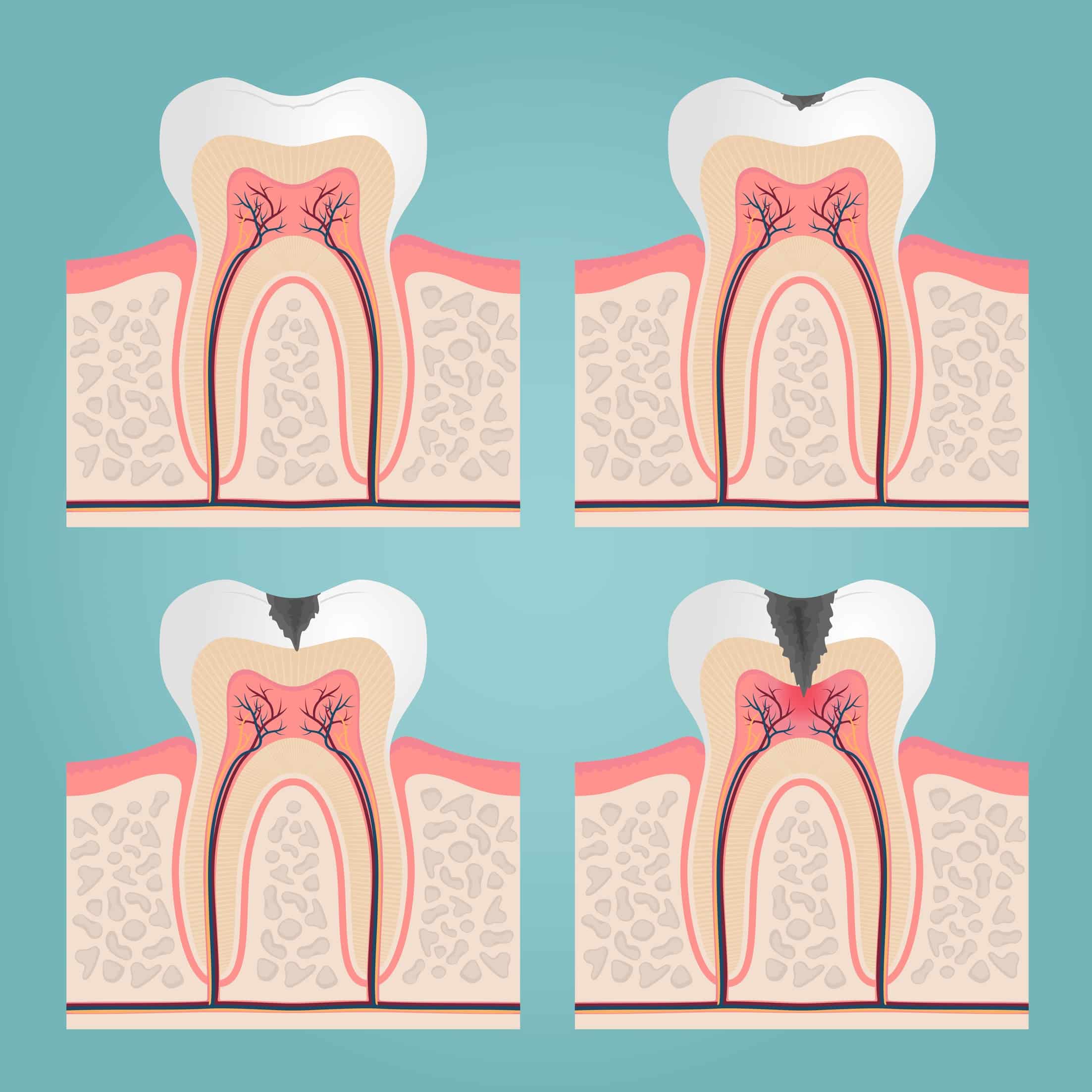
Treatment depends on how far the decay has progressed. The earlier a cavity is caught, the more conservative the fix. Here’s how treatment options compare by severity:

Severity Common Treatment What It Involves
Very early decay Fluoride & monitoring Strengthening enamel before a hole forms
Small to moderate cavity Dental filling Removing decay and filling the space
Larger cavity Inlay, onlay, or crown Restoring a tooth with significant decay
Decay reaching the nerve Root canal & crown Removing infected pulp, then protecting the tooth
Unrestorable tooth Extraction & replacement Removing the tooth when it can’t be saved

Our dentists always aim for the most conservative option that fully resolves the decay, which is why early detection is so valuable.

What happens during cavity treatment with a filling?

For most small to moderate cavities, a filling is a quick, comfortable, single-visit procedure. The typical steps are:

  1. Numbing: We gently numb the area so you stay comfortable.
  2. Removing decay: Our dentist clears away the decayed portion of the tooth.
  3. Cleaning: The space is cleaned to remove bacteria and debris.
  4. Filling: We fill the tooth, often with a tooth-colored material that blends in.
  5. Shaping and polishing: The filling is shaped to your bite and polished smooth.

We offer both tooth-colored and, when appropriate, amalgam fillings, and our dentists will help you choose what’s right for your tooth.

How can you prevent cavities?

Most cavities are preventable with consistent care. Our team recommends:

  • Brushing twice a day with fluoride toothpaste
  • Flossing daily to clean between teeth
  • Limiting sugary and acidic snacks and drinks
  • Drinking water and staying hydrated
  • Keeping up with routine dental cleanings and exams

Professional cleanings remove the plaque and tartar that home brushing can miss, and regular exams let us catch tiny cavities while they’re still easy to treat.

Why choose Vaksman Dental Group for cavity treatment?

Patients across South San Francisco, San Bruno, Daly City, Colma, Brisbane, and Pacifica trust our team to treat cavities gently and conservatively. Here’s why:

  • Early detection through thorough exams that catch decay before it spreads
  • Conservative, tooth-preserving care that saves as much natural tooth as possible
  • Comfort-focused treatment with gentle, modern techniques
  • Natural-looking restorations that blend with your smile
  • Convenient weekday care near El Camino Real and South San Francisco BART, Monday through Friday

Cavities FAQ

The cost of treating a cavity depends on the size and location of the decay and the type of restoration needed, such as a filling, crown, or root canal. Catching a cavity early usually means simpler, more affordable treatment. We'll review your options and any insurance coverage clearly before we begin.

Most dental insurance plans cover fillings and other cavity treatments, often at a significant percentage. Coverage varies by plan and the type of restoration. Our team will verify your benefits and explain your estimated portion before treatment so there are no surprises.

Our office at 1241 Mission Road in South San Francisco treats cavities for patients from San Bruno, Daly City, Brisbane, Colma, and Pacifica. We're conveniently located near El Camino Real and South San Francisco BART, with weekday appointments available.

Most patients feel little to no discomfort during a filling. Our dentists gently numb the area first, so the procedure is comfortable. You may have mild sensitivity for a day or two afterward, which typically fades quickly.

No. Once decay creates a true cavity in the enamel, it cannot heal on its own and will continue to grow without treatment. Very early decay can sometimes be remineralized with fluoride, but an actual cavity needs professional care.

An untreated cavity grows deeper, eventually reaching the nerve and causing pain, infection, and possible tooth loss. What starts as a simple filling can become a root canal or extraction. Treating decay early is always simpler and less costly.

Early cavities often have no symptoms, which is why regular exams are key. Warning signs include sensitivity to sweets or temperature, toothache, visible pits or staining, or pain when biting. A dental exam and X-rays confirm whether decay is present.

Tooth-colored (composite) fillings blend with your natural teeth and bond directly to the tooth, while amalgam fillings are durable and time-tested. Each has advantages depending on the location and size of the cavity. Our dentists will recommend the best option for your situation.

A well-cared-for filling can last many years. Tooth-colored and amalgam fillings each have good longevity, and how long yours lasts depends on its size, location, and your oral hygiene. Routine checkups let us monitor your fillings over time.

Yes. Our dentists treat cavities for patients of all ages, including children, with a gentle, reassuring approach. Catching and treating decay early in baby and young permanent teeth helps protect your child's long-term oral health.

For most people, a dental exam and cleaning every six months is ideal for catching cavities early. Some patients at higher risk for decay may benefit from more frequent visits. Our dentists will recommend the right schedule for you.

Cost & Financing

The cost of Cavities varies with each patient’s needs and treatment plan. We keep care affordable with flexible financing, accept most dental insurance, and offer an in-house membership plan. Contact us for a personalized estimate.

Visit Vaksman Dental Group in South San Francisco

Vaksman Dental Group
1241 Mission Road
South San Francisco, CA 94080
Phone: (650) 588-3710
Hours: Monday–Friday, 8:00 AM – 5:00 PM

Conveniently located near El Camino Real and the South San Francisco BART station, serving San Bruno, Daly City, Brisbane, Colma, Pacifica, Millbrae, and Burlingame.

Schedule an Appointment with a
South San Francisco Dentist!