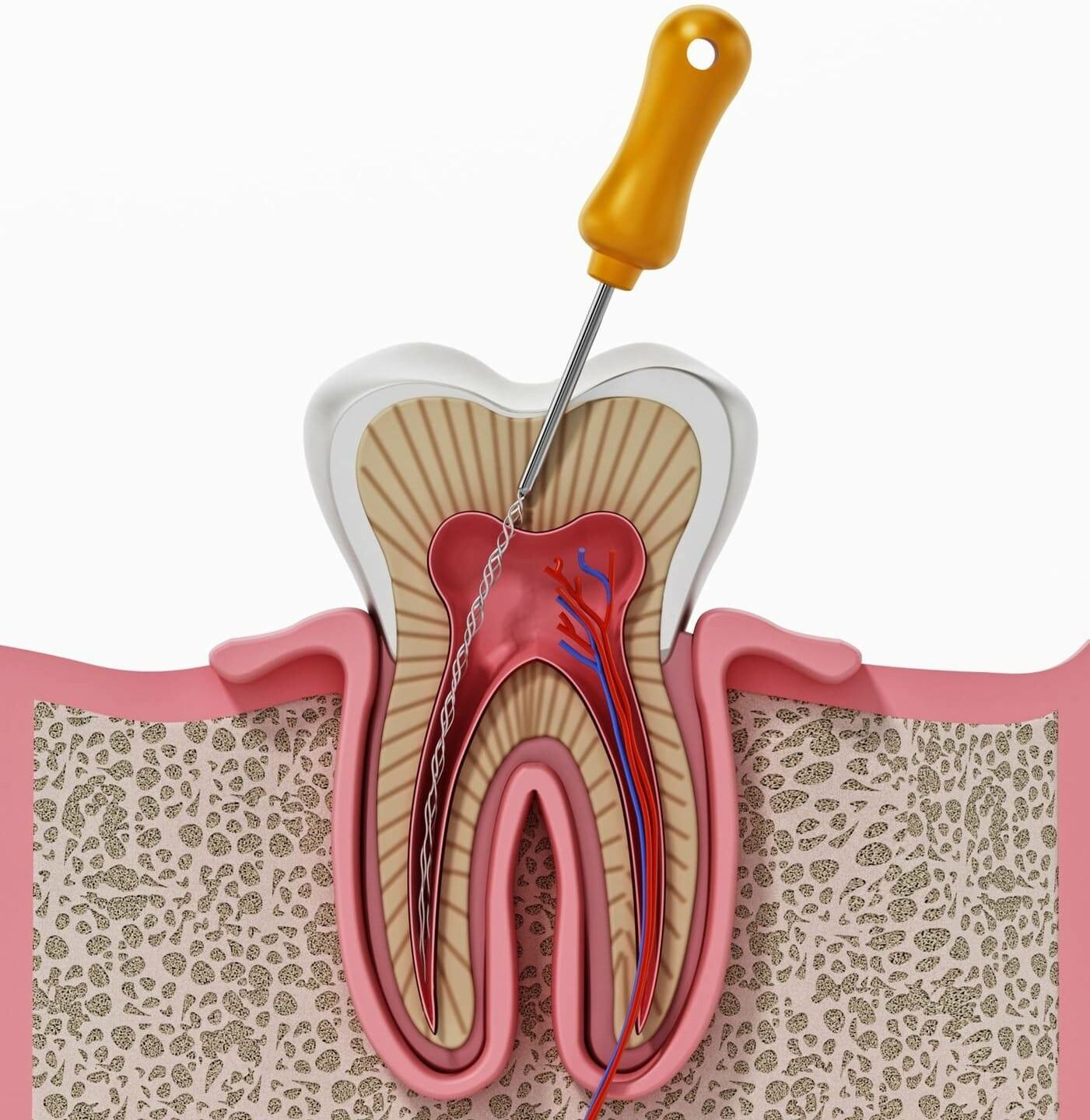
- A root canal removes infected or inflamed tissue from inside a tooth, then cleans, fills, and seals it so you can keep your natural tooth.
- Common signs you may need one include lingering tooth pain, sensitivity to hot or cold that lingers, swelling, or a darkening tooth.
- Modern root canals are typically done with local anesthesia and often feel similar to having a filling placed.
- Saving a natural tooth is usually preferable to removing it, and a treated tooth often needs a crown afterward for protection.
- Our dentists at Vaksman Dental Group in South San Francisco offer gentle, comfortable root canal care for patients across the Peninsula.
A root canal is a dental treatment that removes infected or inflamed tissue from inside a tooth, then cleans, fills, and seals it to stop pain and save the tooth. At Vaksman Dental Group in South San Francisco, our dentists perform gentle, comfortable root canals, and most patients are surprised by how routine the visit feels.
What Is a Root Canal?
Inside every tooth is a soft center called the pulp, which holds nerves and blood vessels. When a deep cavity, a crack, or repeated dental work lets bacteria reach the pulp, it can become infected or inflamed. A root canal (also called endodontic treatment) carefully removes that damaged tissue, disinfects the inside of the tooth, and fills the space so the tooth can stay in place.
The goal is to relieve pain and keep your own tooth rather than removing it. According to the American Association of Endodontists, root canal treatment is a common and well-established way to save a natural tooth that might otherwise be lost.
Signs You May Need a Root Canal
Only an exam and X-rays can confirm whether you need treatment, but these symptoms are worth a call to your dentist:
- Tooth pain that lingers or wakes you at night
- Sensitivity to hot or cold that stays after the food or drink is gone
- Pain when biting or chewing on a specific tooth
- Swelling or tenderness in the nearby gums
- A tooth that looks darker than the ones around it
- A small, pimple-like bump on the gum that comes and goes
Sometimes a tooth needs a root canal with no symptoms at all, which is one reason regular checkups matter. You can learn more about the signs of pulp damage from MouthHealthy, the ADA’s patient resource.
What to Expect During Treatment
A root canal is typically completed in one or two visits, depending on the tooth. Here is the general flow our dentists follow:
- Numbing: The area is fully numbed with local anesthesia so you stay comfortable.
- Access: A small opening is made in the top of the tooth to reach the pulp.
- Cleaning: The infected or inflamed tissue is removed, and the inner canals are cleaned and shaped.
- Sealing: The space is filled with a biocompatible material and sealed.
- Restoration: A temporary or permanent filling is placed, and most back teeth later receive a crown for strength.
Because we use digital imaging and FDA-cleared Pearl AI to help review X-rays, our team can study the tooth carefully and plan each step. When a crown is needed, our CEREC technology can often create a same-visit crown so you avoid extra appointments.
Who a Root Canal Can Help
A root canal may be the right choice when a tooth is infected or badly inflamed but still has enough healthy structure to save. It can help people who want to keep their natural smile, avoid the gap left by an extraction, and chew normally again. If a tooth is too damaged to save, our dentists will talk through other options with you honestly.
Benefits of Saving Your Tooth
- Relief from the pain and pressure of an infection
- Keeping your natural tooth and bite alignment
- Often more cost-effective over time than removing and replacing a tooth
- Normal chewing and a natural-looking result, especially when finished with a crown
Keeping a natural tooth helps protect the surrounding bone and neighboring teeth, which is why our team treats saving a tooth as the first option whenever it is realistic.
Cost of a Root Canal
Cost depends on which tooth is treated and whether a crown is needed afterward. As a general national reference (these are general figures, not our office’s prices), a root canal often ranges from about $700 to $1,500 for a front tooth and roughly $1,000 to $1,800 for a molar, with crowns billed separately. Dental insurance frequently covers part of the treatment. Our front-desk team is happy to review your specific estimate and coverage before you decide.
Recovery and Aftercare
Many people return to normal activities the next day. Mild tenderness for a few days is common and can usually be managed with over-the-counter pain relievers as directed. To help healing:
- Avoid chewing hard foods on the treated tooth until any permanent crown is placed
- Keep up gentle brushing and flossing around the area
- Call us if pain, swelling, or pressure increases instead of easing
With good care and a proper restoration, a treated tooth can often last for many years.
If your tooth pain turns severe or you notice facial swelling, don’t wait — our emergency dental care is here when you need it. A root canal may also be part of a larger plan; if a tooth can’t be saved, we’ll discuss dental crowns and other restorative choices, and severely damaged teeth are sometimes addressed through tooth extraction followed by replacement.
Frequently Asked Questions
Does a root canal hurt?
Modern root canals are typically done with local anesthesia, so the procedure itself often feels similar to having a filling placed. Most discomfort comes from the infection before treatment, and a root canal is designed to relieve that pain. Some tenderness for a few days afterward is normal and usually eases with over-the-counter pain relievers.
How long does a root canal take?
Most root canals are completed in one or two visits, often lasting about 60 to 90 minutes each, depending on the tooth and how many canals it has. Front teeth tend to be quicker, while molars can take a little longer because they have more canals to clean and seal.
Do I need a crown after a root canal?
Often, yes — especially for back teeth that handle heavy chewing. After treatment a tooth can become more brittle, so a crown helps protect it and restore full function. Our dentists will let you know whether your specific tooth needs a crown or whether a filling is enough.
Can I drive home after a root canal?
Yes. A standard root canal uses local anesthesia, which numbs the area without making you drowsy, so most patients drive themselves home and return to their day. If you choose sedation for added comfort, you’ll want someone to drive you, and our team will go over that with you in advance.
Written by the Vaksman Dental Group team and medically reviewed by Dr. Irena Vaksman, DDS — South San Francisco.