
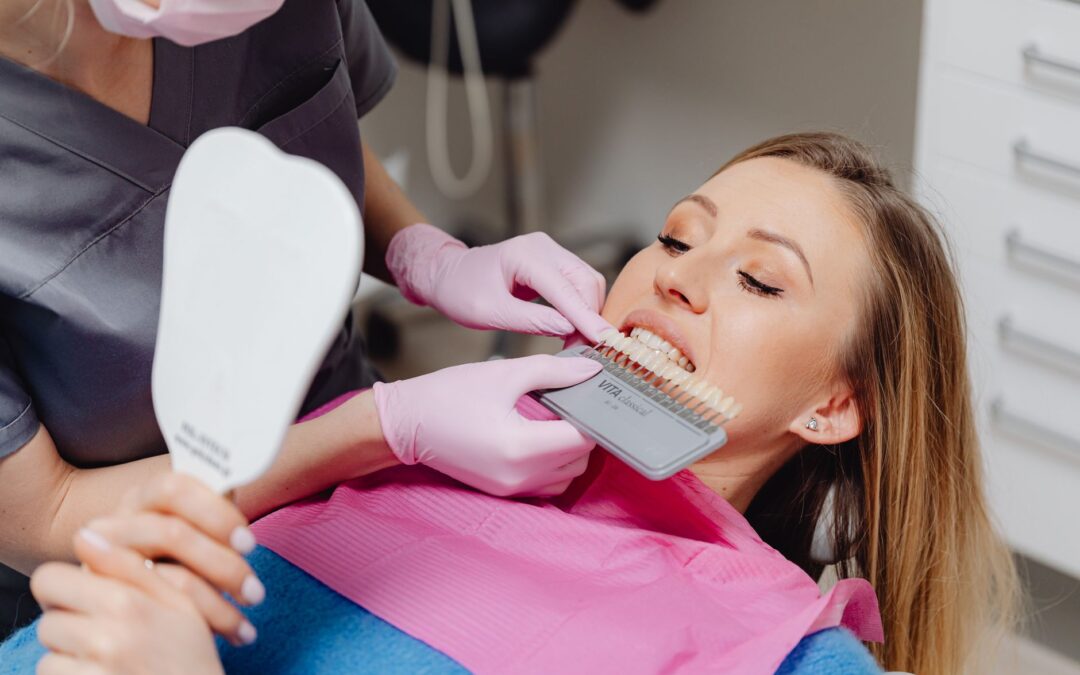
Dental veneers cost between $900 and $2,500 per tooth nationally in 2026, with porcelain veneers on the higher end ($1,200–$2,500+) and composite veneers on the lower end ($900–$1,500). In the San Francisco Bay Area, expect to pay above the national average — typically $1,500 to $3,000+ per tooth for porcelain veneers — due to higher lab and operating costs. Most dental insurance plans do not cover veneers because they’re considered cosmetic, but financing can bring the cost down to a manageable monthly payment.
Key Takeaways
- Porcelain veneers cost $1,200–$2,500+ per tooth nationally; our July 2026 survey of published Bay Area pricing found typical porcelain ranges of $1,500–$3,500 per tooth depending on the city.
- Composite veneers run $900–$1,500 per tooth nationally and can often be completed in a single visit. (Advertised prices as low as $250–$500 usually reflect simple bonding, not full sculpted veneers.)
- A single veneer costs $1,200–$2,500 nationally ($1,500–$3,000 in the Bay Area); a full smile makeover (6–8 veneers) typically costs $7,000–$20,000+ nationally, and $10,000–$25,000+ in the Bay Area.
- Most insurance plans classify veneers as cosmetic and won’t cover them; third-party financing (like CareCredit) can spread the cost into monthly payments, often at low or no promotional interest.
- Well-cared-for porcelain veneers last 10–20 years, with clinical studies reporting survival rates of roughly 93–96% at 10 years.
If it feels like everyone is Googling veneers right now, you’re not wrong. Search interest surged in 2026, driven partly by high-profile smile transformations from stars like Cristiano Ronaldo and Jelly Roll, leaving millions of people wondering: Could that be me — and what would it actually cost?
At Vaksman Dental Group in South San Francisco, the question we hear most often at consultations isn’t “what are veneers?” — it’s “what will this actually cost me?” Patients come to us from SSF, San Bruno, Daly City, Burlingame, Millbrae, and Pacifica having read national averages online, and the local reality is often different. So here’s a genuinely honest breakdown: national costs, what veneers actually cost around the Bay Area, what moves the number up or down, and what to ask before you commit.
What Do Veneers Cost Per Tooth in 2026?
Here are the national average ranges, alongside what patients typically pay in the San Francisco Bay Area:
| Veneer Type | National Average (Per Tooth) | SF Bay Area Typical (Per Tooth) | Lifespan | Enamel Prep? |
|---|---|---|---|---|
| Porcelain (traditional) | $1,200 – $2,500+ | $1,500 – $3,000+ | 10–20 years | Yes (minimal, usually < 1 mm) |
| Composite resin | $900 – $1,500 | $1,000 – $1,800 | 5–10 years | Little to none |
| Prepless / no-prep porcelain (e.g., Lumineers) | $1,200 – $2,000+ | $1,400 – $2,500+ | 10–20 years | Minimal to none |
You’ll get an exact, personalized quote at your consultation — before any treatment begins.
A note on the very low prices you may see advertised online: some clinics and financing sites quote composite veneers from as little as $250–$500 per tooth. Those figures usually reflect minimal single-surface bonding rather than a full, sculpted composite veneer — realistic pricing for quality chairside composite work starts around $900 per tooth. If a quote seems dramatically below every range on this page, ask exactly what’s included.
Most people veneer 6 to 8 front teeth for a cohesive smile. In our office, the majority of veneer cases are 6 units — enough to cover the teeth visible when you smile naturally. That means a full porcelain smile makeover realistically runs $7,000–$20,000+ nationally, and $10,000–$25,000+ in the Bay Area.
Veneer Cost by Number of Teeth
Not everyone needs a full smile makeover. Here’s what different case sizes typically cost for porcelain veneers in 2026:
| Case Size | National (Porcelain) | SF Bay Area (Porcelain) | Common Reason |
|---|---|---|---|
| 1 tooth | $1,200 – $2,500 | $1,500 – $3,000 | Single chipped, discolored, or misshapen tooth |
| 2 front teeth | $2,400 – $5,000 | $3,000 – $6,000 | The “two front teeth” fix after chips or wear |
| 4 front teeth | $4,800 – $10,000 | $6,000 – $12,000 | Upper incisors for a balanced smile line |
| 6 teeth | $7,200 – $15,000 | $9,000 – $18,000 | Most common case in our office — full smile zone |
| 8 teeth | $9,600 – $20,000 | $12,000 – $24,000 | Wide smiles showing more teeth |
| 10–12 teeth (“full mouth” visible teeth) | $12,000 – $30,000+ | $15,000 – $36,000+ | Complete transformation cases |
Can you veneer just one tooth? Yes — single-tooth veneers are common, and matching one veneer seamlessly to your natural neighboring teeth is one of the most technically demanding jobs in cosmetic dentistry. The ceramist must replicate your exact shade, translucency, and surface texture, which is why a single veneer doesn’t cost proportionally less per tooth than a multi-unit case — and why lab quality matters most on one-tooth cases.
2026 Bay Area Veneer Price Survey: What Dentists Charge by City
To give you a more useful picture than a single national range, we compiled published porcelain veneer pricing across the Bay Area in July 2026:
| Area | Typical Porcelain Veneer Range (Per Tooth) | Notes |
|---|---|---|
| San Francisco (city) | $2,000 – $3,500+ | Highest fees in the region; boutique cosmetic practices at the top end |
| Peninsula (South SF, San Bruno, Daly City, Burlingame) | $1,500 – $2,800 | Meaningfully lower than SF proper for comparable lab quality |
| East Bay (Oakland, Berkeley) | $1,500 – $2,800 | Wide spread between general and cosmetic-focused practices |
| South Bay (San Jose, Santa Clara) | $1,600 – $3,000 | Tech-corridor pricing similar to SF at the high end |
| National average (for comparison) | $1,200 – $2,500 | Per major cost databases |
Methodology: ranges compiled July 2026 from published fee information on Bay Area dental practice websites and national dental cost databases. Individual quotes vary by case; verified quarterly by the Vaksman Dental Group team.
One practical takeaway from this data: patients in San Francisco proper can often save meaningfully per tooth by seeing an experienced cosmetic dentist on the Peninsula — a 15-minute BART or Caltrain ride — without compromising lab quality. That’s a pattern we see in our own new-patient appointments.
Why Do Veneers Cost More in the San Francisco Bay Area?
Veneers in San Francisco and the Peninsula typically cost 20–40% more than national averages, for three concrete reasons:
- Lab and ceramist quality. Bay Area cosmetic dentists tend to work with master ceramists whose hand-layered porcelain looks indistinguishable from natural enamel. That artistry costs more than a budget mail-order lab — and it’s the single biggest visible difference in the final result.
- Operating costs. Rent, staff wages, and materials in the SF metro are among the highest in the country, and fees reflect that across all dental care, not just veneers.
- Experience. Practices with extensive cosmetic caseloads charge more per unit — and generally deliver more predictable results and fewer redos.
The upside of getting veneers locally instead of chasing bargain prices abroad: you keep your dentist. Adjustments, repairs, and follow-up care happen ten minutes from home, not ten time zones away. Over the years, we’ve examined patients who returned from overseas “veneer” packages with aggressively ground-down teeth and full crowns they didn’t expect — if you’re tempted by those offers, read our guide to Turkey Teeth: meaning, risks, and safer options first.
What Exactly Are Dental Veneers?
A veneer is a thin shell, usually porcelain or composite resin, bonded to the front surface of a tooth to change its color, shape, size, or length — think of it as a custom-fitted cover for your tooth’s “face.” Veneers are a popular solution for:
- Stained or discolored teeth that don’t respond to whitening
- Chipped or slightly worn teeth
- Minor gaps or spacing irregularities
- Teeth that are slightly misshapen or uneven
They’re not a fix for significantly misaligned teeth (that’s an Invisalign or orthodontics conversation), and they’re the wrong call for a structurally damaged tooth (a dental crown is usually better there). But for cosmetic improvements to otherwise healthy teeth, veneers are often the gold standard.
Veneers vs. Other Cosmetic Options: Cost Comparison
Veneers aren’t the only path to a better smile — and honestly, they’re not always the right one. Here’s how the main options compare:
| Treatment | Typical Cost | Lifespan | Best For |
|---|---|---|---|
| Porcelain veneers | $1,200–$2,500+ per tooth | 10–20 years | Permanent transformation of color, shape, and minor alignment |
| Composite veneers | $900–$1,500 per tooth | 5–10 years | Faster, more affordable improvement; “test drive” before porcelain |
| Dental bonding | $300–$600 per tooth | 3–10 years | Small chips, gaps, or edges on one or two teeth |
| Professional whitening | $300–$800 per treatment | 1–3 years (with touch-ups) | Healthy, well-shaped teeth that are simply discolored |
| Dental crowns | $1,000–$2,500+ per tooth | 10–20 years | Teeth with structural damage, large fillings, or after root canals |
| Invisalign | $3,500–$8,000 full treatment | Permanent (with retainers) | Crooked or misaligned teeth that are otherwise healthy |
Sometimes a few hundred dollars of bonding or whitening solves the problem that brought you in — and an honest consultation should tell you that before anyone talks about a five-figure veneer case.
What Makes the Price Go Up (or Down)?
No two veneer cases cost the same. Here’s what moves the needle:
- Material. Porcelain is stronger, more stain-resistant, and more lifelike, but it’s lab-made and costs more. Composite is sculpted chairside in one visit, which lowers cost but trades away some longevity and polish.
- Number of teeth. Many practices (including ours) can offer per-unit pricing that improves when you’re doing 6+ veneers. Always ask.
- Case complexity. If you need bite adjustment, gum contouring, or decay treated first, that adds to the total treatment cost. In our experience, this is the factor patients least expect — roughly speaking, the healthier your mouth going in, the closer your quote lands to the bottom of the range.
- Lab quality. Veneers from a high-end dental ceramist look dramatically more natural — and cost more — than budget-lab veneers. This is where cheap veneers usually show.
- Geography. As the survey above shows, Bay Area fees run well above national averages. Factor that in whenever you see a national range quoted online.
Are Veneers Covered by Insurance?
Almost never. Because veneers are an elective cosmetic procedure, most dental insurance plans — including Delta Dental, Aetna, and United Concordia — will not cover them. Rare exceptions exist when a veneer restores a tooth fractured by trauma, determined case by case.
The good news: most practices, ours included, offer financing options through third-party lenders like CareCredit that spread the cost over months or years, often with low or no-interest promotional periods. A $12,000 smile makeover can become a monthly payment comparable to a car payment — and unlike the car, porcelain veneers can last 20 years.
The American Dental Association recommends discussing your full treatment plan, including alternatives, with your dentist before committing. Our team walks every patient through every option — veneers, bonding, whitening, or sometimes “do nothing yet” — so you can choose what fits your smile goals and your budget.
Porcelain vs. Composite: Which Is Right for You?
There’s no universal right answer — it depends on your priorities:
- Choose porcelain if you want the most natural-looking, longest-lasting result and you’re okay with a 2–3 appointment process and a higher price tag.
- Choose composite if you want a faster, more affordable option, aren’t ready for a permanent commitment, or want to “test drive” the look before going all-in on porcelain.
- Consider prepless veneers (like Lumineers) if you want porcelain quality with little or no enamel removal. Not every smile is a candidate — thicker teeth and certain bites don’t suit no-prep designs — so a consultation is key. We break this down fully in our guide to prepless veneers: cost, pros, and cons.
What’s the Process Like?
For traditional porcelain veneers, expect three steps:
- Consultation. Your dentist evaluates your teeth, discusses your goals, and confirms you’re a good candidate. At our office this includes a full exam and an honest conversation about cost for your specific case.
- Prep appointment. A very thin layer of enamel (usually under a millimeter) is gently removed, and impressions or a digital scan are taken. You’ll wear temporaries while the lab crafts your permanent veneers.
- Placement appointment. Your veneers are bonded with a special adhesive and light-cured in place. Your dentist checks your bite and makes fine adjustments.
Composite veneers can often be done in a single visit: the resin is sculpted directly on your tooth, shaped, and polished chairside. No lab wait, no temporaries.
How Long Do Veneers Last?
Porcelain veneers last 10 to 20 years or longer with good care. Peer-reviewed clinical studies report porcelain veneer survival rates of roughly 93–96% at the 10-year mark (see this long-term study on PubMed). Composite veneers typically last 5 to 10 years before needing touch-ups or replacement.
Habits matter enormously: grinding, nail-biting, and chewing very hard foods shorten the lifespan of any veneer. If you grind, we’ll almost certainly recommend a custom night guard to protect your investment.
Otherwise, care is reassuringly simple: brush twice a day, floss daily, avoid extremely hard or sticky foods, and keep up with regular checkups. That’s it.
Are Veneers Worth the Cost?
For the right candidate — someone with healthy teeth and gums who’s genuinely bothered by cosmetic concerns — veneers can be life-changing. We see it in our South San Francisco office constantly: patients who hid their smiles for years walking out radiating confidence.
That said, they’re not for everyone, and no ethical dentist will push veneers on a patient who doesn’t need or want them. The best veneer is the one that solves a real problem for a real person — not the one that looks most impressive on a social feed.
The most reliable way to know your real cost? An in-person consultation. We’ll examine your teeth, talk through your goals, and give you an exact, personalized quote for your situation — no pressure, no games.
10 Questions to Ask at Your Veneer Consultation
Bring this list to any veneer consultation — here or anywhere else:
- What is the exact per-tooth fee for my case, and what does it include (temporaries, adjustments, follow-ups)?
- Am I actually a good candidate for veneers, or would bonding, whitening, or aligners solve my concern for less?
- How much enamel will you need to remove, and is a prepless option realistic for my teeth?
- Which dental lab and ceramist will make my veneers, and can I see examples of their work?
- Can I see before-and-after photos of similar cases you’ve treated in this office?
- How many veneers do you recommend, and why that number?
- What will my temporaries look and feel like, and how long will I wear them?
- What happens if a veneer chips or debonds — what’s the repair policy and cost?
- Do I grind my teeth, and will I need a night guard to protect the veneers?
- What financing options do you offer, and what would my realistic monthly payment be?
A good cosmetic dentist will welcome every one of these questions. If any of them get dodged, keep shopping.
Frequently Asked Questions About Veneer Costs
How much do veneers cost per tooth on average?
Nationally, porcelain veneers cost $1,200–$2,500 per tooth and composite veneers $900–$1,500 per tooth in 2026. In the San Francisco Bay Area, porcelain veneers typically run $1,500–$3,000+ per tooth. Your exact price depends on material, case complexity, and lab quality — contact us for a personalized quote.
How much do veneers cost in San Francisco and the Bay Area?
Our July 2026 survey of published Bay Area pricing found porcelain veneers ranging from $1,500–$2,800 per tooth on the Peninsula to $2,000–$3,500+ in San Francisco proper. At Vaksman Dental Group in South San Francisco, you’ll get exact pricing for your case at your consultation.
How much is a veneer for 1 tooth?
A single porcelain veneer costs $1,200–$2,500 nationally and $1,500–$3,000 in the SF Bay Area. Single veneers don’t cost proportionally less than multi-unit cases because matching one veneer to your natural neighboring teeth is technically demanding — the ceramist must replicate your exact shade and translucency.
How much is a full set of veneers?
Most smile makeovers cover the 6–8 teeth visible when you smile — in our office, 6 units is the most common case. Nationally that runs $7,000–$20,000+ for porcelain; in the Bay Area, plan for $10,000–$25,000+. Per-unit pricing often improves when treating 6 or more teeth, so ask about package pricing.
How much do veneers cost with insurance?
Usually the same as without it — dental insurance classifies veneers as cosmetic and rarely contributes anything. The exception is a veneer restoring a tooth fractured by trauma, where partial coverage is sometimes approved case by case. Budget for the full fee and use financing rather than counting on insurance.
Does dental insurance cover veneers?
In most cases, no. Insurance classifies veneers as cosmetic and doesn’t cover them. Rare exceptions apply when a veneer restores a tooth damaged by trauma, decided case by case. Most patients use third-party financing like CareCredit to spread the cost into monthly payments, often with promotional low or no interest.
Are veneers worth the money?
For patients with healthy teeth and gums who are bothered by staining, chips, gaps, or uneven teeth, veneers deliver a dramatic, long-lasting improvement — porcelain veneers routinely last 10–20 years. They’re a poor value if whitening or bonding could solve the same problem for far less, which is exactly what an honest consultation should tell you.
What’s the difference between porcelain and composite veneers?
Porcelain veneers are lab-made ceramic shells — more durable, stain-resistant, and natural-looking, lasting 10–20 years at a higher price. Composite veneers are sculpted directly on your teeth in one visit from tooth-colored resin — faster and more affordable, but typically lasting 5–10 years.
Can veneers last 20 years?
Yes — well-maintained porcelain veneers can last 20 years or longer. Clinical studies report roughly 93–96% of porcelain veneers surviving at the 10-year mark, and many continue well beyond that with good hygiene, regular checkups, and a night guard if you grind. Composite veneers typically need replacement sooner, at 5–10 years.
Can I get veneers without removing enamel?
Sometimes, yes. Prepless or “no-prep” veneers (like Lumineers) involve minimal or no enamel removal, making them a more reversible option. Not every smile qualifies — thicker teeth or certain bite patterns don’t suit no-prep designs — so a consultation determines candidacy.
Why are veneers so cheap in Turkey or Mexico?
Overseas clinics offer lower labor and lab costs, but “veneer” packages abroad are often actually full crowns requiring aggressive tooth grinding — the “Turkey teeth” phenomenon. Complications, redos, and follow-up care become expensive and difficult from thousands of miles away. Read our full guide on the risks of dental tourism veneers.
Written by the Vaksman Dental Group team and medically reviewed by Dr. Irena Vaksman, DDS, South San Francisco.