
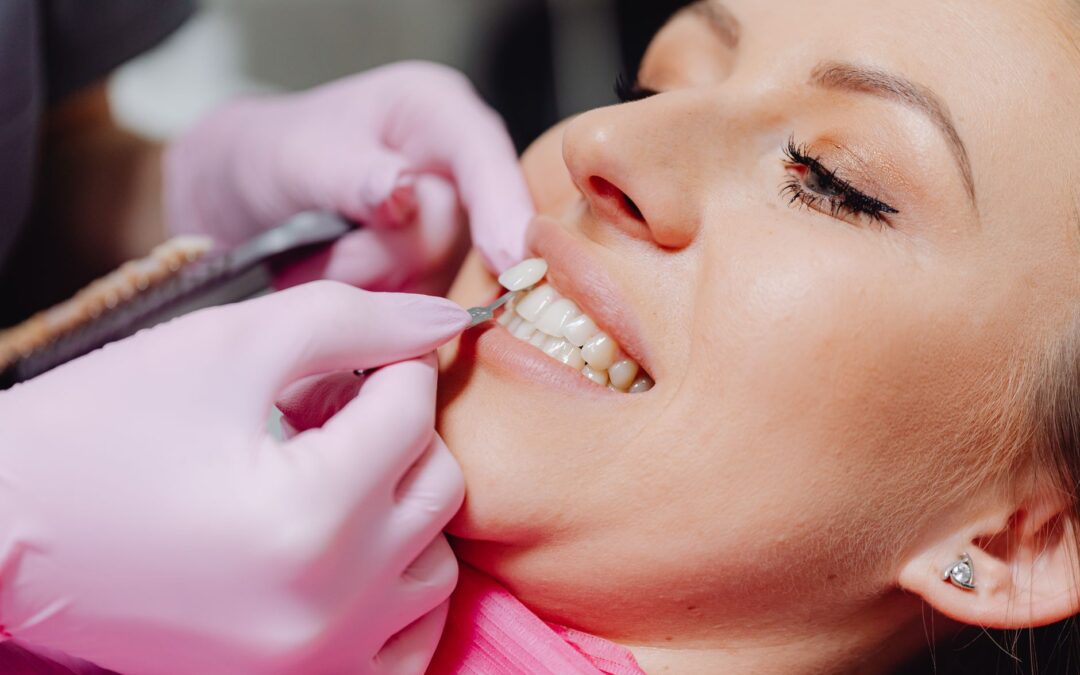
Prepless veneers are ultra-thin porcelain or composite shells bonded to the front surface of teeth with little to no enamel removal. They are also called no-prep veneers, minimal-prep veneers, or no-drill veneers. For the right candidate, they can improve tooth color, shape, size, and symmetry while preserving more natural tooth structure than traditional veneers.
Prepless veneers are not right for every smile. They work best when teeth are healthy, already close to the right size and position, and need mild to moderate cosmetic improvement. If your teeth are crowded, severely discolored, too large, protruding, heavily filled, cracked, or affected by gum disease, another option may create a better and longer-lasting result.
At Vaksman Dental Group in South San Francisco, prepless veneer treatment is planned around your enamel, bite, gum health, tooth shape, smile goals, and whether adding a thin layer to the front of your teeth will look natural.
Key Takeaways
- Prepless veneers are thin cosmetic shells bonded to teeth with little to no enamel removal.
- They are more conservative than traditional veneers, but they are not ideal for every patient.
- Good candidates usually have healthy teeth, enough enamel, mild cosmetic concerns, and teeth that are not too crowded or bulky.
- Prepless veneers may be reversible in select cases, but “no-prep” does not always mean risk-free or completely reversible.
- Prepless veneers often cost about $800–$2,000+ per tooth, depending on material, provider, location, and case complexity.
- Lumineers are one branded type of prepless veneer, but not all prepless veneers are Lumineers.
- A cosmetic dental consultation is needed to know whether prepless veneers, traditional veneers, bonding, whitening, Invisalign, or crowns are right for your smile.
What Are Prepless Veneers?
Prepless veneers are very thin, custom-made veneers designed to cover the front surface of teeth without the same level of enamel removal required for traditional porcelain veneers. Traditional veneers usually require reshaping the tooth surface so the veneer can fit naturally. Prepless veneers are made thin enough to bond directly to the tooth surface in carefully selected cases.
Prepless veneers may improve:
- Mild discoloration
- Small chips
- Minor gaps
- Slightly uneven edges
- Teeth that look small or narrow
- Mild asymmetry
- Smile brightness
- Tooth shape and proportion
Because prepless veneers add material to the tooth instead of creating more space by removing enamel, case selection is very important. When used on the right teeth, they can look natural and conservative. When used on the wrong teeth, they can look bulky or over-contoured.
Are Prepless Veneers Worth It?
Prepless veneers can be worth it if your teeth are healthy, well-aligned, and need cosmetic improvement without major reshaping. They may preserve more enamel, reduce the need for anesthesia, and lower the risk of post-treatment sensitivity compared with more aggressive veneer preparation.
They may not be worth it if your teeth need major changes in shape, position, color, or structure. A dentist should evaluate your teeth, gums, enamel, bite, and smile goals before recommending prepless veneers.
Prepless Veneers vs. Traditional Veneers
| Feature | Prepless Veneers | Traditional Veneers |
| Enamel removal | Little to none in many cases | Usually some enamel removal |
| Tooth reshaping | Minimal | More common |
| Anesthesia | Often not needed | May be needed |
| Reversibility | May be reversible in select cases | Usually irreversible |
| Thickness | Ultra-thin | Slightly thicker |
| Best for | Mild cosmetic changes | Moderate to more dramatic changes |
| Risk of bulky look | Higher if teeth are already large or crowded | Lower when properly planned because space is created |
| Cost range | About $800–$2,000+ per tooth | About $1,000–$2,500+ per tooth |
| Longevity | Often 10–20 years with care | Often 10–20 years with care |
Both options can create beautiful results. The better choice depends on whether your smile needs subtle enhancement or more significant reshaping.
How Much Do Prepless Veneers Cost?
Prepless veneers often cost about $800–$2,000+ per tooth. The final cost depends on the number of veneers, material, lab quality, case complexity, dentist experience, geographic location, and whether additional dental treatment is needed first.
| Number of Prepless Veneers | Estimated Cost Range |
| 4 veneers | $3,200–$8,000+ |
| 6 veneers | $4,800–$12,000+ |
| 8 veneers | $6,400–$16,000+ |
| 10 veneers | $8,000–$20,000+ |
| 12 veneers | $9,600–$24,000+ |
These are general educational ranges, not a guaranteed quote. Your actual cost may be higher or lower after a cosmetic consultation.
What Is Included in Prepless Veneer Cost?
A prepless veneer estimate may include:
- Cosmetic consultation
- Dental exam
- Digital scans or impressions
- Smile design planning
- Shade selection
- Lab fabrication
- Veneer bonding
- Bite adjustment
- Follow-up visit
- Maintenance instructions
Some offices may bill X-rays, whitening, temporary mockups, gum treatment, or night guards separately. Before starting treatment, ask whether your estimate includes all visits, lab fees, adjustments, and follow-up care.
Who Is a Good Candidate for Prepless Veneers?
You may be a good candidate for prepless veneers if your teeth are already healthy, properly positioned, and close to the right size and shape.
Good candidates often have:
- Healthy teeth and gums
- Mild discoloration
- Small chips
- Minor gaps
- Slightly uneven tooth edges
- Teeth that are a little small or narrow
- Enough enamel for bonding
- Good oral hygiene
- No major bite issues
- Realistic cosmetic goals
Prepless veneers are especially useful when adding a thin layer of material improves the smile without making the teeth look too large.
Who Is Not a Good Candidate for Prepless Veneers?
Prepless veneers may not be ideal if you have:
- Severe crowding
- Teeth that already look bulky or protrusive
- Large teeth that do not need added volume
- Severe discoloration that needs more masking
- Active gum disease
- Untreated cavities
- Weak or heavily filled teeth
- Cracked or structurally damaged teeth
- Severe grinding or clenching
- Major bite problems
- Not enough enamel for bonding
- Unrealistic expectations
In these cases, your dentist may recommend traditional dental veneers, Invisalign, teeth whitening, cosmetic bonding, dental crowns, gum treatment, or a night guard before cosmetic treatment.
Pros and Cons of Prepless Veneers
| Pros | Cons |
| Preserves more natural tooth structure | Not suitable for every patient |
| Little to no drilling in many cases | Can look bulky if teeth are not ideal candidates |
| Often no anesthesia needed | May not mask severe discoloration as well |
| May cause less post-treatment sensitivity | Limited ability to change tooth position or size |
| Can look very natural in the right case | May still require minor enamel adjustment |
| May be reversible in select cases | Usually considered cosmetic and not covered by insurance |
Prepless veneers can be a conservative cosmetic option, but they should be planned carefully. “No-drill” does not automatically mean “best.”
Are Prepless Veneers the Same as Lumineers?
Lumineers are a branded type of ultra-thin veneer often marketed as a no-prep or minimal-prep option. Prepless veneers is a broader category that can include Lumineers and other thin porcelain or composite veneer systems.
In simple terms:
- Lumineers are a specific brand.
- Prepless veneers are a treatment category.
- No-prep veneers and minimal-prep veneers are commonly used terms for conservative veneer techniques.
Your dentist may recommend Lumineers, another porcelain system, composite veneers, or traditional veneers depending on your teeth and goals.
Prepless Veneers vs. Composite Bonding
| Feature | Prepless Veneers | Composite Bonding |
| Material | Usually porcelain or ultra-thin ceramic | Tooth-colored resin |
| Cost | Higher | Lower |
| Stain resistance | Better, especially porcelain | Lower |
| Longevity | Often longer | Usually shorter |
| Repairability | May require replacement | Easier to repair |
| Best for | Smile makeover, shape, and color changes | Small chips, minor gaps, quick repairs |
Composite bonding may be a good alternative if you want a lower-cost or more conservative solution for small cosmetic issues. Prepless veneers may be better for a longer-lasting and more polished smile makeover.
Prepless Veneers vs. Removable Snap-On Veneers
Prepless veneers are bonded to your teeth by a dentist. Removable snap-on veneers are temporary cosmetic appliances that cover the teeth but are not permanently bonded.
| Feature | Prepless Veneers | Removable Snap-On Veneers |
| Attached to teeth | Yes, bonded by dentist | No, removable |
| Custom dental treatment | Yes | Usually cosmetic appliance |
| Natural feel | More natural | Bulkier |
| Eating function | Better | Limited |
| Longevity | Longer | Shorter |
| Best for | Long-term cosmetic improvement | Temporary appearance change |
Snap-on veneers may be cheaper, but they do not replace professional cosmetic dentistry and may not look or feel as natural.
What Is the Procedure for Prepless Veneers?
The prepless veneer process usually involves several steps.
1. Consultation and Smile Design
Your dentist evaluates your teeth, gums, bite, enamel, smile line, facial features, and goals. Photos, scans, or a digital smile design may be used to plan the result.
2. Oral Health Check
Before veneers, your dentist checks for cavities, gum disease, tooth wear, cracks, bite issues, and grinding. Cosmetic work should be placed on a healthy foundation.
3. Digital Scan or Impression
A scan or impression is taken so the veneers can be made to fit your teeth and smile plan.
4. Shade and Shape Selection
You and your dentist choose a shade and shape that fits your face, gumline, and natural smile. The goal is a natural-looking result, not teeth that are too white or bulky.
5. Veneer Fabrication
The veneers are made by a dental lab or through a digital workflow depending on the case.
6. Bonding Appointment
Your dentist checks the fit, color, and shape before bonding the veneers to your teeth. The veneers are attached using dental bonding material and cured into place.
7. Bite Check and Final Polish
Your dentist checks your bite and makes small adjustments if needed. You will receive care instructions and may be advised to wear a night guard if you grind your teeth.
Do Prepless Veneers Hurt?
Prepless veneers are usually comfortable because little or no enamel is removed in many cases. Local anesthesia may not be needed. Some patients may still feel mild sensitivity after bonding, but this is usually temporary.
If your case needs enamel reshaping, gum treatment, or other dental work first, comfort and anesthesia needs may vary.
How Long Do Prepless Veneers Last?
Prepless veneers can last 10–20 years with proper care, depending on material, bite, oral hygiene, grinding habits, and regular dental visits.
To help them last longer:
- Brush twice daily.
- Floss every day.
- Avoid biting hard objects.
- Do not use your teeth as tools.
- Wear a night guard if you grind or clench.
- Keep regular dental cleanings.
- Avoid chewing ice, pens, or fingernails.
- Treat gum inflammation early.
Like all veneers, prepless veneers are not permanent for life. They may eventually need repair or replacement.
Can Prepless Veneers Be Removed?
Prepless veneers may be removable in some cases if little or no enamel was changed. However, reversibility depends on how the veneers were placed, whether any enamel was adjusted, the bonding process, and the condition of the teeth underneath.
Even when no enamel is removed, removing bonded veneers should be done by a dentist. Do not assume that “prepless” always means completely reversible.
What Are the Disadvantages of Prepless Veneers?
The main disadvantages are case selection and bulk. Because prepless veneers add material without removing much tooth structure, they can make teeth look too thick if the teeth are already large, crowded, or protrusive.
Possible disadvantages include:
- Not ideal for severe discoloration
- Not ideal for major crowding
- Not ideal for large or bulky teeth
- Limited ability to change tooth position
- May not correct bite problems
- Can look too thick if poorly planned
- May still require minor enamel adjustment
- Usually not covered by insurance
A cosmetic consultation and smile design process help determine whether prepless veneers will look natural on your teeth.
Are Prepless Veneers Covered by Insurance?
Prepless veneers are usually considered cosmetic, so dental insurance often does not cover them. If a tooth needs structural repair, a different restoration such as a crown may have different coverage depending on the insurance plan.
Patients often pay for prepless veneers using:
- Healthcare financing
- CareCredit
- In-house payment options
- Credit cards
- Phased treatment
- Membership savings plans when available
Vaksman Dental Group can review available payment options before treatment begins.
Are Prepless Veneers Right for a Full Smile Makeover?
Prepless veneers can be used for a full smile makeover when the patient is a good candidate. Many smile makeovers involve 6 to 10 veneers on the upper front teeth, but some patients need more depending on how many teeth show when they smile and speak.
Prepless veneers may work well for a full smile makeover if your teeth are:
- Healthy
- Slightly small
- Mildly discolored
- Not crowded
- Not protrusive
- Properly aligned
- Strong enough for bonding
If your teeth need major reshaping, traditional veneers or a combination of treatments may create a better result.
Prepless Veneers in South San Francisco
If you are searching for prepless veneers in South San Francisco, Vaksman Dental Group can evaluate whether no-prep, minimal-prep, traditional porcelain veneers, bonding, whitening, Invisalign, or crowns are the right option for your smile.
Vaksman Dental Group is located at:
1241 Mission Road
South San Francisco, CA 94080
The office serves patients in South San Francisco and nearby Peninsula communities, including San Bruno, Daly City, Brisbane, Colma, Pacifica, Millbrae, and Burlingame.
Schedule a cosmetic dentistry consultation to learn whether prepless veneers are right for your smile.
Frequently Asked Questions
Are prepless veneers worth it?
Prepless veneers can be worth it if your teeth are healthy, well-aligned, and need mild cosmetic improvement. They may preserve more enamel than traditional veneers, but they are not ideal for every smile.
How much do prepless veneers cost?
Prepless veneers often cost about $800–$2,000+ per tooth. The final cost depends on the number of veneers, material, lab work, dentist experience, case complexity, and location.
How long do prepless veneers last?
Prepless veneers can last 10–20 years with good care. Longevity depends on oral hygiene, bite, grinding habits, material quality, and regular dental maintenance.
What are the disadvantages of prepless veneers?
Prepless veneers may not work well for crowded, protrusive, large, severely stained, damaged, or heavily filled teeth. They can also look bulky if the case is not planned carefully.
Are prepless veneers reversible?
They may be reversible in select cases when no enamel is removed. However, reversibility depends on bonding, tooth condition, and whether any adjustments were made. A dentist should evaluate this before treatment.
Are Lumineers the same as prepless veneers?
Lumineers are a branded type of ultra-thin veneer often used for no-prep or minimal-prep cases. Prepless veneers is a broader category that can include Lumineers and other thin veneer systems.
Do prepless veneers damage teeth?
Prepless veneers are designed to preserve more natural tooth structure than traditional veneers. However, they still involve bonding material to the teeth and may require minor adjustments in some cases.
Do prepless veneers look bulky?
They can look bulky if the teeth are already large, crowded, or protrusive. They look best when teeth are slightly small, well-aligned, and appropriate for added thickness.
Can prepless veneers fix crooked teeth?
Prepless veneers may improve the appearance of slight unevenness, but they do not move teeth. Invisalign or orthodontic treatment may be better for significant crowding or bite issues.
Are prepless veneers better than traditional veneers?
Not always. Prepless veneers are more conservative, but traditional veneers may be better for more dramatic color, shape, or alignment changes. The best option depends on your teeth and goals.
Medical Disclaimer
This article is for educational purposes only and does not replace a dental diagnosis, cosmetic consultation, or personalized treatment plan. Prepless veneer candidacy depends on your oral health, enamel, bite, tooth position, gum health, smile goals, and exam findings.