
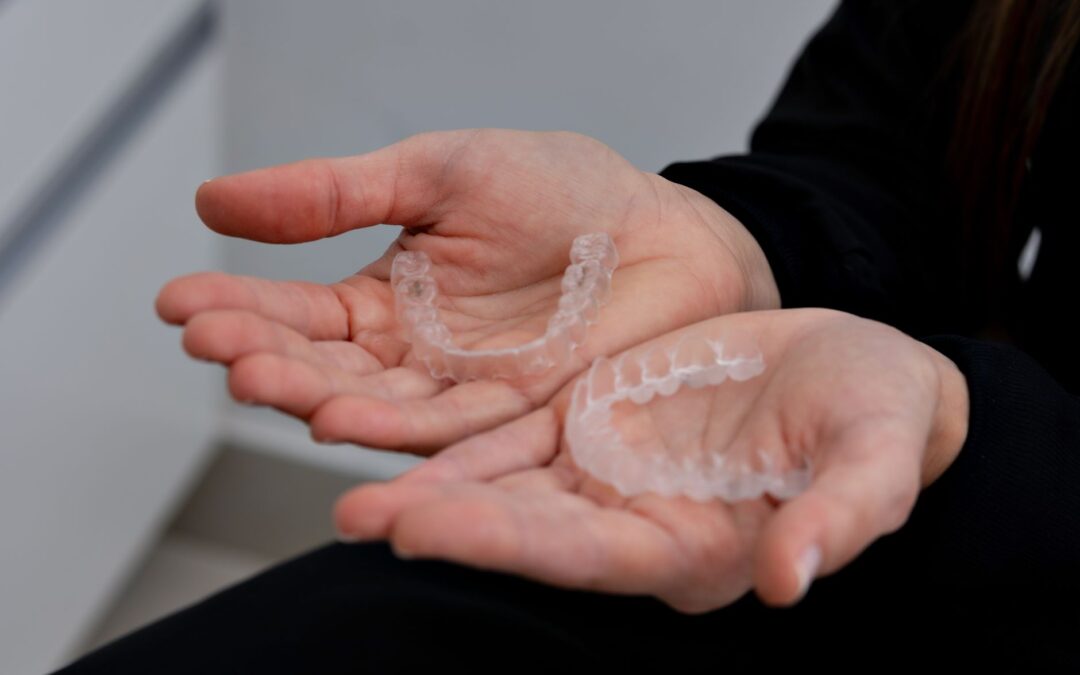
Invisalign for teens is a clear aligner treatment designed to straighten teenage teeth without metal brackets and wires. It uses a series of removable, custom-made trays that gradually move teeth into better alignment. For many teenagers, Invisalign can correct crowding, spacing, and mild to moderate bite issues while offering a more discreet alternative to traditional braces.
The most important factor is consistency. Invisalign only works when the aligners are worn as directed, usually 20 to 22 hours per day. A motivated teen who remembers to wear the trays, clean them, and put them back in after meals may be a strong candidate. A teen who frequently loses items, forgets routines, or does not want to wear aligners may do better with braces.
At Vaksman Dental Group in South San Francisco, Invisalign treatment for teens is planned around tooth development, bite alignment, jaw growth, lifestyle, oral hygiene, compliance, and long-term stability.
Key Takeaways
- Invisalign for teens uses removable clear aligners to straighten teeth without metal brackets.
- Teens usually need to wear aligners 20 to 22 hours per day for predictable results.
- Invisalign Teen may include compliance indicators, eruption tabs, and replacement aligners.
- Invisalign can help with crowding, spacing, overbite, underbite, crossbite, and open bite in mild to moderate cases.
- Braces may be better for severe bite problems, complex tooth movement, or teens who may not wear aligners consistently.
- Invisalign for teens often costs about $3,000 to $8,000 nationally, depending on complexity, treatment length, location, and insurance.
- Retainers are needed after Invisalign to help prevent teeth from shifting back.
What Is Invisalign for Teens?
Invisalign for teens is an orthodontic clear aligner system made for growing patients. Instead of brackets and wires, Invisalign uses a series of transparent plastic trays that fit over the teeth and apply controlled pressure to move them over time.
The aligners are removable, which means teens can take them out for:
- Eating
- Drinking anything other than water
- Brushing
- Flossing
- Sports, when appropriate
- Playing certain musical instruments
- Special events, when approved by the dentist
Because the trays are removable, Invisalign gives teens more flexibility than braces. That flexibility also requires responsibility. If the trays are not worn enough, treatment may take longer or become less predictable.
How Does Invisalign for Teens Work?
Invisalign for teens works by using a digital treatment plan and a sequence of custom aligners. Each aligner set moves the teeth slightly. After wearing one set for the prescribed amount of time, the teen switches to the next set.
The process usually includes:
- Invisalign consultation and orthodontic evaluation
- Digital scans or impressions
- Bite and tooth movement planning
- Custom aligner fabrication
- Wearing aligners 20 to 22 hours per day
- Switching trays as directed
- Progress visits to monitor movement
- Refinements, if needed
- Retainers after treatment
Your dentist will explain how often your teen should change aligners and how often progress visits are needed.
Invisalign Teen vs. Regular Invisalign
Invisalign Teen works similarly to regular Invisalign, but it may include features designed for teenage patients and growing mouths.
| Feature | Invisalign Teen | Regular Invisalign |
| Clear aligners | Yes | Yes |
| Removable trays | Yes | Yes |
| Compliance indicators | Often included | Usually not included |
| Eruption tabs | May be included | Usually not needed |
| Replacement aligners | May be included depending on plan | Varies |
| Designed for growing patients | Yes | Mostly adults or older teens |
| Best for | Responsible teens with suitable orthodontic needs | Adults and older teens with suitable cases |
What Are Compliance Indicators?
Compliance indicators are small blue marks on some Invisalign Teen aligners. They fade with wear, helping parents and dental providers estimate whether the aligners are being worn consistently.
They are not meant to punish teens. They are a practical tool to support accountability and help identify problems early. If the indicators are not fading as expected, the dental team can talk with the teen and parent before treatment gets off track.
What Are Eruption Tabs?
Eruption tabs are special spaces built into some Invisalign Teen aligners. They help leave room for teeth that are still coming in, such as second molars.
This matters because many teens are still growing. Invisalign Teen can be planned around developing teeth in a way that adult aligners may not need to consider.
What Dental Problems Can Invisalign for Teens Fix?
Invisalign for teens can help correct many common orthodontic issues, depending on severity and compliance.
Invisalign may help with:
- Crowded teeth
- Crooked teeth
- Gaps between teeth
- Mild to moderate overbite
- Mild to moderate underbite
- Mild to moderate crossbite
- Open bite
- Rotated teeth
- Teeth that shifted after earlier orthodontic treatment
More complex bite problems, severe crowding, impacted teeth, jaw growth concerns, or skeletal discrepancies may require braces, early orthodontic treatment, specialist care, or a combined approach.
Is Invisalign Worth It for Teenagers?
Invisalign can be worth it for teenagers who are responsible enough to wear the trays consistently and whose orthodontic needs are appropriate for clear aligner treatment.
It may be worth it if your teen:
- Wants a discreet treatment option
- Feels self-conscious about braces
- Can follow daily routines
- Plays sports or musical instruments
- Has good brushing and flossing habits
- Understands the importance of wearing aligners
- Has mild to moderate orthodontic issues
- Is motivated to complete treatment
It may not be worth it if your teen frequently loses items, forgets routines, snacks often without replacing trays, or does not want to participate in treatment. In those cases, braces may be more predictable because they are fixed to the teeth.
Invisalign for Teens vs. Braces
| Feature | Invisalign for Teens | Braces |
| Appearance | Clear and discreet | Visible brackets and wires |
| Removable | Yes | No |
| Eating restrictions | Fewer restrictions because trays come out | More restrictions with sticky, hard, or crunchy foods |
| Brushing and flossing | Easier because trays are removed | More difficult around brackets and wires |
| Compliance needed | High | Lower because braces stay on |
| Sports | Often convenient with mouthguard planning | Brackets may irritate lips during impact |
| Instruments | Often easier for some musicians | Brackets can affect comfort |
| Severe cases | Not always ideal | Often better for complex movement |
| Lost appliance risk | Aligners can be misplaced | Braces are fixed |
| Checkups | Needed to monitor progress | Needed for adjustments |
Both Invisalign and braces can work well. The better choice depends on your teen’s orthodontic needs, maturity, lifestyle, and ability to follow instructions.
Invisalign for Teens Cost
The cost of Invisalign for teens often falls in a similar range to braces. Nationally, teen orthodontic treatment may commonly range from about $3,000 to $8,000, depending on case complexity, provider, location, treatment length, insurance, and whether refinements are needed.
| Treatment Option | Typical National Range | Average Treatment Length |
| Traditional metal braces | $3,000–$7,000 | 18–36 months |
| Ceramic braces | $4,000–$8,000 | 18–36 months |
| Invisalign for teens | $3,000–$8,000 | 12–24 months, varies by case |
These are general educational ranges, not guaranteed fees. A personalized estimate requires an exam, scans, and a treatment plan.
Does Insurance Cover Invisalign for Teens?
Many dental or orthodontic insurance plans cover Invisalign similarly to braces when orthodontic benefits are included. Coverage depends on the plan, deductible, lifetime orthodontic maximum, age limits, waiting periods, and whether treatment is considered eligible.
Before starting treatment, ask the dental office to check:
- Orthodontic benefits
- Lifetime maximums
- Deductibles
- Age limits
- Waiting periods
- Invisalign coverage
- Payment plan options
- HSA or FSA eligibility
Vaksman Dental Group can help review insurance benefits and explain estimated out-of-pocket costs before treatment begins.
What Age Can Teens Start Invisalign?
Many teens start Invisalign once most permanent teeth have erupted, often around ages 12 to 14, but timing varies. Some younger patients may qualify for Invisalign First or early orthodontic treatment, while older teens may qualify for standard Invisalign or Invisalign Teen.
Age alone is not the deciding factor. The dentist will evaluate:
- Permanent tooth eruption
- Jaw growth
- Bite development
- Crowding or spacing
- Oral hygiene
- Compliance readiness
- Treatment goals
A consultation is the best way to determine whether your teen is ready for Invisalign.
How Long Does Invisalign for Teens Take?
Invisalign for teens may take 6 to 24 months or longer, depending on the complexity of the case and how consistently the aligners are worn.
Mild spacing or crowding may take less time. More complex movement, bite correction, refinements, or inconsistent wear can extend treatment.
Treatment may take longer if:
- Aligners are not worn 20 to 22 hours per day
- Trays are lost or damaged
- Teeth do not track as expected
- The teen forgets to switch aligners on schedule
- Refinements are needed
- Bite issues are more complex than expected
Will My Teen Actually Wear the Aligners?
This is one of the most important questions parents should ask. Invisalign success depends heavily on the teen’s willingness to wear the aligners consistently.
Ask yourself:
- Did my teen ask for Invisalign, or am I pushing it?
- Does my teen understand that aligners only work when worn?
- Will my teen put the trays back in after meals?
- Does my teen often lose retainers, earbuds, phones, or school items?
- Can my teen follow daily hygiene routines?
- Is my teen comfortable being responsible for treatment?
Motivated teens can do very well with Invisalign. Teens who are not interested or not ready may do better with braces.
Can Teens Eat Normally with Invisalign?
Yes. Teens can eat normally with Invisalign because the aligners are removed during meals. This is one of the biggest advantages compared with braces.
Teens should remove aligners before eating or drinking anything other than water. After eating, they should brush or rinse before putting the trays back in.
Good habits include:
- Keeping the aligner case nearby
- Never wrapping trays in napkins
- Brushing after meals when possible
- Rinsing before replacing aligners
- Avoiding sugary drinks while trays are in
- Wearing trays immediately after eating
What Happens If My Teen Loses an Aligner?
Lost aligners are common, especially for teens. Invisalign Teen may include replacement aligners depending on the plan.
If your teen loses an aligner:
- Contact the dental office.
- Do not skip ahead unless instructed.
- Keep the previous aligner as a backup.
- Follow the dentist’s instructions.
- Use the aligner case every time trays are removed.
Losing trays repeatedly can delay treatment and increase costs, so building a consistent routine is important.
Can Teens Play Sports with Invisalign?
Yes. Invisalign can be convenient for teen athletes because the aligners are removable. For contact sports, a protective sports mouthguard may still be recommended.
Your teen should ask the dentist whether to remove aligners during sports and what type of mouthguard is appropriate. Invisalign trays should not be used as a sports mouthguard.
Can Teens Play Instruments with Invisalign?
Many teens who play instruments find Invisalign easier than braces because there are no brackets or wires. However, some instruments may feel different at first while the teen adjusts to aligners.
The dentist can explain when aligners should be worn or removed for specific activities.
Does Invisalign Hurt?
Invisalign should not be painful, but teens may feel pressure or soreness when starting a new set of aligners. This usually means the trays are moving the teeth.
Mild discomfort often improves after a few days. Severe pain, sharp edges, gum irritation, or a tray that does not fit should be reported to the dental office.
What Are Invisalign Attachments?
Attachments are small tooth-colored shapes bonded to teeth to help aligners grip and move teeth more effectively. They are common in Invisalign treatment and may be needed for certain movements.
Attachments are temporary and are removed after treatment. They can make trays feel tighter but often improve treatment precision.
What Happens After Invisalign?
After Invisalign treatment, retainers are needed to help keep teeth in their new positions. Without retainers, teeth can shift back over time.
Your teen may need:
- Clear removable retainers
- Fixed bonded retainers
- Nighttime retainer wear
- Periodic retainer checks
- Replacement retainers if lost or damaged
Retention is not optional. It is part of keeping the result.
Invisalign for Teens in South San Francisco
If you are searching for Invisalign for teens in South San Francisco, Vaksman Dental Group can evaluate your teen’s teeth, bite, growth stage, oral hygiene, and readiness for clear aligner treatment.
Vaksman Dental Group is located at:
1241 Mission Road
South San Francisco, CA 94080
The office serves families in South San Francisco and nearby Peninsula communities, including San Bruno, Daly City, Brisbane, Colma, Pacifica, Millbrae, and Burlingame.
Frequently Asked Questions
Is Invisalign worth it for teenagers?
Invisalign can be worth it for teenagers who are responsible enough to wear aligners 20 to 22 hours per day and whose orthodontic needs are appropriate for clear aligner treatment. Braces may be better for teens who may not wear removable trays consistently.
What age can teens start Invisalign?
Many teens start Invisalign around ages 12 to 14 once most permanent teeth have erupted, but timing varies. A dental or orthodontic evaluation is needed to determine whether your teen is ready.
Is Invisalign better than braces for teens?
Invisalign is better for some teens because it is clear, removable, and easier for eating and brushing. Braces may be better for severe cases, complex bite issues, or teens who may not wear aligners consistently.
How long does Invisalign for teens take?
Invisalign for teens may take 6 to 24 months or longer depending on the complexity of the case, bite correction needs, aligner wear time, and whether refinements are needed.
How much does Invisalign for teens cost?
Invisalign for teens commonly ranges from about $3,000 to $8,000 nationally, depending on case complexity, treatment length, provider, location, insurance, and whether refinements are needed.
Does insurance cover Invisalign for teens?
Many orthodontic insurance plans cover Invisalign similarly to braces when orthodontic benefits are included. Coverage depends on deductibles, lifetime maximums, age limits, and plan rules.
Can teens eat with Invisalign?
Teens should remove Invisalign aligners before eating. Because the trays come out, teens can usually eat their normal foods, then brush or rinse before putting the aligners back in.
What happens if my teen loses an aligner?
Contact the dental office as soon as possible. Your teen may be told to wear the previous aligner, move to the next one, or order a replacement depending on the treatment plan.
Can Invisalign fix an overbite in teens?
Invisalign may help correct mild to moderate overbite in some teens. Severe bite problems may require braces, additional orthodontic appliances, or specialist care.
Do teens need retainers after Invisalign?
Yes. Retainers are needed after Invisalign to help prevent teeth from shifting back. Your dentist will explain how often your teen should wear retainers after treatment.
Medical Disclaimer
This article is for educational purposes only and does not replace a dental or orthodontic diagnosis, consultation, or personalized treatment plan. Invisalign for teens depends on tooth development, bite, jaw growth, oral hygiene, compliance, symptoms, and exam findings.
Related reading and services: Invisalign system approaches teen treatment · National Institutes of Health · Invisalign consultations · orthodontic evaluations