
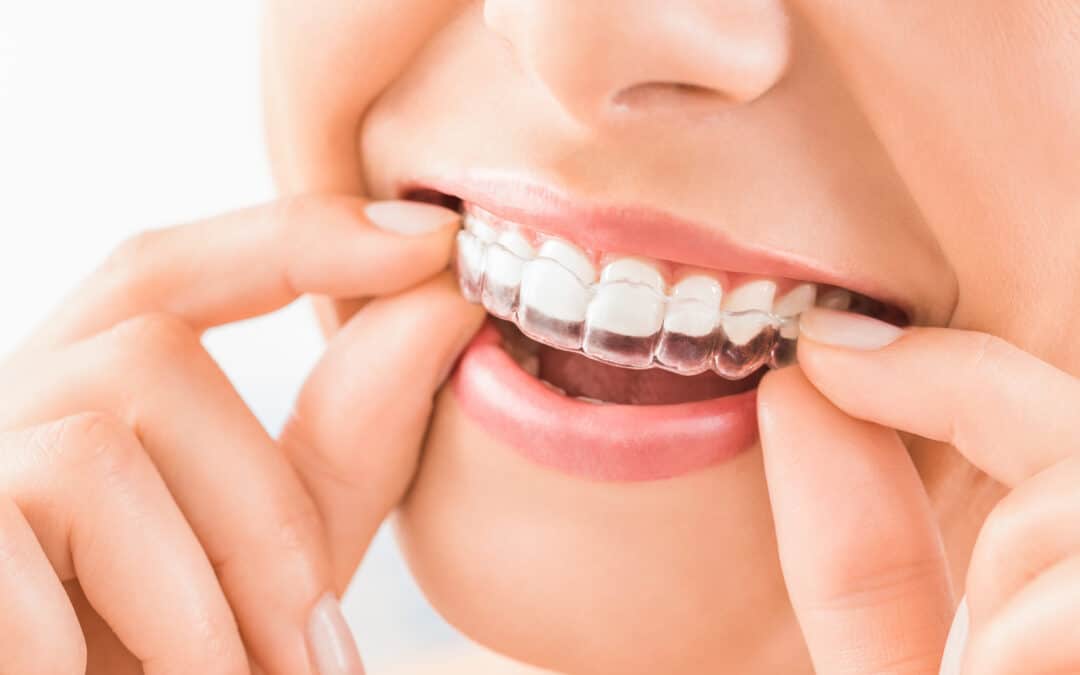
Invisalign uses clear, removable aligners to gradually straighten your teeth, and it’s never too late to start, even as an adult. If your teeth aren’t as straight as you’d like, here are four things every patient in South San Francisco should know before beginning treatment.
Key Takeaways
- Invisalign uses smooth, removable clear aligners, not metal brackets or wires: making treatment more comfortable and convenient than traditional braces.
- Treatment typically takes 6 to 18 months, about the same as braces, as long as aligners are worn 20 to 22 hours per day.
- If your dental insurance covers traditional braces, it most likely covers Invisalign too, and flexible payment plans can help cover any remaining cost.
- Invisalign treats a wide range of issues beyond crooked teeth, including overbite, underbite, crossbite, crowding, and gaps.
- Aligners and retainers serve different purposes. Invisalign moves teeth during treatment, while a retainer holds them in place afterward.
First, a Quick Clarification: Aligners vs. Retainers
People often use “Invisalign” and “retainer” interchangeably, but they do two different jobs:
- Invisalign aligners move your teeth. Each set is slightly different and gently shifts your teeth toward a straighter position over the course of treatment.
- A retainer holds your teeth in place after treatment is finished, so they don’t drift back.
So Invisalign is the treatment that does the straightening, and a retainer is what keeps your results stable once you’re done. With that cleared up, here’s what to know about Invisalign in South San Francisco.
1. Invisalign Is Comfortable
Traditional braces are made of metal brackets and wires. Invisalign aligners are made of smooth, clear plastic instead, so there are no sharp edges or wires poking the inside of your mouth.
Because the aligners are removable, you can take them out to eat, drink, and brush your teeth. For most people, that adds a real sense of comfort and convenience throughout treatment.
2. Treatment Usually Takes About as Long as Braces
A common myth is that Invisalign is slower or less effective than metal braces. That’s simply not true. In most cases, it takes about the same amount of time to straighten your teeth.
Typical treatment runs 6 to 18 months, depending on how complex your case is and how consistently you wear your aligners. Wearing them about 20 to 22 hours a day is key to staying on schedule.
3. It May Be More Affordable Than You Think
Another myth is that dental insurance never covers Invisalign. In reality, the general rule of thumb is that if your plan covers traditional braces, it most likely covers Invisalign too.
Invisalign can cost a bit more than metal braces, so you may be responsible for part of the total. A practice that performs a lot of Invisalign in South San Francisco and across the Peninsula should be able to offer flexible payment plan options to make treatment manageable.
4. Invisalign Treats More Than Just Crooked Teeth
Invisalign isn’t only for mild cases of crooked teeth. It can address a range of issues, including:
- Overcrowding of teeth
- Overbite
- Underbite
- Crossbite
- Gaps between teeth
That’s why a consultation matters: you won’t know for certain whether Invisalign is right for you until a dentist evaluates your bite and alignment. It’s one of several orthodontic treatment options we can walk you through.
Frequently Asked Questions
What’s the difference between Invisalign and a retainer?
Invisalign aligners actively move your teeth into a straighter position. A retainer is worn after treatment to hold your teeth in their new position so they don’t shift back.
Is Invisalign covered by insurance in South San Francisco?
Often, yes. If your dental plan covers traditional braces, it typically covers Invisalign as well. Coverage varies, so it’s worth confirming the details with our team.
How long does Invisalign take to work?
Most cases take about 6 to 18 months, depending on complexity and how consistently you wear your aligners each day.
Can Invisalign fix an overbite or gaps?
Yes. Invisalign can treat overbite, underbite, crossbite, crowding, and gaps in many cases. A consultation will confirm whether it’s the right fit for you.
Ready for your next visit to a South San Francisco dentist?
Book Now