
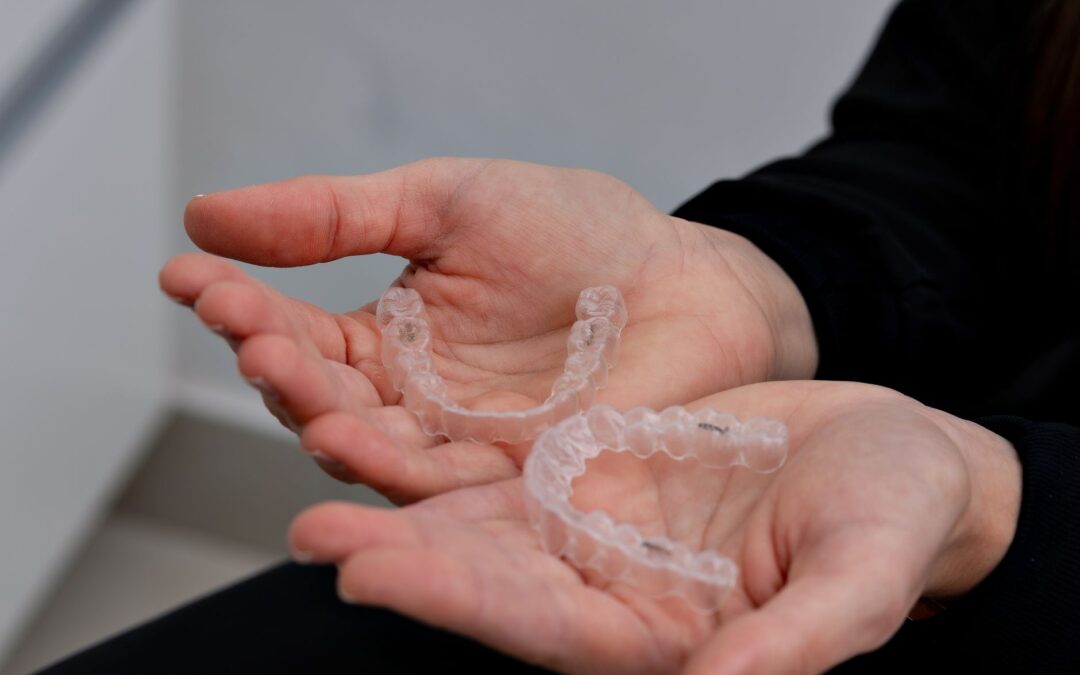
Yes, Invisalign can fix many overbites — but how well it works depends on the severity and type of your bite problem. Mild to moderate overbites respond well to clear aligner treatment. Severe skeletal cases may still need traditional braces, jaw surgery, or a combination approach. Here is what you actually need to know before booking a consultation.
Key Takeaways
- Invisalign corrects most mild to moderate overbites using precision attachments and bite-adjustment features built into the aligner series.
- Severe skeletal overbites (where jaw bones are misaligned, not just teeth) may require braces or oral surgery in addition to aligners.
- Treatment typically takes 12 to 24 months for adults and can be shorter for teens whose jaws are still developing.
- Success depends heavily on wearing aligners 20 to 22 hours a day, every day — consistency is the single biggest factor patients control.
- A dental exam and digital X-rays are the only reliable way to find out which approach is right for your bite.
What exactly is an overbite?
An overbite means your upper front teeth overlap your lower front teeth more than they should. A small amount of overlap (about 1 to 2 mm, or 10 to 20 percent) is completely normal. Problems start when that overlap grows larger.
There are two distinct types, and the distinction matters a lot for treatment planning:
- Dental overbite: The jaw bones sit in a reasonable position, but the teeth themselves are tipped or crowded in a way that creates excess overlap. This is the most common type, and it responds very well to Invisalign.
- Skeletal overbite: The upper and lower jaw bones are genuinely misaligned — the upper jaw protrudes forward, or the lower jaw is underdeveloped. Mild skeletal cases can still be improved with aligners, but severe ones usually need additional treatment.
According to the American Dental Association, malocclusion (misaligned bite) is one of the most common dental issues in the U.S. and can contribute to wear on tooth enamel, jaw joint stress, and difficulty chewing if left untreated.
How does Invisalign actually move teeth to correct an overbite?
This is where the engineering gets interesting. Invisalign aligners do not just push teeth into a straighter line — they can apply controlled, three-dimensional forces to shift teeth vertically (up and down) and change the angle at which teeth sit in the jaw.
For overbite correction, Invisalign uses several tools built into the treatment plan:
- Precision bite ramps: Small ridges molded into the aligner that hold the lower teeth slightly forward, gradually training the bite to close in a better position.
- Attachments (buttons): Small tooth-colored bumps bonded to specific teeth that give the aligners a grip point for more complex movements — like intruding (pushing up) the upper front teeth.
- Elastics: Many Invisalign overbite cases also use small rubber bands hooked between upper and lower attachments, applying additional forward or backward force on the jaw. This is similar to what braces use.
- Mandibular advancement (Invisalign Mandibular Advancement feature): Available in teen cases, this uses precision wings built into the aligner to encourage the lower jaw forward as it grows — taking advantage of a teenager’s still-developing jaw to address mild skeletal issues without surgery.
The aligners are swapped out every one to two weeks, each set moving teeth a fraction of a millimeter. Over the series, those tiny shifts add up to meaningful bite correction.
What kinds of overbites does Invisalign fix best?
Invisalign tends to work particularly well for:
- Dental overbites of any severity (mild, moderate, or significant — as long as the jaw bones themselves are not the root cause).
- Overbites combined with crowding or spacing. Many patients who want their teeth straightened also have an overbite. Invisalign addresses both in the same treatment plan.
- Mild to moderate skeletal overbites in teens whose jaws are still growing, using the Mandibular Advancement feature.
- Adults with mild skeletal overbite who want a noticeable improvement even if full correction would require jaw surgery (which they may choose to decline).
The cases where Invisalign is less likely to be the right sole solution include severe skeletal overbites in adults, situations where significant jaw surgery is needed for functional or airway reasons, and some complex root-movement cases.
How long does Invisalign take to fix an overbite?
Timelines vary quite a bit depending on bite severity, patient age, and consistency of wear. Rough national benchmarks (not our office’s specific estimates):
| Case type | Typical Invisalign duration |
|---|---|
| Mild overbite, minimal crowding | 6 to 12 months |
| Moderate overbite with some crowding | 12 to 18 months |
| More significant dental overbite | 18 to 24 months |
| Teen with mild skeletal overbite (Mandibular Advancement) | 12 to 18 months |
The number-one factor patients control is wear time. Aligners must stay in 20 to 22 hours per day. Taking them out for meals and brushing is fine — but treating them as optional on weekends or pulling them out for social situations consistently will extend treatment or reduce how fully the bite is corrected.
How does Invisalign compare to braces for overbite correction?
Both work. The right choice depends on the specifics of your bite, your lifestyle, and your goals. Here is a practical comparison:
| Factor | Invisalign | Traditional braces |
|---|---|---|
| Visibility | Nearly invisible | Visible metal or ceramic brackets |
| Removable | Yes (eat, brush freely) | No (fixed until removed by dentist) |
| Requires discipline | High (must wear 20-22 hrs/day) | Lower (always on) |
| Severe skeletal overbite | May not be sufficient alone | Better force control; often preferred |
| Complex tooth movements | Good; some limits on rotation | Excellent across most movements |
| Comfort | Smooth plastic, no wires | Can irritate cheeks, especially early |
| Emergency visits | Rare | More common (broken wires, brackets) |
For most adults with dental overbites, Invisalign is a fully capable option. For teens with growing jaws, both are excellent, and the Mandibular Advancement feature gives Invisalign a meaningful advantage in mild skeletal cases. For severe skeletal cases in adults, a frank conversation with your dentist or orthodontist is the right first step.
What happens if you leave an overbite untreated?
Many people live with a moderate overbite for years with no immediate problems. But over the long term, an uncorrected bite can cause real issues worth knowing about:
- Enamel wear: When upper and lower teeth meet at the wrong angle, they grind and chip each other faster than normal. This is irreversible damage.
- Jaw joint stress: An uneven bite can put uneven pressure on the temporomandibular joints (TMJ), sometimes contributing to jaw pain, clicking, or headaches over time.
- Gum recession: Lower front teeth that bite into the gum tissue behind the upper teeth can cause localized gum recession or even bone loss in that area.
- Difficulty chewing: A significant overbite can affect the efficiency and comfort of chewing — and that can gradually influence food choices and nutrition.
The National Institute of Dental and Craniofacial Research notes that bite-related jaw stress is one of the factors studied in temporomandibular disorder (TMD) research — another reason that early correction, when recommended, tends to be easier and less costly than waiting.
Does insurance cover Invisalign for an overbite?
Many dental and orthodontic insurance plans cover a portion of Invisalign treatment, typically using the same orthodontic benefit they would apply to braces. Coverage varies significantly by plan. Key things to check with your insurance:
- Is there a lifetime orthodontic maximum (commonly $1,000 to $2,500)?
- Does the plan cover adults, or only patients under 18 or 19?
- Is there a waiting period for orthodontic benefits?
- Does the plan require a documented functional (medical) need, or will it cover cosmetic alignment?
Our team at Vaksman Dental Group can help you check your coverage before committing to a plan. We accept most major dental insurance.
Frequently Asked Questions
Can Invisalign fix a severe overbite?
Severe dental overbites (where the teeth are the issue, not the jaw bones) can often be corrected with Invisalign, though treatment may take longer and require elastics. Severe skeletal overbites in adults may need braces combined with jaw surgery for full correction. An X-ray and bite analysis at a dental exam will tell you which category your bite falls into.
Is Invisalign or braces better for an overbite?
For most mild to moderate dental overbites, Invisalign works just as well as braces and has the advantage of being removable and less visible. For complex bite cases or severe skeletal overbites, braces may give orthodontists more precise control. The best answer depends on your specific bite, not a general rule.
Can adults fix an overbite with Invisalign, or is it just for teens?
Invisalign treats overbites in adults very effectively. In fact, adult Invisalign is one of the fastest-growing categories of orthodontic treatment. The main difference is that adults cannot take advantage of jaw-growth features designed for teens — but dental overbite correction works at any age.
Will my overbite come back after Invisalign?
It can, if you skip retainer wear after treatment. Teeth naturally try to shift back toward their original positions once the aligner forces stop. Wearing your retainer as directed — typically nightly for the long term — is what locks in the result. Skipping retainers is the most common reason overbites partially return after any orthodontic treatment.
If you have been wondering whether your overbite is fixable with clear aligners, the only way to know for sure is to get your bite evaluated with proper X-rays and a clinical exam. Our dental team in South San Francisco uses digital X-rays to get a clear picture of both your teeth and your jaw position, so we can give you an honest answer about what Invisalign can and cannot do for your specific situation.
We also offer Invisalign in South San Francisco for both adults and teens, and if your case turns out to need a different approach, we can discuss traditional teeth braces in South San Francisco as well. For patients with significant jaw joint symptoms alongside their bite concerns, our team also evaluates TMJ treatment in South San Francisco to make sure all the pieces of your bite health are addressed together.
Written by the Vaksman Dental Group team and medically reviewed by Dr. Irena Vaksman, DDS — South San Francisco. Last reviewed July 2026.