
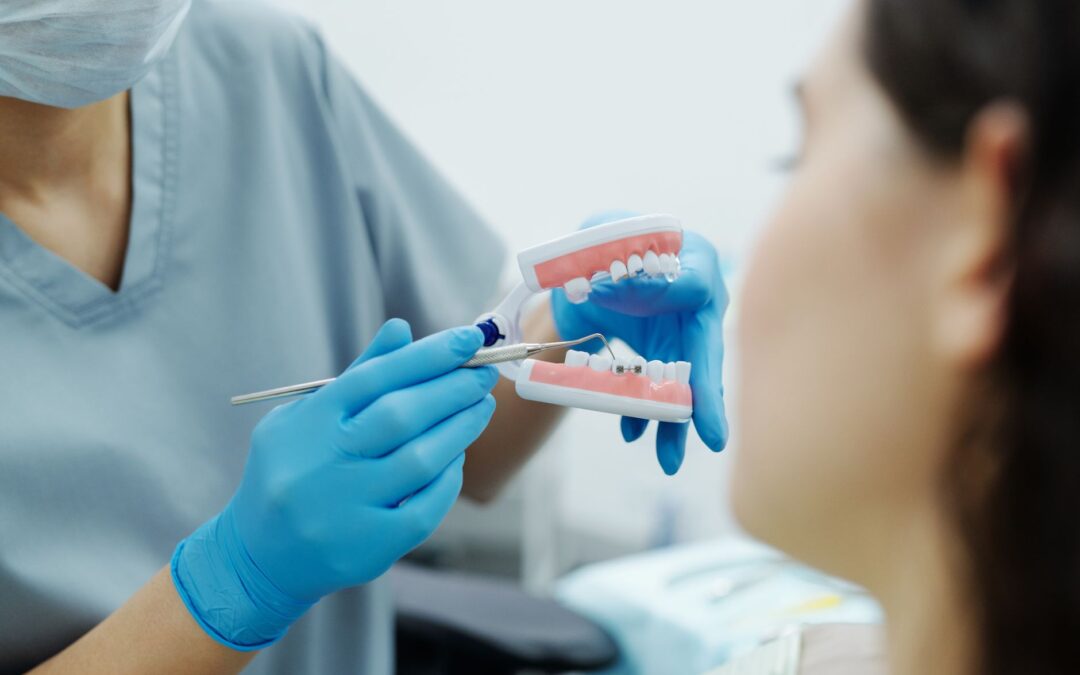
The short answer: neither one is universally better. Braces win on correction power for complex cases; Invisalign wins on aesthetics, comfort, and convenience for mild-to-moderate alignment issues. Which one is right for you depends on the specific problem your teeth need solved, your lifestyle, and how well you’ll wear removable trays. This comparison breaks it all down so you can walk into your consultation already knowing the right questions to ask.
The Quick Side-by-Side
| Factor | Traditional Braces | Invisalign Clear Aligners |
|---|---|---|
| Visibility | Noticeable metal or ceramic brackets | Nearly invisible when worn |
| Removability | Fixed — cannot be removed | Removable for eating, brushing, and special occasions |
| Compliance required | Low — always working | High — must wear 20–22 hours per day |
| Case complexity | Mild to severe, including rotations and vertical movement | Mild to moderate; some complex cases now treatable with attachments |
| Typical treatment time | 18–36 months | 6–24 months (varies widely by case) |
| National average cost | $3,000–$7,500 (not our office’s prices) | $3,000–$8,500 (not our office’s prices) |
| Dietary restrictions | Yes — avoid hard, sticky, crunchy foods | None — remove trays before eating |
| Oral hygiene difficulty | More involved — special flossers, proxabrushes needed | Easier — brush and floss normally, then clean trays |
| Comfort | Brackets and wires can irritate soft tissue | Smooth plastic; pressure from tray changes lasts 1–3 days |
| Office visits | Every 4–8 weeks for wire adjustments | Every 6–10 weeks; some progress done remotely |
| Insurance coverage | Often covered up to plan maximum | Covered by most orthodontic benefits the same as braces |
| After treatment | Retainer required (removable or fixed) | Retainer required (removable or fixed) |
Cost ranges above are national ballpark averages only and do not reflect Vaksman Dental Group’s fees. Your actual cost depends on case complexity, your insurance plan, and whether you choose in-office teeth whitening or other add-ons during or after treatment.
Where Braces Have a Clear Edge
Braces have been moving teeth for more than a century, and there are specific situations where they still outperform clear aligners.
Serious bite problems
Severe overbites, underbites, and crossbites often require more precise three-dimensional tooth control than aligners alone can deliver. Braces can apply force in multiple directions simultaneously, including rotating a tooth on its axis or extruding it vertically out of the gumline. These are genuinely difficult moves for any removable appliance.
Large gaps and crowding
When teeth need to travel a significant distance, the continuous pressure of fixed brackets tends to be more predictable. For mild to moderate crowding and spacing, Invisalign is quite competitive. For severe cases, braces often get there more reliably.
It works without your cooperation
This is the bluntest advantage braces have: they are always on. If you are not confident you will keep aligners in for 20–22 hours a day (or if you have a teenager who might “forget”), braces remove the compliance variable entirely. Research published in the American Journal of Orthodontics and Dentofacial Orthopedics has found that patient compliance is one of the biggest predictors of Invisalign outcome quality. Braces sidestep the issue.
Often lower cost for complex cases
When a case truly needs braces-level complexity management, trying to do it with aligners can extend treatment time and add cost through refinement trays. Starting with braces for a truly difficult case can be the more efficient (and less expensive) path.
Where Invisalign Has a Clear Edge
Invisalign has improved dramatically. For a large portion of the patients our team sees, it delivers outcomes that match or come close to braces, with meaningful lifestyle advantages.
Aesthetics during treatment
Clear aligners are virtually invisible in conversation and in photos. For adults who are self-conscious about orthodontic treatment at work or in social situations, this is frequently the deciding factor. Even ceramic (tooth-colored) braces are noticeably visible up close.
No food rules
Remove the trays, eat whatever you like, and put them back in. With braces, hard foods (apples, bagels, popcorn, raw carrots) risk breaking brackets or bending wires, which means unplanned trips to the orthodontist and extended treatment time.
Easier cleaning
You brush and floss your teeth exactly as you always have. The trays themselves get rinsed and cleaned with a soft brush. Braces require threading floss under the wire with a floss threader or a water flosser, which many patients find time-consuming enough to skip. Poor oral hygiene during braces treatment can lead to white spot lesions (demineralized patches on enamel) that become permanent marks on the front of teeth. That risk is essentially eliminated with aligners.
Comfort
Both treatments create pressure as teeth move. But the smooth plastic edges of Invisalign trays rarely cut into cheek or gum tissue the way a bracket edge or poking wire can. Most patients report that the discomfort after switching to a new tray is manageable and fades within a day or two.
Fewer emergency appointments
No wires mean no wires breaking or poking. Broken brackets are one of the most common reasons braces patients need unscheduled visits. Invisalign patients occasionally crack a tray (usually by bending it too hard when removing it), but it is a much rarer disruption.
The Compliance Question: Be Honest With Yourself
This is the conversation our dental team has with virtually every patient who asks about Invisalign, and it is worth having with yourself before you decide.
Twenty to twenty-two hours a day sounds easy. It means the trays are out for roughly two hours total, covering all meals and oral hygiene. In practice, patients who snack frequently, who have long business lunches, or who travel often find that hours add up faster than they expected. Consistently wearing aligners for fewer hours slows treatment, can allow teeth to shift back between trays, and sometimes forces a restart with new impressions and new trays.
If you are genuinely disciplined and motivated, Invisalign works beautifully. If you have had trouble finishing past treatment plans or sticking to routines, your dentist may honestly recommend braces, not because of the clinical complexity, but because a fixed appliance protects your investment.
What About Invisalign Alternatives?
Searching “Invisalign alternatives” is trending right now, and it is worth clearing up what that actually means.
The main alternatives to Invisalign (the brand) are other clear aligner systems, some of which are prescribed through dentists and some of which are sold directly to consumers online without an in-person exam. The branded Invisalign system, used at offices like ours, involves in-person records (photos, scans, X-rays), treatment planning by a licensed dentist who can catch issues that wouldn’t appear on a smile selfie, and regular check-ins throughout treatment.
Direct-to-consumer aligner companies skip the in-person exam. The ADA has raised concerns about DTC orthodontics, noting that moving teeth without properly evaluating bone, gum health, and bite relationships can cause unintended damage. If you are considering a DTC option specifically to save money, it is worth asking your dentist about the full range of supervised aligner options first, since prices vary more than most patients expect.
Which Is Right for You? A Simple Decision Guide
Answer these questions honestly, and the answer usually becomes clear:
- Do you have severe crowding, a significant bite problem, or teeth that need major rotation? Braces are probably the more reliable path.
- Is discretion a priority, and is your case mild to moderate? Invisalign is a strong candidate.
- Are you (or your teenager) likely to wear trays 20–22 hours per day without reminders? If yes, Invisalign. If you are not sure, honest conversation with your dentist matters here.
- Do you have specific dietary habits or contact sports that make a fixed appliance inconvenient? Invisalign flexibility is a real advantage.
- Are you trying to minimize total treatment time? Simple to moderate cases often move faster with Invisalign; complex cases typically move faster with braces.
The right answer also depends on a clinical exam. Neither braces nor Invisalign is appropriate until a dentist evaluates your gum health, checks for untreated cavities, and takes X-rays to see how your roots and bone look. Straightening teeth that have underlying gum disease, for example, can accelerate bone loss. That is not a scare tactic; it is just why the exam comes first.
At Vaksman Dental Group in South San Francisco, our team sees patients from all over the Peninsula, including San Bruno, Daly City, Millbrae, and Burlingame. If you are weighing your options, the best starting point is a consultation where we can look at your specific bite and talk through what will actually work for your situation. We offer Invisalign in South San Francisco and also provide traditional teeth braces in South San Francisco for cases where a fixed appliance is the smarter clinical choice. And if you end up needing any restorative work before or after orthodontics, our restorative dentistry in South San Francisco team handles that too, so your care stays in one place.
Frequently Asked Questions
Is Invisalign more expensive than braces?
Not necessarily. The national averages overlap significantly, with braces ranging from about $3,000 to $7,500 and Invisalign from about $3,000 to $8,500 (national estimates, not our office prices). Simple Invisalign cases can cost less than complex braces cases, and vice versa. Most dental insurance plans with orthodontic benefits cover both at the same rate. The final number depends on your case complexity and your plan details, so get a personalized estimate at your consultation.
How long does Invisalign treatment take compared to braces?
Invisalign treatment typically ranges from 6 to 24 months, with mild cases sometimes completing in under a year. Traditional braces average 18 to 36 months. That said, Invisalign timelines are more variable because they depend heavily on patient compliance. A braces patient who wears their appliance all the time (because they have no choice) often finishes more predictably than an Invisalign patient who wears trays inconsistently.
Can Invisalign fix an overbite or underbite?
Invisalign can correct mild to moderate overbites, often using small tooth-colored “attachments” bonded to the teeth to give the trays better grip. Severe bites and skeletal discrepancies usually require braces, and sometimes jaw surgery in addition to orthodontics. This is a clinical call your dentist makes after evaluating your specific bite, not something a photo consultation can determine accurately.
Do I need a retainer after both braces and Invisalign?
Yes, with no exceptions. Teeth naturally drift back toward their original positions after orthodontic treatment. This process, called relapse, happens regardless of whether you used braces or aligners. After both treatments, patients wear a retainer, either a removable clear retainer worn nightly or a thin fixed wire bonded behind the front teeth, usually for the long term. Skipping retainer use is the most common reason patients end up needing a second round of orthodontic treatment.
Schedule Your Orthodontic Consultation
Written by the Vaksman Dental Group team and medically reviewed by Dr. Irena Vaksman, DDS — South San Francisco. Last reviewed November 2026.