
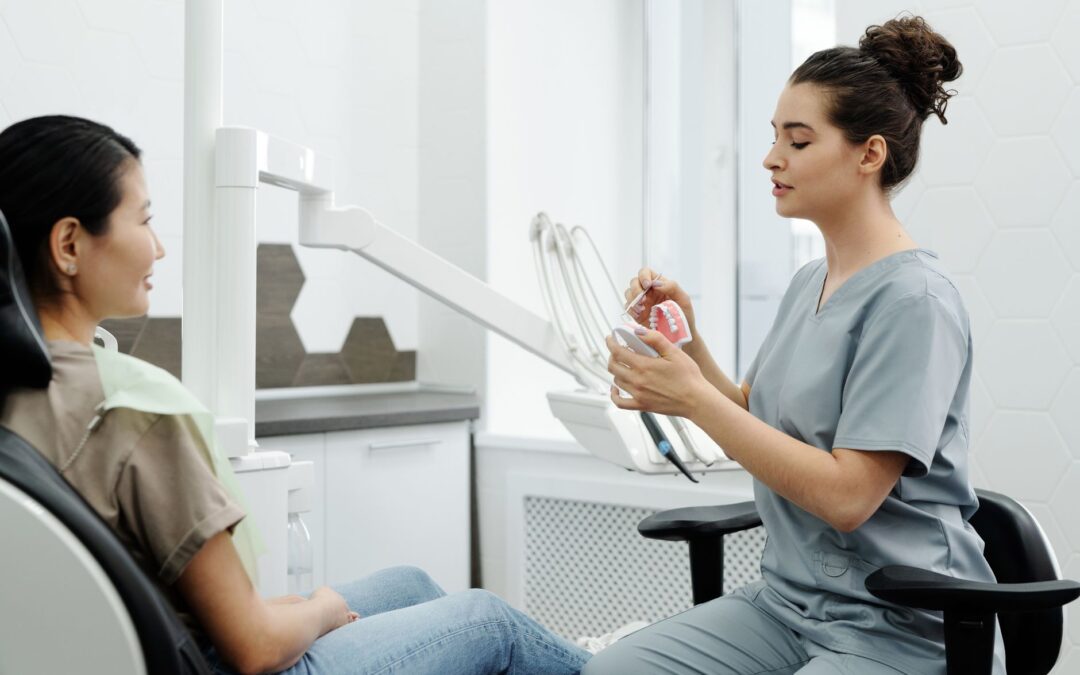
Dental implants come up constantly in our South San Francisco office, and nearly every conversation starts the same way: “But is it going to hurt?” It is a completely fair question. An implant is a titanium post placed into your jawbone, so the concern makes sense. The honest answer is that most patients are surprised by how manageable the experience is — but there is nuance worth knowing before you decide. Below, our dental team tackles the questions we actually hear most, answered as directly as we can.
Are dental implants painful during the procedure?
No — the placement itself is not painful. Your dentist at Vaksman Dental Group administers local anesthesia before anything begins, so the surgical site is thoroughly numb. Most patients feel pressure and some vibration during drilling, but not sharp pain. If at any point you feel more than pressure, you can (and should) raise your hand and let us know immediately.
For patients with significant dental anxiety, sedation options are available. Nitrous oxide (laughing gas) takes the edge off without putting you fully to sleep, and stronger sedation can be discussed for more complex cases. The goal is that you feel calm and in control throughout.
What does implant recovery actually feel like?
This is where people need realistic expectations. The first 24 to 72 hours after surgery are when discomfort peaks. Most patients describe it as a sore, achy feeling — similar to having a tooth pulled, maybe a bit more noticeable. Swelling around the jaw and cheek is common, and you may see some light bruising.
Over-the-counter pain relievers (ibuprofen or acetaminophen, as directed by your dentist) handle the discomfort well for the majority of patients. Some cases are prescribed a short course of prescription pain relief, though many people never need it. By day four or five, most people are back to normal daily routines. Full healing of the bone around the implant — called osseointegration — takes several months, but that process is completely painless; the bone simply fuses quietly around the titanium post.
Things that help recovery go smoothly: cold packs on the cheek for the first day, soft foods for about a week, no smoking, and keeping the site clean as directed. The American Dental Association’s overview of dental implants is a good reference if you want authoritative background on what the procedure involves.
What if I feel sharp pain days or weeks after placement?
Some mild soreness trailing off over the first week is normal. Sharp, worsening, or new pain that starts days after placement is not something to wait out — it warrants a call to us promptly. Possible causes include:
- Infection at the site (rare but treatable when caught early)
- Implant micromovement from biting too hard on the healing area
- Dry socket (more associated with extractions but can occasionally affect nearby healing tissue)
- Nerve proximity in rare lower-jaw placements (your dentist evaluates this carefully using 3D imaging before surgery)
Peri-implantitis — an infection of the tissue around an implant — can develop months or years later if oral hygiene lapses. It causes tenderness, swelling, and eventually bone loss around the implant. The good news: it is largely preventable with consistent brushing, flossing, and regular professional dental cleaning in South San Francisco. If you notice anything unusual around an implant at any point, call us — early intervention is far easier than letting it progress.
Are dental implants covered by insurance?
This is one of the most-searched implant questions right now, and the answer is: sometimes, partially, and it depends on your plan.
Traditional dental insurance has historically treated implants as a cosmetic or elective procedure and excluded them entirely. That is shifting. More plans — including some Delta Dental and MetLife tiers — now cover a portion of the implant crown, the abutment, or even part of the surgical placement. A few medical insurance plans contribute when the tooth loss resulted from an accident or a covered medical condition.
What to do before your consultation:
- Call your insurance carrier and ask specifically: “Does my plan cover dental implants, implant-supported crowns, or tooth replacement after extraction?”
- Ask about your annual maximum and whether implants count toward it.
- Request a pre-authorization or benefits breakdown in writing.
At our office, we help patients navigate their coverage and work through the numbers honestly before treatment starts. Financing options are also available for out-of-pocket costs. Implants are a significant investment — typically $3,000 to $5,000+ per tooth nationally (not our office’s prices) — but they are the only tooth-replacement option that preserves jawbone and can last decades with proper care.
How do implants compare to other tooth-replacement options for comfort?
It is worth stepping back and comparing the long-term comfort picture, not just the short-term procedure experience.
| Option | Procedure discomfort | Long-term comfort | Bone preservation |
|---|---|---|---|
| Dental implant | Moderate (surgery + healing) | Feels like a natural tooth | Yes — stimulates bone |
| Fixed dental bridge | Low to moderate (no surgery) | Good, but relies on adjacent teeth | No — bone resorbs under gap |
| Removable partial denture | Minimal procedure discomfort | Can slip, sore spots common | No |
| Implant-retained denture | Moderate (surgery for anchors) | Far more stable than regular denture | Partial, under implant sites |
The upfront discomfort of implant surgery is real but time-limited. The payoff is a restoration that does not move, does not put pressure on neighboring teeth, and lets you eat and speak normally. Many patients who chose a bridge or denture years ago come to us later wishing they had done the implant the first time.
For patients missing multiple teeth or an entire arch, All-on-4 dental implants in South San Francisco use just four strategically placed implants to support a full arch — a more involved surgery but still typically far less discomfort than most people expect.
Am I a good candidate for implants, or would my situation make it harder?
Most healthy adults with a missing tooth are candidates. A few factors can complicate things, though none are automatic disqualifiers:
- Bone loss at the extraction site. If a tooth has been missing for years, the jawbone can resorb. A bone graft (done at the time of extraction or as a preparatory step) builds it back up. This adds healing time but is a routine procedure.
- Uncontrolled diabetes. Elevated blood sugar impairs healing. Patients with well-managed diabetes generally do fine.
- Smoking. Smoking significantly raises the risk of implant failure by reducing blood flow to the healing site. Quitting before and after surgery improves outcomes considerably.
- Active gum disease. Periodontal disease needs to be treated and stabilized before implant placement — placing an implant in an infected environment sets it up to fail. Our team screens for this at the consultation stage.
- Certain medications. Bisphosphonates (used for osteoporosis) can affect jawbone healing. Full medication review is part of every implant consultation.
The only way to know for certain is a consultation with detailed X-rays and, in most cases, a 3D cone-beam scan so your dentist can see the exact bone volume, nerve location, and anatomy before anything is planned.
What is the long-term success rate, and how do I protect my implant?
Dental implants have an impressive track record. Research published in peer-reviewed literature consistently shows 10-year survival rates of 95% or higher when placed in appropriate candidates and maintained well. A large systematic review in the International Journal of Oral and Maxillofacial Implants found implant survival rates consistently above 94% over 10 years across thousands of cases.
Protecting that investment comes down to a few habits:
- Brush twice daily and floss around the implant — bacteria do not care that a tooth is artificial.
- Keep your regular cleaning appointments. Tartar can build up at the implant margin just like on natural teeth.
- If you grind your teeth, wear a night guard. Grinding forces can loosen the crown or even damage the implant over time. Our team can fit you with a custom dental mouth guard to protect both natural teeth and implants.
- Avoid using your implant (or any tooth) to open packaging or bite hard non-food objects.
With consistent care, implants routinely last 20-plus years. Many last a lifetime. The crown portion (the visible part) may need replacement after 10 to 15 years depending on wear, but the implant post itself often stays permanently in place.
Key Takeaways
- Implant placement is done under local anesthesia — the procedure itself should not be painful, just pressured.
- Post-surgery soreness is real but usually manageable with OTC pain relievers and resolves within days.
- Sharp or worsening pain after the first week needs a prompt call to your dentist — do not wait it out.
- Insurance coverage for implants is improving but still inconsistent; always verify your specific plan benefits before treatment.
- Long-term, implants are the most comfortable and bone-preserving tooth-replacement option available.
- Success rates top 95% over 10 years with proper patient selection and maintenance.
Ready to find out if implants are right for you?
Our team is happy to walk through your specific situation, your bone health, your insurance, and your options with zero pressure.
Written by the Vaksman Dental Group team and medically reviewed by Dr. Irena Vaksman, DDS — South San Francisco. Last reviewed July 2026.