
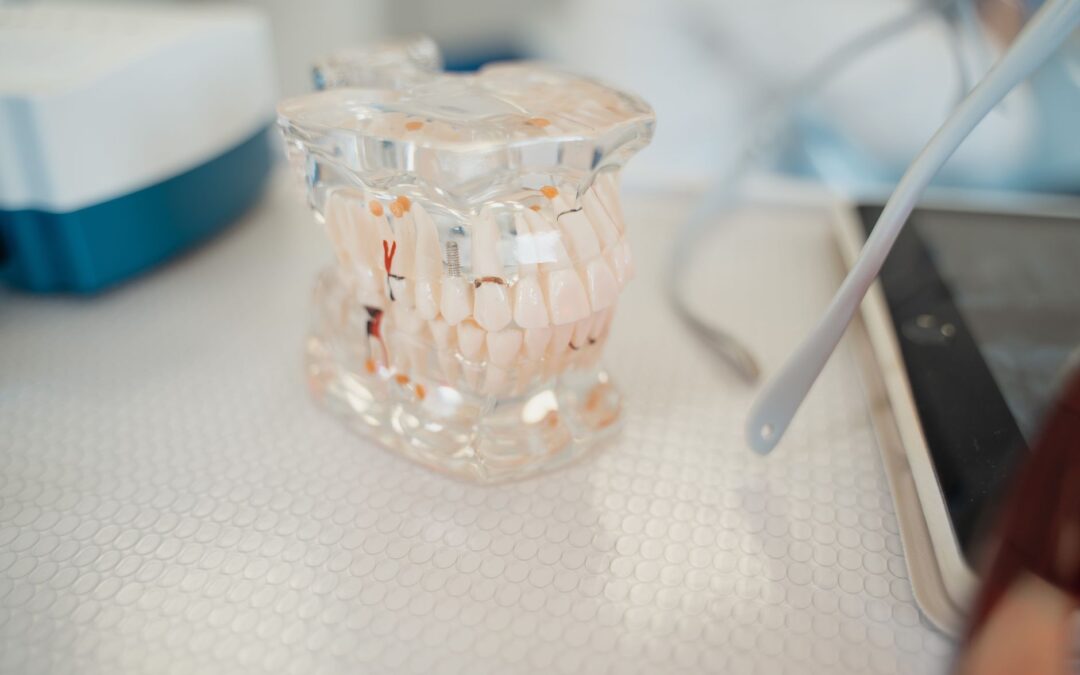
Hybridge dental implants are a full-arch tooth-replacement system that uses five to six strategically placed implants to anchor a fixed, non-removable bridge — giving people who are missing most or all of their teeth a permanent, stable smile, often in a streamlined number of appointments. If you’ve been seeing “Hybridge” pop up in your research and wondering how it compares to All-on-4 or traditional implants, this guide breaks it all down honestly.
- Hybridge uses 5–6 implants per arch (compared to 4 in All-on-4) to support a fixed ceramic bridge — no removable denture involved.
- The bridge is designed to look and function like natural teeth, and patients typically eat a normal diet once fully healed.
- National cost estimates range roughly from $20,000 to $30,000 per arch; actual prices vary widely by location, provider, and individual case complexity (those are not our office’s prices).
- Hybridge is a brand and protocol — not every dental office offers it, and comparable full-arch implant options exist under different names.
- Candidacy depends on bone density, gum health, and overall medical history; a thorough evaluation is required before any implant treatment.
What exactly is a “Hybridge” implant — is it a different type of implant?
The short answer: no, the implant posts themselves are standard titanium dental implants. What “Hybridge” refers to is a specific clinical protocol and branded system for placing a fixed full-arch bridge on those implants. The company, Hybridge Clinical Centers, developed a standardized approach that uses five or six implants per arch, placed in precise positions to maximize bone support, and then attaches a high-strength, fixed ceramic or zirconia bridge on top.
Think of it like this: the implants are the foundation, and the bridge is the permanent set of teeth attached to them. You don’t take them out at night. You brush and floss them (with a water flosser or floss threader) just like natural teeth. The Hybridge protocol is notable for its emphasis on standardization and its focus on getting patients to a functioning full smile efficiently.
It’s worth knowing that Hybridge is a licensed network, so not every dentist offers it under that name. Many dental practices offer functionally very similar full-arch implant bridges under terms like “implant-supported fixed bridge,” “full-arch implants,” or “teeth-in-a-day” protocols that follow the same core principles.
How is Hybridge different from All-on-4?
This is the question most people have, and it’s a fair one. The two systems are more similar than different, but there are meaningful distinctions.
All-on-4, developed by Nobel Biocare, uses exactly four implants per arch. Two are placed straight in the front of the jaw, and two are angled toward the back at up to 45 degrees. This angling allows the implants to reach denser bone without requiring bone grafting in many cases, which is one of the main selling points. The bridge snaps on the same day as surgery (hence “teeth-in-a-day”), though that initial bridge is often a temporary one that gets replaced with a final prosthesis later.
Hybridge typically uses five or six implants per arch, placed without the extreme posterior angulation. The additional implants are meant to distribute bite force more evenly across the jaw, which Hybridge proponents argue leads to greater long-term stability and a bridge that can withstand more chewing stress. The tradeoff is that more implants mean higher surgical complexity and, in some cases, more bone grafting may be needed.
Neither system is universally “better.” The right choice depends on your bone anatomy, budget, and what a qualified implant provider recommends after a thorough evaluation. Here’s a quick comparison:
| Feature | Hybridge | All-on-4 |
|---|---|---|
| Implants per arch | 5–6 | 4 |
| Implant angulation | Mostly upright/minimal angulation | Rear implants angled up to 45° |
| Bridge type | Fixed ceramic/zirconia bridge | Fixed acrylic (temp) then zirconia/ceramic (final) |
| Bone grafting | May be required | Often avoids grafting with angling technique |
| Removable by patient? | No | No (final prosthesis) |
| Branded network? | Yes (licensed centers) | Yes (Nobel Biocare protocol) |
Who is a good candidate for Hybridge (or any full-arch implant system)?
Full-arch implant systems like Hybridge are generally designed for people who are missing all or most of the teeth in one or both arches, or those whose remaining teeth are failing and need to be extracted. Candidacy hinges on a few key factors.
Bone density and volume. Implants need bone to fuse with. People who have been without teeth for a long time often experience significant bone loss, which can require grafting before implants can be placed. Advanced 3D imaging (CBCT scans) is used to assess exactly how much bone is available.
Gum health. Active gum disease or infection needs to be treated before any implant procedure. Placing implants in an unhealthy mouth dramatically increases the risk of implant failure.
Overall health. Conditions like uncontrolled diabetes, immune disorders, or a history of radiation therapy to the jaw can affect healing and implant success. Heavy smoking is also a significant risk factor. The National Institute of Dental and Craniofacial Research notes that good general health is an important consideration for implant candidacy.
Commitment to aftercare. Full-arch implants require diligent oral hygiene — water flossing, interdental brushing, and regular professional cleanings are essential for long-term success. This isn’t a “set it and forget it” investment.
A comprehensive exam, including X-rays and a CBCT scan, is the only way to determine whether you’re a candidate. If you’re considering full-arch implants in the South San Francisco area, our dental team can walk you through exactly what an evaluation looks like and what your options are.
What does the Hybridge process actually look like, start to finish?
The timeline varies by patient, but here’s a general picture of what most people go through with a full-arch fixed-implant treatment.
- Comprehensive evaluation. CBCT scan, full exam, medical and dental history review. This is where candidacy is established and a treatment plan is developed.
- Any preparatory work. If you still have failing teeth, extractions happen at or before the implant surgery. If bone grafting is needed, that typically adds several months of healing time before implants can be placed.
- Implant placement surgery. The five or six implants are placed into the jawbone under local anesthesia (with sedation options for comfort). A temporary fixed or transitional bridge is often attached the same day or shortly after, so you leave with teeth.
- Osseointegration — the healing phase. Over roughly three to six months, the implants fuse with the bone. This is the most important part of the process, and rushing it risks failure. You’ll be on a soft-food diet during this time.
- Final bridge placement. Once osseointegration is confirmed, the final high-strength ceramic or zirconia bridge is custom-fabricated and attached. This is the permanent restoration.
- Ongoing maintenance. Regular cleanings and check-ups every three to six months are strongly recommended to protect the investment.
Total timeline from first consultation to final teeth: typically six months to over a year, depending on whether preparatory procedures are needed.
How much do Hybridge dental implants cost?
This is usually the first question people ask, and the honest answer is: it depends significantly on where you live, which provider you use, whether bone grafting is needed, and whether you’re doing one arch or two. These are national ballpark figures, not our office’s prices.
Full-arch fixed implant systems (including Hybridge and All-on-4) generally run in the range of $20,000 to $30,000 per arch nationally, with upper and lower arch together sometimes reaching $40,000 to $50,000 or more. Premium materials, complex bone grafting needs, and high-cost-of-living areas like the San Francisco Bay Area typically push prices toward the higher end.
Dental insurance rarely covers implants at the level needed for full-arch work, though some plans may cover extractions or a portion of other components. Many practices offer financing to help make treatment manageable. It’s worth having a detailed conversation with any provider about the full breakdown of costs before committing.
Are full-arch implants worth it? What does the research say?
Long-term outcomes data for implant-supported fixed bridges is genuinely encouraging. A large body of research shows that implant-supported full-arch restorations have high survival rates over 10 years or more when placed in appropriate candidates by skilled providers and maintained well. Studies published in peer-reviewed journals consistently report 95% or higher implant survival at five to ten years for well-selected patients.
From a quality-of-life standpoint, the difference between a stable fixed bridge and removable dentures is frequently described by patients as life-changing. Chewing function, speech, and confidence all improve meaningfully. That said, no dental treatment is permanent in an absolute sense. Bridges can chip, screws can loosen, and the gum and bone underneath require ongoing monitoring. Realistic expectations matter.
The most important factor in long-term success is not which branded system you choose. It’s the skill of the provider, the thoroughness of the treatment plan, the quality of the prosthetic work, and your own commitment to maintenance.
How does this fit with what’s available at a South San Francisco dental office?
Our team at Vaksman Dental Group works with patients considering tooth replacement options every week. While we use the term most familiar to our patients, the core question is always the same: what’s the best, most durable, most functional solution for this specific person’s mouth and goals?
We offer All-on-4 dental implants in South San Francisco for patients who are candidates for full-arch fixed restoration. For patients who need individual tooth replacement, our dental implants in South San Francisco service covers single-tooth and multi-tooth solutions. And for patients who aren’t implant candidates right now, options like implant-retained snap-in dentures can offer substantially better stability than traditional removable dentures at a lower cost than a full fixed bridge.
Every implant case starts with a thorough evaluation. There is genuinely no way to tell you which option is right without seeing your X-rays, understanding your bone anatomy, and talking through your health history and goals. We’re always happy to have that conversation.
Frequently Asked Questions
Is Hybridge the same as All-on-4?
They’re similar full-arch implant systems but not identical. Hybridge typically uses five or six implants per arch placed with minimal angulation; All-on-4 uses exactly four implants, with the rear two angled significantly to avoid bone grafting. Both result in a fixed, non-removable bridge. The best choice depends on your bone anatomy and individual clinical factors, which only a thorough evaluation can determine.
Can I eat normally with Hybridge or All-on-4 implants?
Most patients return to a largely normal diet once the final bridge is in place and osseointegration is complete. During the healing phase (typically three to six months), a soft-food diet is required to protect the implants. Long-term, very hard foods (like crunching on ice or hard candy) are generally discouraged to protect the prosthetic material, but everyday foods like steak, apples, and crunchy vegetables are fine for most patients.
How long do full-arch implant bridges last?
The implants themselves, when they successfully integrate with the bone, can potentially last a lifetime with proper care. The prosthetic bridge on top may need repairs or replacement over time, often after 10 to 20 years, depending on the material used and how well it’s maintained. Regular professional monitoring is key to catching any issues early.
Does Vaksman Dental Group offer Hybridge specifically?
We are not a licensed Hybridge network provider, but we offer full-arch implant solutions, including All-on-4, that follow the same core principles of fixed, non-removable, implant-supported full-arch restoration. If you’ve been researching Hybridge, the best next step is to schedule a consultation so our dental team can evaluate your specific situation and explain all the options available to you.
Ready to explore your implant options? Schedule a consultation with our team.
Written by the Vaksman Dental Group team and medically reviewed by Dr. Irena Vaksman, DDS — South San Francisco. Last reviewed September 2026.