
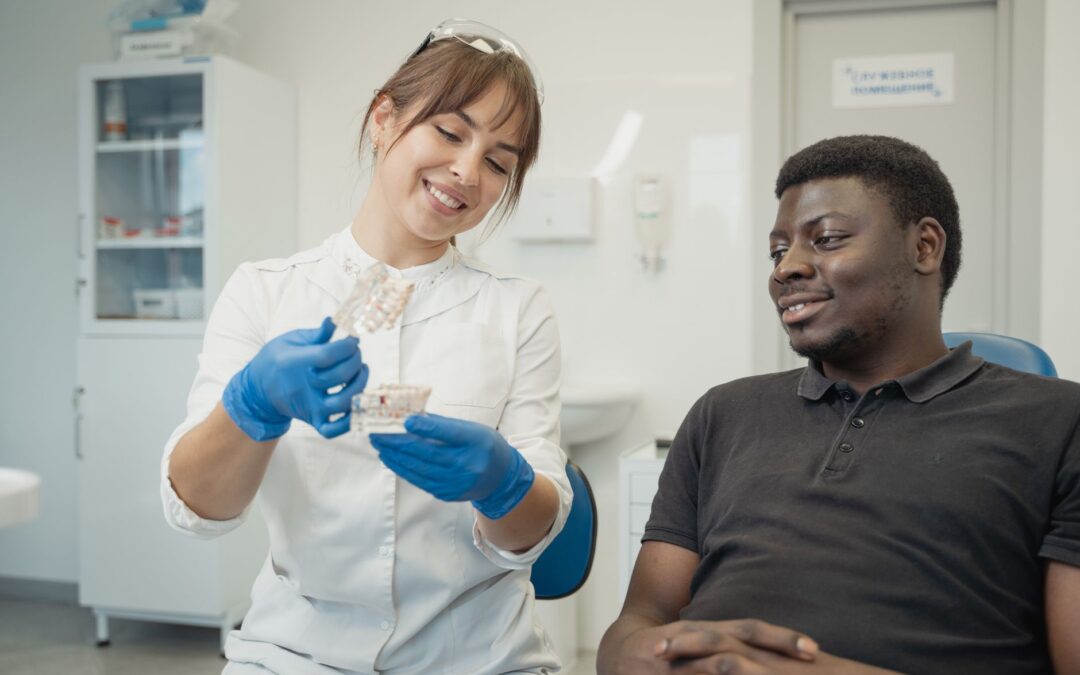
Kristaps Porzingis is in the news again, and so is his smile. Searches for “Porzingis veneers” have been climbing this week, and the question we’re seeing most is a genuine one: did he actually get veneers, and what would that process look like for a regular person? We can’t speak to what any specific athlete has or hasn’t had done — dental records are private, and we won’t speculate. What we can do is answer the questions his trending smile is raising, accurately and completely, so you can make a smart decision about your own.
Here are the real questions patients ask us about veneers — the ones that happened to go viral this week.
What are veneers, exactly, and what do they actually change about a tooth?
A veneer is a thin shell of ceramic (usually porcelain) or composite resin that bonds to the front surface of a tooth. The thickness is roughly comparable to a contact lens for porcelain, slightly thicker for composite. It changes the tooth’s color, shape, length, and surface texture — but it doesn’t structurally replace the tooth the way a crown does.
What veneers can address:
- Staining that doesn’t respond to whitening (fluorosis, tetracycline staining, intrinsic discoloration)
- Chips, small cracks, or worn edges
- Minor gaps between teeth
- Slightly uneven or asymmetrical tooth shapes
- Teeth that are proportionally short relative to the gumline
What veneers generally can’t fix on their own: significant misalignment or bite problems (those may need orthodontics first), structural decay underneath, or missing teeth. Your dentist examines your bite, gum health, and existing enamel before recommending them.
How do dentists decide between porcelain veneers and composite veneers?
Both materials work — the choice depends on your goals, budget, timeline, and how much natural tooth structure you want preserved.
| Factor | Porcelain veneers | Composite veneers |
|---|---|---|
| Typical lifespan | 10–20 years with good care | 5–8 years with good care |
| Stain resistance | High (glazed ceramic surface) | Moderate (resin is more porous) |
| Tooth prep required | Usually some enamel removal (irreversible); “minimal prep” or “prepless” options exist for select cases | Often minimal or none |
| Repairability | Chips require replacement | Chips can often be repaired chairside |
| Typical national cost range (not our prices) | $900–$2,500 per tooth | $250–$1,500 per tooth |
| Best for | Severe staining, longer-term investment, maximum esthetic result | Minor corrections, budget-conscious patients, reversibility |
At our South San Francisco office, our dental team walks through both options during the consultation and helps you match the material to what you actually need — not the most expensive path.
Does getting veneers hurt? What does the process feel like from start to finish?
For most patients, the process is more involved than whitening but significantly less intense than a root canal. Here’s the honest, step-by-step picture:
- Consultation and photos. Your dentist examines your gums, bite, and existing enamel. Some offices take digital impressions or use smile-simulation software so you can preview the result.
- Tooth preparation (porcelain veneers). A thin layer of enamel is removed — usually 0.3–0.7 mm — to make room for the veneer shell. Local anesthetic is used, so discomfort during the procedure is typically minimal. This step is permanent: once enamel is removed, it doesn’t grow back, which is why the consultation matters.
- Temporaries. While the lab fabricates your permanent veneers (usually 1–2 weeks), temporary veneers protect the prepared teeth. Some sensitivity to hot and cold is normal during this period.
- Bonding appointment. The permanent veneers are tried in, color is confirmed, and they’re bonded with a dental cement activated by a curing light. Any final adjustments are made chairside.
- Follow-up. A short check-in a few weeks later lets your dentist confirm the bite feels right and gums look healthy.
Post-bonding soreness is usually mild and resolves within a few days. Most patients return to normal eating within 24–48 hours, though hard, crunchy, or staining foods are worth avoiding immediately after.
How many veneers do most people actually get — do you have to do the whole mouth?
No. This is one of the biggest misconceptions we hear. The number is entirely based on what you want to change and what shows in your natural smile. Some patients treat only one chipped tooth. Others do 4–6 upper front teeth because that’s what’s visible when they talk and smile. A full upper and lower smile makeover involving 20 or more teeth is an option, but it’s genuinely rare outside of cases where there’s severe wear or structural damage throughout the mouth.
The more teeth involved, the more important it is to get the shade and shape right before committing. Reputable dentists use mock-ups, digital previews, or wax models so you can visualize the outcome. If a practice skips that step and jumps straight to preparation, that’s a yellow flag worth asking about.
Can you get veneers if you grind your teeth?
Bruxism (teeth grinding) doesn’t automatically disqualify you, but it does require a conversation. Grinding exerts significant force on teeth, and veneers — especially porcelain — can chip or debond under sustained bruxing pressure.
What most dentists recommend in this scenario:
- Address the grinding first, or at minimum manage it. A custom night guard worn while you sleep is the standard approach and can protect veneers long-term once they’re placed.
- Consider composite veneers, which are more repairable if a chip occurs.
- Discuss whether your occlusion (bite) needs adjustment before cosmetic work is done — placing veneers on a bite that’s already under stress can accelerate problems.
If you think you grind (morning jaw soreness, worn tooth edges, frequent headaches), mention it at your consultation. Our team can check for wear patterns and talk through your best sequence of treatment. We also offer custom dental mouth guards in South San Francisco for patients who need protection before or after cosmetic work.
What’s the difference between veneers and crowns — when would a dentist recommend one over the other?
Both veneers and crowns change the visible appearance of a tooth, but they serve different structural purposes. The key difference is coverage and how much tooth structure is involved.
A veneer covers only the front face of the tooth. It’s a cosmetic solution best suited for teeth that are essentially healthy underneath.
A crown caps the entire tooth — front, back, chewing surface, and sides. It’s chosen when a tooth is structurally compromised: a large cavity or old filling has weakened it, it’s cracked, it’s had a root canal, or it’s broken significantly.
In plain terms: if the tooth looks bad but is structurally sound, a veneer is usually the right answer. If the tooth is damaged or at risk of fracture, a crown protects it while also improving how it looks.
At Vaksman Dental Group, we use CEREC technology for same-visit ceramic crowns — meaning if your dentist determines a crown is the right call, we can design, mill, and place a custom ceramic crown in a single appointment, with no temporary and no second visit. It’s one of the genuinely useful ways modern dental technology saves patients time.
Are veneers reversible? What happens if I don’t like them?
This is the most important question to ask before agreeing to any veneer procedure, and we appreciate that it’s asked more often now.
Traditional porcelain veneers are not reversible in a practical sense. Because enamel is removed to create space for the shell, that enamel doesn’t grow back. You’ll always need a veneer or crown covering that tooth going forward. That’s not a reason to avoid veneers — millions of people are thrilled with theirs — but it’s a reason to be confident in your decision and your dentist before the first drill turns on.
What to do if you’re unsure:
- Ask for a mock-up or wax-up so you can see the shape before any tooth is touched.
- Consider composite veneers as a trial — they can be removed or changed more easily, though they also have a shorter lifespan.
- Ask specifically about “minimal prep” or “prepless” veneers for your case. For the right tooth shape, these options exist and preserve more enamel. (We’ve written about prepless veneers in depth if you want the full picture.)
- Get a second opinion if anything feels rushed.
If you genuinely dislike completed veneers, the realistic options are adjustment (reshaping, re-polishing), replacement with new veneers, or in some cases coverage with a crown. It’s manageable — but prevention through good communication before the procedure is far easier.
How do I actually know if I’m a candidate for veneers?
The honest answer is: a clinical exam is the only way to know for certain. That said, here are the general green lights and red flags dentists look for:
Good candidate signals:
- Healthy gums (no active gum disease)
- Enough existing enamel for bonding
- No significant untreated decay on the target teeth
- Reasonable bite stability
- Realistic expectations about what the final result will look like
Things to address first:
- Active cavities or gum disease need treatment before cosmetic work begins
- Severe misalignment often benefits from orthodontics first (Invisalign and veneers are frequently combined, in that order)
- Significant bruxism should be managed before placement
- Very little remaining enamel may make a crown a better structural choice
Veneers are genuinely one of the more powerful cosmetic dental tools available. When they’re placed on the right teeth by an experienced team, the results last years. The key is a thorough evaluation first, not a rushed consult that skips the clinical groundwork.
If you’re in South San Francisco, San Bruno, Daly City, or anywhere on the Peninsula and you’re curious whether veneers make sense for your situation, our team offers consultations where we walk through your options honestly. You can explore what full cosmetic dentistry in South San Francisco looks like at our office, or go straight to booking below.
Written by the Vaksman Dental Group team and medically reviewed by Dr. Irena Vaksman, DDS — South San Francisco. Last reviewed November 2026.