
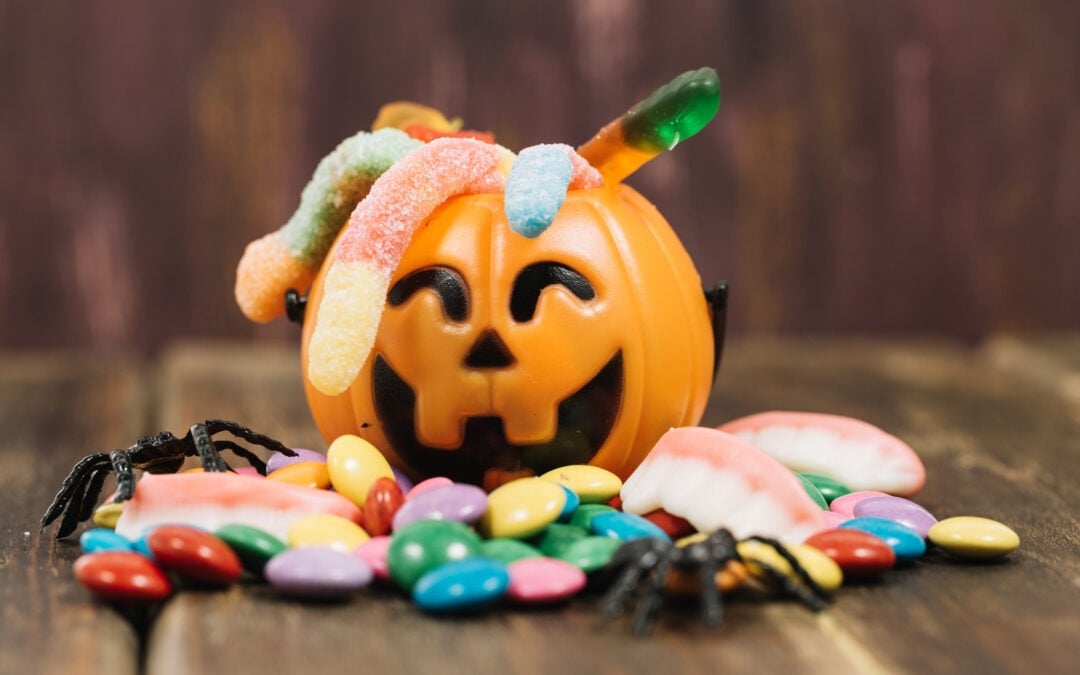
The best way to enjoy Halloween candy without harming your teeth is to eat sweets in one sitting right after a meal, then brush or rinse soon afterward. Limiting how often sugar touches your teeth — not necessarily how much you eat in a day — is what keeps cavities at bay.
Key Takeaways
- Frequency of sugar exposure matters more than quantity — eating candy in one sitting after a meal is better for your teeth than grazing throughout the day.
- Sticky candies like caramels, taffy, and candy corn are the worst offenders because they cling to teeth and give bacteria more time to produce cavity-causing acid.
- Brush after eating candy to remove sugar and lower acid levels, or at minimum rinse with water several times if brushing isn’t possible.
- Chewing sugar-free gum boosts saliva flow, which helps neutralize acid and wash away residual sugar between brushings.
- Routine professional cleanings every six months are essential for removing buildup that home brushing can’t fully address and for catching small problems early.
Halloween can be a scary time of year for your smile, especially for those of us who love sweets. The good news is that a few simple habits let you enjoy the season’s sugary treats while protecting your teeth. Here are five dentist-approved tips from the team at Vaksman Dental Group in South San Francisco.
5 Dentist-Approved Halloween Candy Tips
1. Eat sugary foods once a day, at the end of a meal
How often you eat candy — and how sticky it is — matters more than the total amount. Each time you eat a sugary snack, acid-producing bacteria feed on the sugar and shift the pH in your mouth, and it can take up to an hour for that acid to dissipate. Eating sweets right after a meal, when saliva flow is highest, helps neutralize the acid faster and lowers your cavity risk.
2. Avoid or limit sticky candies
Caramels, candy corn, jelly beans, taffy, and even dried fruit like raisins cling to teeth, making it harder for saliva to wash the sugar away. The longer sugar sits in the grooves of your teeth, the more time bacteria have to do damage.
3. Brush shortly after your sugary snack
The longer sugar stays on your teeth, the higher the acid level and the more cavity-prone your teeth become. Adults and children alike should brush after eating candy. If brushing isn’t possible, rinse with water a few times to help reduce the acidity in your mouth.
4. Chew sugar-free gum
Chewing sugar-free gum increases saliva flow, which helps neutralize acid and rinse away leftover sugars from candy. It’s an easy on-the-go habit when you can’t brush right away.
5. Keep up with your routine cleanings
No matter how good your hygiene routine is, plaque and tartar will still build up over time, making it harder to brush away sticky, cavity-causing sugars, stains, and bacteria. Staying current with a professional dental cleaning and a dental exam keeps small problems from turning into big ones.
What to Do With Leftover Halloween Candy
One of the easiest ways to cut down on lingering sugar at home is simply to have less candy around. Vaksman Dental Group runs an annual candy buy-back, so you can trade in extra Halloween loot instead of letting it tempt the household for weeks. Learn more about Operation Candy for Gratitude and turn that surplus sugar into something positive.
A little planning goes a long way. Pair candy with water, brush before bed, and remember that moderation plus good habits beats total restriction. Kids and adults can both enjoy the season — the goal is simply to keep sugar from sitting on your teeth for hours at a time. If you do notice tooth sensitivity or a rough spot after the holidays, it’s worth a quick check before it becomes a cavity that needs a dental filling.
Halloween is a fun holiday, so enjoy it — just don’t let cavities get in the way.
Frequently Asked Questions
Is it better to eat all my Halloween candy at once?
Surprisingly, yes — eating sweets in a single sitting, ideally after a meal, exposes your teeth to acid for a shorter overall window than grazing on candy throughout the day. Frequency of sugar exposure is one of the biggest cavity risk factors.
Which Halloween candies are worst for your teeth?
Sticky and long-lasting candies are the biggest offenders. Caramels, taffy, candy corn, and hard candies keep sugar on your teeth the longest, giving bacteria more time to produce cavity-causing acid.
Should I brush right after eating candy?
Brushing within a reasonable window after eating helps remove sugar and lower acid levels. If you can’t brush, rinse with water several times. Keeping up with routine cleanings adds another layer of protection.
How often should I see the dentist?
Most patients do well with an exam and cleaning every six months, though your dentist may recommend a different schedule based on your needs. Regular visits catch cavities early, before they require larger repairs.
Ready for your next visit to a South San Francisco dentist?
Book Now