
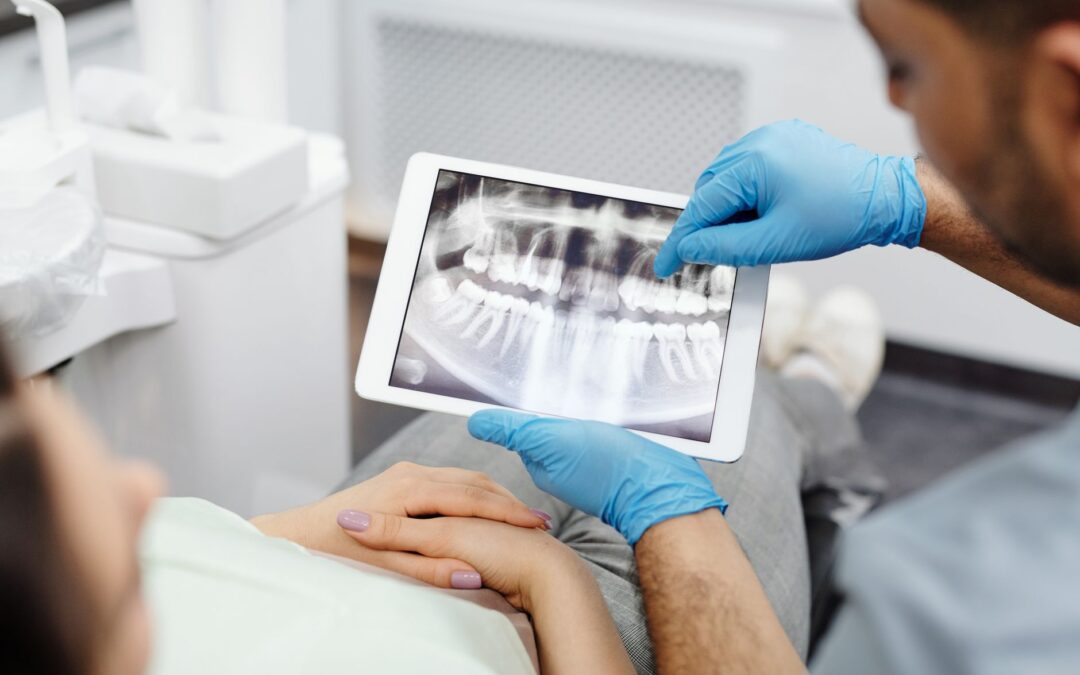
Root canal. Two words that make people’s shoulders tense up — and then immediately wonder, “how much is this going to cost me?” It’s one of the most common questions our dental team hears, and it deserves a straight answer. Below, we’ve pulled together the questions patients actually ask before, during, and after their appointment and answered each one honestly.
How much does a root canal cost?
Root canal cost varies based on which tooth needs treatment. Here are the national ballpark ranges (these are not our office’s prices — contact us for your specific estimate):
| Tooth Type | Typical National Range (no insurance) |
|---|---|
| Front tooth (incisor/canine) | $700 – $1,100 |
| Premolar (bicuspid) | $800 – $1,200 |
| Molar | $1,000 – $1,600 |
Molars cost more because they have more canals — sometimes three or four — which means more time and more technical work. A specialist (endodontist) may charge 20–30% more than a general dentist. These figures come from the American Dental Association’s dental fee research, which surveys actual dentist fees across the U.S. annually.
Will my dental insurance cover any of it?
Almost certainly some of it, yes. Most dental insurance plans categorize root canal therapy as a “major” or “basic restorative” procedure and cover 50–80% of the cost after your deductible, up to your annual maximum.
A few things to check before your appointment:
- Annual maximum: Most plans cap at $1,000–$2,000 per year. If you’ve already used some of that for other work, your out-of-pocket share goes up.
- Waiting periods: Some plans require you to have been enrolled for 6–12 months before covering major procedures. Emergency exceptions sometimes apply.
- In-network vs. out-of-network: Seeing a dentist in your plan’s network typically means lower negotiated fees — and a lower co-pay for you.
- Pre-authorization: Some insurers want to pre-approve the procedure before you have it done. Your dental office can usually handle this paperwork.
If you’re near South San Francisco, the front desk team at our Mission Road office can verify your benefits before your visit and give you a clear breakdown of estimated out-of-pocket cost.
Does a root canal hurt? I’ve heard the horror stories.
This is the question underneath the cost question for a lot of people. The honest answer: a root canal performed today is not the procedure it was decades ago.
Local anesthesia numbs the tooth and surrounding tissue before any work begins. Most patients report the procedure feels similar to getting a filling — pressure, some vibration, but not sharp pain. The tooth may have been causing significant pain in the days before treatment (that’s usually the infection pressing on the nerve), and removing that infected tissue typically brings relief fairly quickly.
Some mild soreness in the days after is normal, and over-the-counter pain relievers like ibuprofen or acetaminophen handle it well for most people. According to the American Association of Endodontists, patients who have experienced root canal treatment rate it as no more uncomfortable than having a tooth filled. The fear is real; the reality is usually much milder.
How long does a root canal appointment actually take?
For a front tooth or premolar, most root canals take one appointment of 60–90 minutes. Molars, which have multiple canals, can run 90 minutes to two hours — or occasionally require a second visit if the anatomy is complex or the infection is significant.
A quick breakdown of what happens during that time:
- X-rays and diagnosis to map the canals (your dentist may use digital X-rays for a sharper image).
- Local anesthesia — the part patients dread the most, but it’s typically just a pinch.
- A small opening is made in the crown of the tooth.
- The infected pulp is removed and the canals are cleaned, shaped, and disinfected.
- The canals are filled with a biocompatible material called gutta-percha and sealed.
- A temporary or permanent filling closes the opening.
After that, you’ll usually return for a crown — but more on that in the next question.
Do I really need a crown after a root canal? That’s another big expense.
For most molars and premolars — yes, a crown is strongly recommended, and here’s why it matters. Once a tooth’s pulp is removed, the tooth no longer has a blood supply. It becomes more brittle over time, and the forces of chewing (especially on back teeth) can crack it. A dental crown in South San Francisco caps and protects the tooth, dramatically extending how long it lasts.
Front teeth (incisors and canines) don’t take the same biting load and sometimes only need a filling-type restoration, not a full crown. Your dentist will give you a clear recommendation based on which tooth was treated and how much natural tooth structure remains.
Crown costs nationally run $1,000–$1,800 without insurance, so yes — budget for it. But weigh that against the cost of extracting the tooth and replacing it with an implant or bridge, which is almost always more expensive. A root canal plus crown saves the natural tooth, which is always the first goal.
What happens if I skip the root canal and just have the tooth pulled?
Extraction is less expensive upfront — typically $150–$350 for a simple pull, or $200–$600 for a surgical extraction of a molar. But that’s rarely where the cost ends.
A missing tooth creates a gap. Adjacent teeth drift toward that gap over months and years, changing your bite, making teeth harder to clean, and potentially leading to bone loss in the jaw where the root used to be. To restore that space, you’re usually looking at a dental implant ($3,000–$5,000+ per tooth), a dental bridge ($2,500–$5,000 for a three-unit bridge), or a partial denture. Any of those options costs more than saving the original tooth.
There are real situations where extraction is the right call — a tooth that’s too badly broken down to restore, severe bone loss, or a patient’s financial constraints at a specific moment in time. Our dental team will always give you an honest picture of your options without pressure, and we can talk through payment plans that make the root canal route more accessible if that’s the better long-term choice.
Are there ways to lower my out-of-pocket root canal cost?
Yes, several practical ones:
- Use your insurance in full. If you’ve met your deductible but haven’t hit your annual maximum, the end of the year is actually a good time to schedule needed work before benefits reset January 1.
- Ask about a payment plan. Many dental offices (including ours) offer financing options through third-party lenders so you can spread the cost over several months.
- Get treatment sooner rather than later. An early-stage infection is typically simpler to treat than one that’s spread — simpler means fewer appointments and lower fees.
- Dental schools: University dental clinics offer significantly reduced rates. Procedures are performed by supervised students or residents. Quality is generally solid, but wait times can be longer.
- Don’t ignore the tooth. A tooth infection doesn’t resolve on its own. Waiting usually means a more complex procedure, a higher bill, and — in rare cases — a serious health risk if infection spreads. The CDC’s oral health data consistently shows untreated dental disease is one of the most common and most avoidable health conditions in the U.S.
If you’re in the South San Francisco, San Bruno, or Daly City area and you’ve been putting off a painful tooth because of cost concerns, call us at (650) 588-3710 — the team can walk you through what your insurance covers and what financing looks like before you commit to anything.
Ready to take care of that tooth?
Written by the Vaksman Dental Group team and medically reviewed by Dr. Irena Vaksman, DDS — South San Francisco. Last reviewed October 2026.