
Veneers are one of the most searched cosmetic dentistry topics right now, and the myths around them are genuinely wild. Will they ruin your real teeth forever? Do they look fake? Can anyone get them? The short answer: it depends, and most of what you’ve heard is at least partly wrong. This post walks through the eight most common pros-and-cons claims, separates myth from fact, and helps you figure out whether veneers are actually worth exploring for your smile.
Myth 1: “Veneers always look fake and overly white.”
Fact: Modern veneers are designed to look like real teeth, not chiclets.
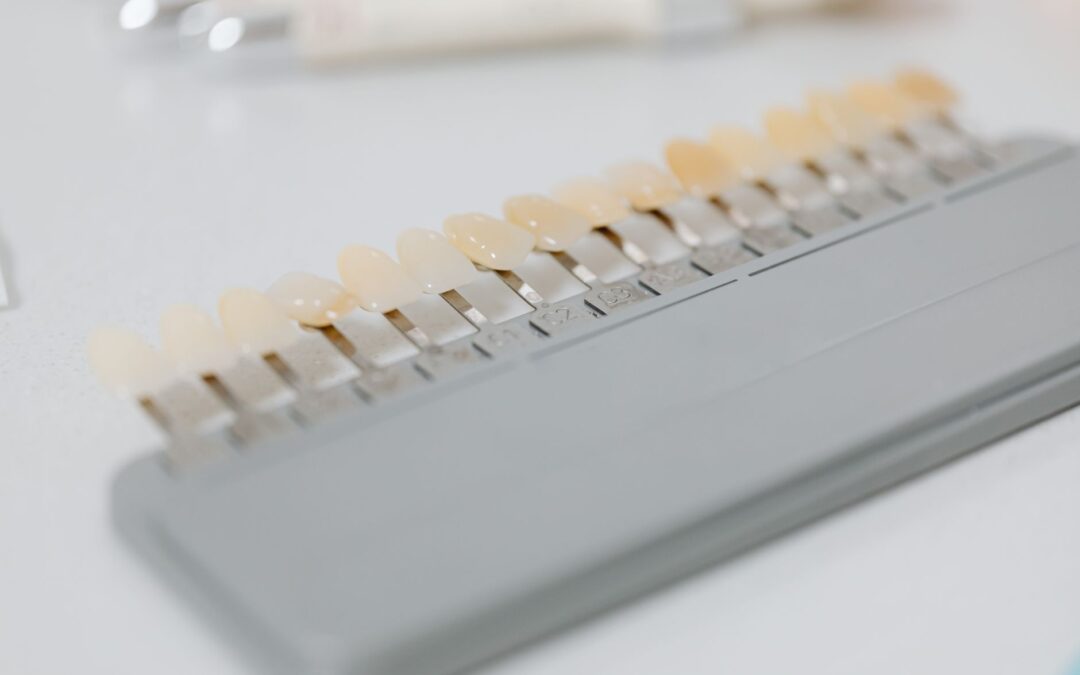
This is the biggest fear most patients bring up, and it was more valid twenty years ago. Today’s porcelain and ceramic materials mimic the way natural enamel reflects light, including the subtle gradients of color, translucency, and texture that give real teeth their character. The “piano-key” look comes from veneers that are made too opaque, sized too uniformly, or selected in a shade that doesn’t match the patient’s complexion. A skilled dental team customizes shade, shape, and size to your face. The goal isn’t blindingly white, it’s believably beautiful. Thin, well-crafted veneers can be nearly indistinguishable from the teeth beside them.
Myth 2: “Getting veneers means destroying your healthy teeth.”
Fact: Prep work is required, but the amount depends heavily on which type you choose.
Traditional porcelain veneers do require removing a thin layer of enamel, typically about 0.5 mm, so the veneer sits flush and doesn’t look bulky. That’s a real, permanent change. But it’s also far less removal than a dental crown, which reshapes the entire tooth. And for patients whose teeth have mild cosmetic issues, prepless (no-drill) veneers may require little or no enamel removal at all. The right type for you depends on your tooth structure, bite, and goals. The key takeaway: “destroying your teeth” is an overstatement, but enamel removal is real, it can’t be undone, and it’s something to discuss carefully with your dentist before you commit.
Myth 3: “Veneers are purely cosmetic, so they’re basically useless dentally.”
Fact: Veneers can solve real functional and structural problems, not just aesthetic ones.
People often get veneers to fix chips, cracks, gaps, mild crowding, worn enamel, or permanent staining that whitening won’t touch (think tetracycline stains or intrinsic discoloration). While they aren’t a substitute for orthodontic treatment when significant bite issues are involved, they genuinely address problems that affect a person’s comfort and confidence. Worn enamel in particular can leave teeth sensitive and vulnerable; covering those surfaces with a well-fitted veneer can actually provide some protection. That said, veneers are not a substitute for treating underlying decay or gum disease. Those problems have to be resolved first.
Myth 4: “Veneers last forever once you have them.”
Fact: They’re durable, but not permanent. Plan on 10 to 20 years with good care.
According to research published in the Journal of Prosthetic Dentistry, porcelain veneers have solid longevity, with many lasting 15 to 20 years when cared for properly. But they can chip, crack, or debond, especially if you grind your teeth at night (bruxism is a real enemy of veneers), bite your nails, or chew on hard objects. If you’re a grinder, your dentist may recommend a night guard to protect your investment. Composite veneers tend to have a shorter lifespan, often 5 to 7 years, but can be repaired or replaced more easily and at lower cost than porcelain.
Myth 5: “Veneers are only for celebrities and the very wealthy.”
Fact: Veneers are more accessible than they used to be, though they’re still a meaningful investment.
Nationally, porcelain veneers typically run between $900 and $2,500 per tooth (these are not our office’s prices; costs vary by location, material, and case complexity). A full smile makeover covering 8 to 10 teeth is a real financial commitment. That said, composite veneers are considerably more affordable, often $250 to $1,500 per tooth nationally. Dental insurance rarely covers veneers because they’re classified as cosmetic, but many offices offer financing plans that spread payments over time. In the Bay Area, costs tend to run higher than the national average. The point is, the gap between “celebrity smile” and “everyday option” has narrowed considerably, especially with composite as an entry point.
Myth 6: “Anyone who wants veneers can get them.”
Fact: Good candidacy matters, and not everyone qualifies without some prep work first.
Veneers work best when your underlying teeth and gums are healthy, your bite is stable, and you have enough enamel to bond to. Patients with active gum disease, untreated decay, severe teeth grinding, or very small/thin teeth may need to address those issues before veneers become a viable option. People with significant misalignment are often better served by orthodontic treatment first (like Invisalign), and then veneers for any remaining cosmetic refinements. A good consultation is the only real way to know which category you’re in.
Myth 7: “Veneers require a ton of special maintenance.”
Fact: The day-to-day care is actually pretty simple.
Brush twice a day, floss daily, and keep up with regular cleanings. That’s most of it. There are a few habits to avoid: biting fingernails, chewing ice, using your teeth as a tool to open packages, or eating excessively hard foods. Porcelain veneers resist staining better than natural enamel, so coffee and red wine won’t discolor them the way they might your other teeth. (Your other teeth, though, may shift shade over time, so it’s worth being mindful of consistency.) Non-abrasive toothpaste is recommended to avoid scratching the surface. Beyond that, veneers don’t require a special regimen, just the habits you should already have.
Myth 8: “If one veneer breaks, you have to redo the whole set.”
Fact: Individual veneers can often be replaced without touching the rest.
A chip or crack in one veneer doesn’t necessarily mean starting over. If the underlying tooth is intact and the bonding is otherwise solid, a skilled cosmetic dentist can often match and replace the single damaged veneer. The catch is shade-matching: porcelain veneers don’t change color over time, but your natural teeth might, and if you’ve had your set for years, finding an exact match for one replacement can be tricky. This is another reason to keep good records of your original shade and material. Composite veneers are even more repair-friendly and can sometimes be patched chair-side in a single visit.
The Verdict: What the Pros and Cons of Veneers Really Come Down To
- Modern porcelain veneers look natural when designed well. The “fake” look is a craftsmanship problem, not an inherent material problem.
- Some enamel removal is usually required for traditional veneers. This is permanent. Prepless options exist for suitable candidates.
- With proper care, porcelain veneers realistically last 10 to 20 years. Composite veneers last less but cost less and repair more easily.
- You need healthy teeth and gums first. Underlying problems must be treated before veneers go on.
- Maintenance is straightforward: good brushing, flossing, and regular cleanings, plus a night guard if you grind.
- A thorough consultation is non-negotiable. Your candidacy, goals, and budget all shape what type (if any) makes sense.
The American Dental Association’s MouthHealthy resource on veneers is a good starting point for additional background, and it reinforces the same core point: veneers are a real, effective option for the right patients, and the right patients are those who go in with accurate expectations and healthy foundations.
At Vaksman Dental Group in South San Francisco, our team takes the consultation seriously. We look at your bite, your enamel, your gum health, and your goals before recommending any cosmetic work. If veneers are a good fit, we’ll tell you honestly. If something else would serve you better, we’ll say that instead.
Frequently Asked Questions
Do veneers hurt to get?
Most patients report minimal discomfort during the procedure. The prep appointment involves removing a thin layer of enamel, which is done with local anesthesia so the tooth is numb. Some sensitivity in the days after is normal and typically fades quickly. If you’ve had a dental crown placed, veneers are generally less involved than that.
Can you whiten veneers if they get stained?
No. Traditional whitening agents don’t work on porcelain or composite veneer material. Porcelain veneers resist staining well and usually just need regular professional cleaning to stay bright. If they do become discolored over many years, replacement is the solution. This is also why timing your veneer shade to a post-whitening color on your natural teeth makes sense if you’re a whitening candidate.
How do I know if I need veneers or something else, like bonding or crowns?
Veneers, dental bonding, and crowns each solve different problems at different levels of intervention. Bonding is less expensive and less invasive but less durable. Crowns cover the entire tooth and are better for teeth with significant structural damage. Veneers sit in the middle: more durable and natural-looking than bonding, less aggressive than a crown. A proper clinical exam is the only reliable way to know which is right for your specific tooth and situation.
Are veneers worth it?
For patients who are good candidates, have realistic expectations, and understand the commitment involved, most report high satisfaction. The key is going in informed. Veneers are not reversible, they’re not free, and they’re not maintenance-free. But for the right person with the right goals, they can genuinely change how confident you feel about your smile every day. That’s not nothing.
Ready to find out if veneers are actually right for your smile? Our team in South San Francisco will give you a straight answer.
Written by the Vaksman Dental Group team and medically reviewed by Dr. Irena Vaksman, DDS — South San Francisco. Last reviewed September 2026.