
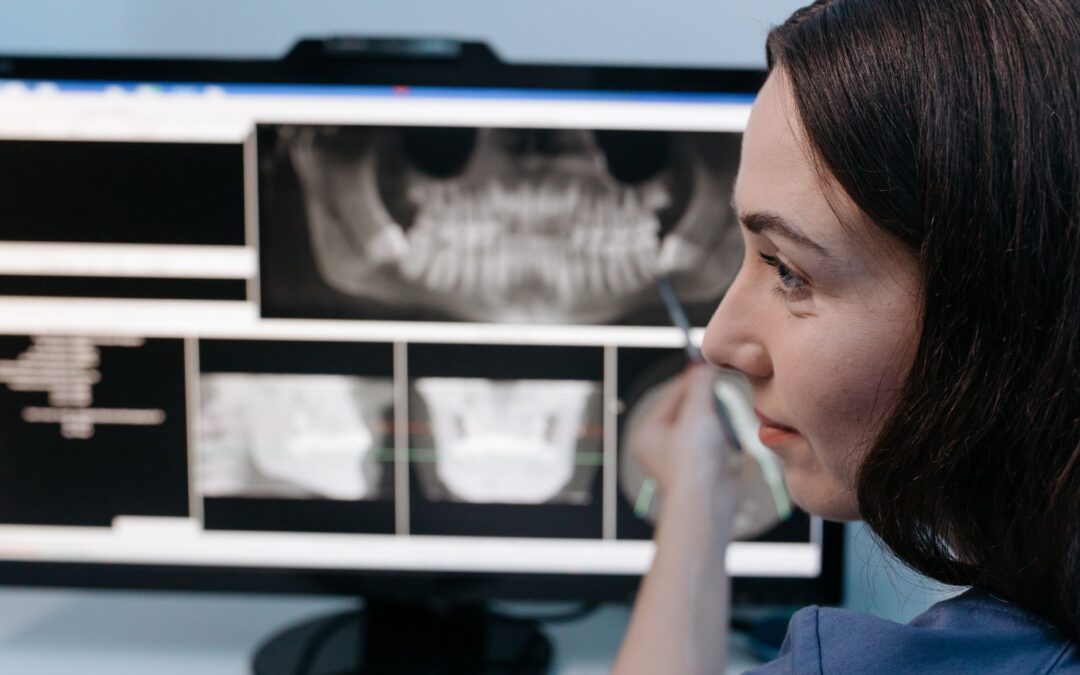
A Fox News headline from this week asked the question pretty directly: Would you trust a tiny dental robot? It’s a fair thing to wonder. Between FDA-cleared AI reading your X-rays and robotic arms placing implants, the dental office of 2026 looks meaningfully different from the one you visited as a kid. But what does any of this actually mean for you as a patient? Is it safer? Faster? Scarier? We’ll walk through what dental robots and AI tools really do, where the technology is genuinely useful, and where the human dentist is still very much in charge — because that part matters a lot.
The “dental robot” category is broader than you think
When most people picture a dental robot, they imagine a mechanical arm hovering over an open mouth, making decisions on its own. The reality is both less cinematic and more interesting. The term covers a wide spectrum of tools, from fully automated implant-placement systems tested in research settings to the CAD/CAM milling machines that have been quietly sitting in tech-forward dental offices for years, carving ceramic crowns while you wait.
The clearest way to think about it: dental “robots” and AI tools are generally designed to handle specific, well-defined tasks with greater precision or consistency than manual processes alone. They don’t diagnose, plan, or make judgment calls independently. A dentist still drives every decision. The technology just raises the ceiling on how accurately certain steps can be executed.
Robotic implant-placement systems, for example, use a pre-planned 3D surgical guide to help position an implant within fractions of a millimeter of where it was planned to go. Clinical studies have shown this kind of guided approach can improve placement accuracy compared to freehand technique. But a dentist or oral surgeon still creates the treatment plan, reviews the 3D imaging, sets the parameters, and remains hands-on throughout. The robot isn’t improvising.
AI in the dental X-ray room: this one is already here
While robotic implant arms make for great headlines, the dental AI that’s actually reached everyday patients is more subtle. It lives in the X-ray review workflow.
At Vaksman Dental Group, our team uses Pearl AI, an FDA-cleared artificial intelligence system that analyzes dental X-rays and flags findings for our dentists to review. Pearl was trained on millions of annotated radiographs and can identify potential cavities, bone-level changes, calculus deposits, and other findings that might be easy to overlook on a quick read — especially in early stages, when they’re small.
It’s worth being precise about what Pearl does and doesn’t do. It does not diagnose. It surfaces findings and marks them on the image, the same way a spell-checker underlines a word without telling you what to write. Our dentists then review every flagged area, apply their clinical judgment, look at the patient in the chair, and make the actual call. The AI is a second set of eyes trained specifically to be thorough. That combination — machine consistency plus human judgment — is what makes it genuinely useful.
A peer-reviewed analysis published in the Journal of Dentistry found that AI-assisted X-ray analysis significantly improved detection rates for interproximal caries (the cavities that form between teeth, where they’re hardest to see). Earlier detection generally means a smaller, simpler fix — the kind of filling that takes 20 minutes rather than the kind that turns into a root canal.
The key distinction: Every AI and robotic tool in dentistry today works with a licensed dentist, not instead of one. The dentist approves the plan, interprets the findings, and is responsible for your care. Technology raises precision; it doesn’t replace the person.
Same-day crowns: the robot that’s been in your dentist’s office for years
Here’s a dental robot most people have already encountered without realizing it: the CAD/CAM milling machine.
Traditional crowns required two appointments — one to prepare the tooth and take an impression, and a second two weeks later to seat the permanent crown after a lab made it. In between, you wore a temporary. The whole process was inconvenient, and temporaries sometimes fell off or caused sensitivity.
CEREC technology changed that. Our office uses an in-office CEREC system that lets our dental team take a digital scan of the prepared tooth, design the crown on-screen, and then mill it from a ceramic block — right here, same visit. You leave with a permanent, custom-fit ceramic restoration in a single appointment. No temporary, no second visit, no waiting.
The milling unit is, in a real sense, a dental robot: it receives a digital design file and carves the restoration automatically to precise tolerances. But again, the dentist is designing the crown, checking the fit, adjusting the bite, and cementing it. The machine does the precise manufacturing step that used to require a lab and two weeks.
CEREC restorations are made from high-quality dental ceramic and are designed to look and function like natural tooth structure. For patients in South San Francisco who want to get a crown done and move on with their lives, same-day CEREC crowns are one of the most practical technology wins in modern dentistry.
3D printing is already making dental appliances, too
SprintRay, the in-office 3D printer we use at Vaksman Dental Group, produces surgical guides, study models, night guards, and other appliances directly from digital files. Instead of sending an impression to an outside lab and waiting days, our team can print certain items same-day or next-day.
This matters most for things like custom night guards (if you grind your teeth, a proper fit is everything) and surgical guides for implant placement (the printed guide physically constrains where the drill can go, helping the dentist execute the planned position accurately). The FDA has a formal framework for 3D-printed medical devices, and point-of-care dental printing within that framework is one of the fastest-growing areas of dental technology right now.
What the scary headlines are — and aren’t — about
It’s worth addressing why some of the “dental robot” headlines feel a little alarming. Most of the anxiety in that Fox News piece centered on fully autonomous systems — devices that could, in theory, perform procedures without a dentist present. Those systems exist in research settings. They are not in clinical use in the United States. The FDA requires rigorous clearance for any device used on patients, and the standard of care requires a licensed dentist to be responsible for your treatment.
The dental AI that’s actually cleared and in use — systems like Pearl — are specifically classified as decision-support tools, not autonomous diagnosis systems. They help dentists catch things they might otherwise miss. That’s a very different thing from replacing clinical judgment.
The honest answer to “would you trust a dental robot?” is: it depends what you mean. If you mean an FDA-cleared AI that helps your dentist spot a tiny cavity earlier? Yes, that’s worth trusting. If you mean a fully autonomous device performing procedures with no dentist involved? That’s not what’s happening in mainstream dental offices, and it’s not what we use.
The bottom line
Dental technology is genuinely advancing — faster than most patients realize. AI-assisted X-ray review, in-office CAD/CAM crown milling, and 3D-printed appliances aren’t science fiction; they’re tools that careful, tech-forward practices are using right now to make care more accurate and more convenient. At Vaksman Dental Group in South San Francisco, our team uses Pearl AI, CEREC, and SprintRay because we believe better tools lead to better outcomes — not to replace the dentist-patient relationship, but to make every step of it more precise. The robot doesn’t see you. Your dentist does. The technology just helps them do it better.
If you have questions about how we use technology in your care, we’re always happy to walk you through it at your next visit.
You can also explore more about dental crowns at Vaksman Dental Group, including our same-day CEREC option, or learn about our digital dental X-rays in South San Francisco and how AI-assisted review fits into your exam.
Frequently Asked Questions
Are dental robots actually used in real dental offices?
Yes, though the term covers a range of tools. CAD/CAM milling machines (like CEREC) and AI-assisted X-ray review systems (like Pearl AI) are in use at tech-forward practices right now. Fully autonomous robotic surgery systems remain in research and are not part of mainstream U.S. dental care.
Is AI reading my dental X-rays safe?
Yes. FDA-cleared dental AI systems like Pearl are classified as decision-support tools, meaning they flag findings for a dentist to review. They don’t diagnose independently. Your dentist still interprets every finding and makes all clinical decisions. Research suggests AI-assisted review can improve detection of early cavities and other findings.
What is a same-day crown and how does it work?
A same-day crown uses in-office CAD/CAM technology (CEREC) to scan your prepared tooth digitally, design a custom ceramic crown on-screen, and mill it from a ceramic block in the office — all in one appointment. No temporary crown, no second visit, no lab wait time.
Does Vaksman Dental Group use dental AI and robotics?
Our office uses Pearl AI (FDA-cleared AI for X-ray review), CEREC (in-office same-day ceramic crowns), and SprintRay (in-office 3D printing for surgical guides, night guards, and appliances). All of these tools are used by our dental team as part of a patient care process where a licensed dentist is responsible for every decision.
Curious what a tech-forward dental visit actually feels like? We’d love to show you.
Written by the Vaksman Dental Group team and medically reviewed by Dr. Irena Vaksman, DDS — South San Francisco. Last reviewed July 2026.