
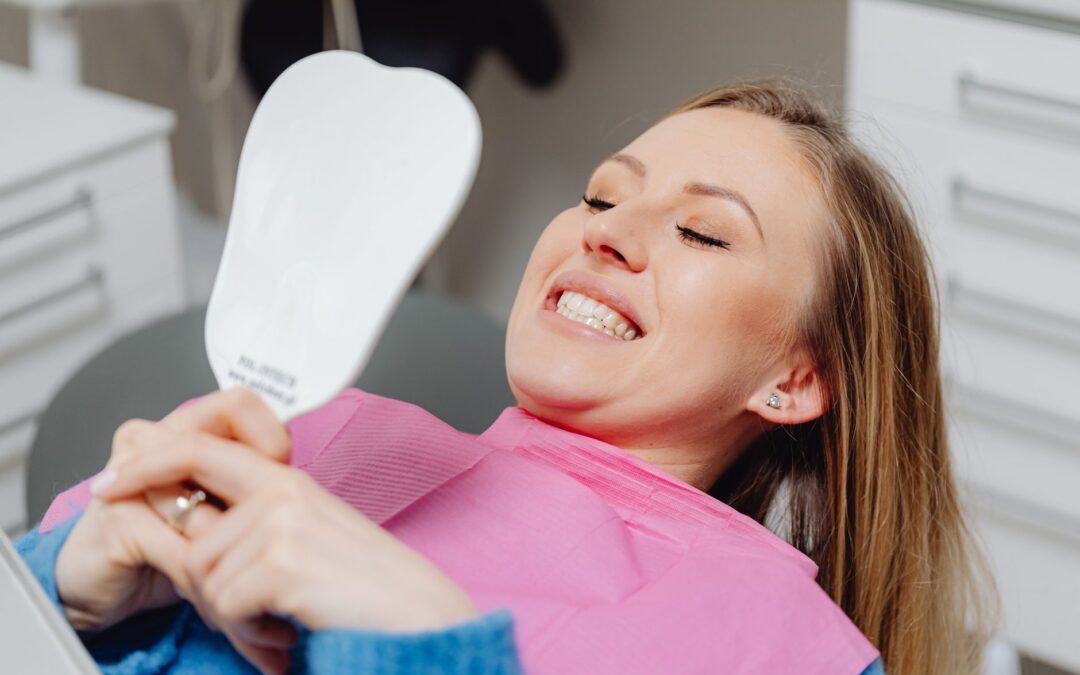
The right cosmetic treatment depends on what’s actually bothering you. If your teeth are well-shaped but yellowed, professional whitening ($300–$1,200) is usually all you need. Small chips or gaps are best fixed with cosmetic bonding ($300–$600 per tooth) in a single visit. Crooked or crowded teeth call for Invisalign or braces ($3,000–$8,000). Only when color, shape, size, and symmetry all need changing at once do porcelain veneers ($1,200–$3,000 per tooth) become the right tool. A thorough exam comes first in every case, because cosmetic work placed over untreated decay or gum disease will fail.
Key Takeaways
- Most people need less treatment than they assume: whitening or bonding solves a large share of the concerns that bring patients in asking about veneers.
- Veneers are permanent. Traditional porcelain requires removing a thin layer of enamel, so those teeth will need a covering for life.
- Lumineers and other minimal-prep options preserve more natural tooth structure, but not every case is a candidate.
- Combining simpler treatments in the right order — align first, then whiten, then bond — often produces better results for less money than defaulting to a full set of veneers.
- Healthy teeth and gums are the foundation for any cosmetic work. Untreated decay, gum disease, or bite problems get addressed first.
When people see a dramatically improved smile, they often assume one single treatment is responsible. In reality, cosmetic dentistry is more like a wardrobe: you mix and match depending on what you’re working with. The most common mistake we see at our South San Francisco practice is patients arriving convinced they need veneers — a five-figure, permanent commitment — when a few hundred dollars of bonding or a whitening course would get them where they want to go.
Here’s an honest breakdown of every option, what each actually solves, and how to tell which one fits.
The Five Main Cosmetic Options
Porcelain veneers
Ultra-thin shells of dental porcelain bonded to the fronts of teeth. They can change shape, size, color, and even correct the appearance of mild crowding or gaps — all in a couple of appointments. Durable (often 10–20 years with good care) and highly customizable.
The tradeoff: placing traditional veneers involves removing a small, permanent layer of enamel. That enamel doesn’t grow back, so those teeth will need a covering of some kind going forward. It’s a lifelong commitment, which is exactly why a thorough evaluation should come before anyone recommends one. Learn more about dental veneers at our South San Francisco office.
Lumineers and minimal-prep veneers
Lumineers are a brand of ultra-thin veneers that typically require little to no enamel removal, which is why some patients call them “no-prep” veneers. They’re a good fit for certain cases and preserve far more natural tooth structure.
They aren’t ideal for everyone. Very dark staining or significant shape corrections may still call for traditional veneers, because a wafer-thin shell can’t mask deep discoloration or add substantial bulk. Candidacy comes down to your existing tooth volume and how much change you need.
Cosmetic dental bonding
Dental bonding uses tooth-colored composite resin to reshape, fill, or brighten a tooth. It’s one of the most conservative and affordable cosmetic options, often completed in a single visit with no enamel removal at all.
Results don’t last quite as long as porcelain — typically 5–7 years before a touch-up — and composite is more prone to staining over time. But for the right candidate, bonding can be genuinely impressive. It’s also a smart “test drive” before committing to veneers: you get a sense of the shape change without the permanence.
Professional teeth whitening
Sometimes the biggest smile upgrade is simply getting several shades brighter. Professional whitening — whether in-office Zoom whitening or custom take-home bleaching trays — consistently outperforms anything you can buy at the drugstore, and it’s the lowest-risk cosmetic option available.
It’s also the most commonly underestimated. If your teeth are well-shaped and well-aligned and the only issue is color, whitening alone accounts for a great many transformations people assume required veneers.
Orthodontics: Invisalign or braces
When the issue is alignment rather than color or shape, straightening is often the most foundational fix. Invisalign clear aligners have made this accessible to adults who’d never consider traditional braces, and the results can be transformative — especially combined with whitening afterward.
Orthodontics has one significant advantage over every other option on this list: it moves your natural teeth rather than altering them. Nothing is ground down, nothing is permanent, and the tooth structure you were born with stays intact.
Which One Is Right for You?
This is the question we get most often, and the honest answer is: it depends. Here’s the framework we use:
| Your main concern | Most common starting point | Typical timeline |
|---|---|---|
| Teeth are yellow or stained, but well-shaped | Professional whitening | 1 visit to 2 weeks |
| One or two small chips or gaps | Cosmetic bonding | 1 visit |
| Crowding, spacing, or crooked teeth | Invisalign or orthodontic treatment | 6–24 months |
| Too much gum showing when you smile | Gum contouring | 1–2 visits |
| Shape, size, and color all need changing | Porcelain veneers or Lumineers | 2–3 visits over 2–4 weeks |
| A structurally damaged or root-canaled tooth | A dental crown, not a veneer | 1–2 visits |
| Multiple concerns at once | Smile makeover consultation (combination approach) | Varies by plan |
One thing our dentists always emphasize: cosmetic work needs a healthy foundation. Gum disease, untreated cavities, or bone loss can all affect what’s possible and in what order. That’s why every cosmetic plan at our office starts with a thorough exam — not to slow you down, but because we want your results to last.
What Each Option Costs
| Treatment | National Range | SF Bay Area Typical | How Long Results Last |
|---|---|---|---|
| Professional in-office whitening | $300 – $1,000 | $500 – $1,200 | 1–3 years with maintenance |
| Custom take-home whitening trays | $200 – $500 | $300 – $600 | 1–2 years with touch-ups |
| Cosmetic bonding (per tooth) | $300 – $600 | $400 – $700 | 5–7 years |
| Porcelain veneers (per tooth) | $1,200 – $2,500 | $1,500 – $3,000 | 10–20 years |
| Lumineers / minimal-prep (per tooth) | $1,200 – $2,000 | $1,400 – $2,500 | 10–20 years |
| Invisalign (full treatment) | $3,000 – $8,000 | $4,500 – $9,000 | Permanent with retainers |
| Dental crown (per tooth) | $1,000 – $2,500 | $1,400 – $3,000 | 10–20 years |
Dental insurance treats cosmetic procedures as elective and generally won’t contribute, with the occasional exception of bonding used to repair a tooth damaged by injury. Orthodontics is the outlier: many plans include an adult orthodontic lifetime benefit of $1,000–$2,000. Financing options can spread larger treatment plans across months or years.
Why Sequencing Matters More Than People Think
The order of treatment changes both the result and the price.
Align before you whiten. Straightening teeth first means the whitening gel contacts surfaces evenly, and previously overlapped areas don’t stay darker.
Whiten before you bond or veneer. Composite resin and porcelain don’t respond to whitening agents. If you whiten afterward, your natural teeth lighten and your restorations don’t — leaving a mismatch. Get to your target shade first, then match the restorations to it.
Treat disease before anything cosmetic. Placing a beautiful restoration over active decay or inflamed gums is painting over rot. The cosmetic work fails, and the underlying problem worsens underneath it.
Consider the conservative option first. Whitening and bonding are reversible or replaceable. Veneers are not. Starting conservative preserves the option to escalate; starting with veneers eliminates it.
Patients who follow this order frequently find they stop before reaching veneers at all — because aligned, whitened teeth with two bonded edges already got them what they wanted.
The “Diamond Cut” Veneer Trend, and Why It Worries Dentists
Trending dental searches have popularized terms like “diamond cut veneers.” The term usually refers to the aggressive tooth shaping sometimes done abroad to prep for veneers: a technique that has drawn serious concern from dental professionals because it can involve removing far more enamel than necessary, sometimes damaging the tooth’s nerve.
The American Dental Association’s consumer resource MouthHealthy notes that veneers done correctly involve minimal, targeted enamel reduction — not wholesale reshaping. If you see dramatic “shaved down” teeth on social media and feel alarmed, trust that instinct. What’s often being shown isn’t veneer preparation at all; it’s full crown preparation, which removes structure from every surface of the tooth.
Reputable cosmetic dentistry preserves as much natural tooth structure as possible. Always ask your dentist to walk you through what prep is involved, why, and what alternatives exist. We cover the risks of overseas cosmetic packages in more detail in our guide to Turkey teeth and dental tourism.
Is Cosmetic Dentistry Safe?
When performed by a qualified dentist on properly selected candidates, cosmetic procedures like veneers, bonding, and professional whitening have strong safety records. The American Dental Association acknowledges teeth whitening as safe and effective when used as directed, and notes that sensitivity is the most common — and temporary — side effect. Veneers and bonding, done well, should not weaken healthy teeth.
The risks rise in three situations: when people seek bargain treatment abroad without follow-up care, when cosmetic work is placed over teeth that needed restorative treatment first, and when a patient’s grinding or bite problems go unaddressed before porcelain is placed. The safest cosmetic dentistry is the kind done in a relationship with a team that knows your full dental history.
What Happens at a Cosmetic Consultation
- Exam and records. Photographs, a digital scan, and often X-rays. This confirms your teeth, gums, and bone are healthy enough for cosmetic work and identifies anything that needs treating first.
- Goals conversation. What specifically bothers you, and what you want to look like. This matters more than it sounds — “whiter” and “straighter” and “more even” lead to completely different plans.
- Options and honest tradeoffs. Every path that could reach your goal, with the cost, permanence, and timeline of each. A good consultation includes the option of doing less.
- Digital smile preview. For veneer and makeover cases, seeing a simulation of the proposed result before any prep work begins.
- A written plan. Sequenced treatment with exact pricing, so you can decide with real numbers instead of ranges.
No pressure, no obligation to proceed. Some of our best consultations end with a patient deciding to whiten and stop there.
Frequently Asked Questions
Do veneers ruin your natural teeth?
Traditional porcelain veneers do require the permanent removal of a thin layer of enamel, so they are a lifelong commitment and that enamel cannot grow back. However, when placed correctly, they don’t “ruin” healthy teeth; they simply reshape them. Lumineers and other minimal-prep options reduce or eliminate enamel removal entirely. The key is choosing a qualified dentist who recommends only what your teeth actually need.
How long do veneers last?
Porcelain veneers typically last 10–20 years with good care: regular brushing, flossing, dental cleanings, and avoiding habits like nail-biting or using teeth as tools. Composite bonding tends to last 5–7 years before needing a touch-up. Neither is permanent, but both can provide beautiful, long-lasting results.
Should I get veneers or just whitening?
If your teeth are well-shaped and well-aligned and your only concern is color, whitening is almost always the better choice — it’s far less invasive, far less expensive, and reversible in the sense that nothing permanent is done to your teeth. Veneers make sense when you also want to change shape, length, or symmetry, or fix chips that whitening can’t address.
What’s the difference between veneers and dental bonding?
Veneers are custom-fabricated shells of porcelain or composite made in a lab and permanently bonded to the tooth surface; they offer superior durability and stain resistance. Dental bonding uses composite resin applied and sculpted directly onto the tooth in a single visit. Bonding is more affordable and requires no enamel removal, but it’s less stain-resistant and may need replacement sooner.
Is teeth whitening safe for sensitive teeth?
Many people with sensitive teeth can still whiten safely, but it’s worth discussing with your dentist first. Professional whitening allows for more controlled concentrations and application than over-the-counter products, and your dental team can recommend a gentler protocol or desensitizing treatments to minimize discomfort. In-office and custom tray options both have protocols designed for sensitive patients.
Can veneers fix crooked teeth?
Veneers can mask mild crowding or minor rotations by changing the visible surface of the teeth, but they don’t move anything. For moderate to significant misalignment, orthodontics or clear aligners address the actual position of the teeth, which produces a more stable, healthier result. Some patients do orthodontics first and then a small number of veneers for final refinement.
How many veneers would I need?
It depends on how many teeth show when you talk and smile. Many cosmetic cases use 6 upper veneers to cover the visible smile zone; wider smiles may need 8–10. Single-tooth veneers are common too, though matching one veneer to natural neighbors is technically demanding work. Your dentist determines the number at the consultation.
Does insurance cover cosmetic dentistry?
Generally no — cosmetic procedures are classified as elective and aren’t covered. Bonding used to repair a tooth damaged by injury may have partial coverage depending on your plan. Orthodontic treatment is the common exception: many dental plans include an adult orthodontic lifetime benefit of $1,000–$2,000. Our front desk can verify your specific benefits.
Written by the Vaksman Dental Group team and medically reviewed by Dr. Irena Vaksman, DDS, South San Francisco.