
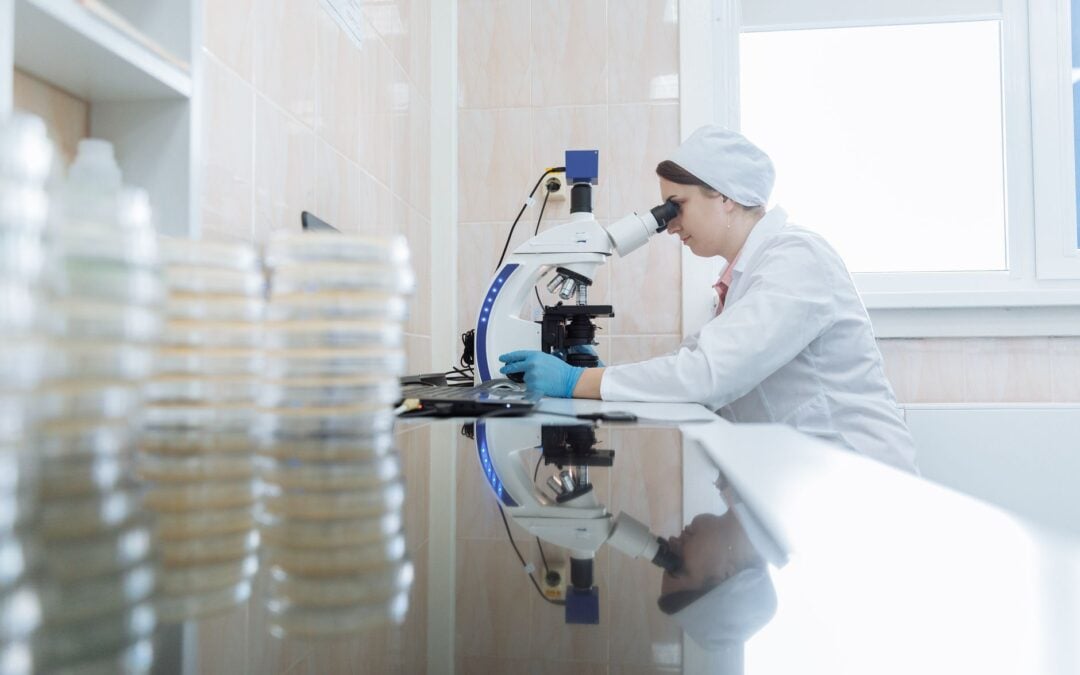
Scientists in Japan have developed a drug that may stimulate a dormant third set of teeth to grow in humans — a discovery that could one day change how we replace missing teeth. The drug, an anti-USAG-1 antibody called TRG035, entered the world’s first human clinical trial in October 2024 at Kyoto University Hospital. Early results focus on safety, and a widely available tooth-growing treatment is realistically still years away — developers are targeting around 2030 at the earliest, and initially for people born missing teeth. For anyone with missing teeth today, proven options like dental implants, bridges, and dentures remain the right choice.
Key Takeaways
- Most people carry a vestigial “third dentition”: dormant tooth buds that normally never activate.
- Researchers in Japan — oral surgeon Dr. Katsu Takahashi and the Kyoto University spinout Toregem Biopharma — developed an antibody drug (TRG035) that blocks a protein called USAG-1 to “wake up” these buds.
- The world’s first human trial began in October 2024 at Kyoto University Hospital, enrolling adults with congenital tooth loss; it tests safety first.
- The drug received orphan drug designation from Japan’s Ministry of Health in September 2025, and developers are aiming for commercialization around 2030 — first for people with congenital conditions, not as a routine alternative to implants.
- Right now, the best ways to replace missing teeth remain dental implants, dental bridges, and dentures — all of which we offer at Vaksman Dental Group.
- The discovery is also a powerful reminder of why protecting the teeth you have now matters more than ever.
A headline about humans growing a third set of teeth recently stopped a lot of people mid-scroll. It sounds almost too good to be true, like something out of a sci-fi novel. But the science behind it is real, peer-reviewed, and genuinely worth understanding. Let’s dig in — calmly, and without the hype.
Wait, Do Humans Really Have a Third Set of Teeth?
Sort of, yes — and this is one of the more fascinating facts in human biology. You already know about your two sets: your baby (primary) teeth, which you lose as a child, and your permanent (adult) teeth, meant to last a lifetime. But researchers have known for years that most humans carry a set of dormant tooth buds: essentially the genetic “blueprint” for a third dentition that never gets activated under normal circumstances.
These buds are a bit of an evolutionary leftover. Our ancient ancestors had multiple sets of teeth (think sharks, which cycle through teeth continuously). Over millions of years of evolution, humans gradually lost that regenerative ability, but the underlying genetic machinery isn’t entirely gone. It’s just switched off.
A small percentage of people do spontaneously grow extra permanent teeth: a condition called hyperdontia, which hints that this latent potential is real. In fact, the Japanese research began with exactly this clue — mice bred to lack the USAG-1 protein grew extra (“supernumerary”) teeth, which pointed researchers toward a way to switch tooth growth back on.
What’s the New Drug, and How Does It Work?
The research has been led for nearly three decades by Dr. Katsu Takahashi, an oral surgeon now at the Medical Research Institute Kitano Hospital in Osaka, working with teams from Kyoto University and the University of Fukui. In 2020 the team founded a Kyoto-based startup, Toregem Biopharma, to bring the treatment toward patients.
At the center of the science is a protein called USAG-1 (uterine sensitization-associated gene-1), which acts as a molecular “brake” on tooth growth. USAG-1 suppresses the BMP signaling that would otherwise tell a dormant tooth bud to develop.
The team’s breakthrough: an antibody drug, code-named TRG035, that blocks USAG-1 and releases that brake. In animal studies — first mice, then ferrets (whose tooth patterns resemble ours) — blocking USAG-1 allowed new teeth to grow. That foundational work was published in the peer-reviewed journal Science Advances in 2021 (Anti-USAG-1 therapy for tooth regeneration through enhanced BMP signaling).
It’s worth being clear about the distance between “an antibody that works in animals” and “a treatment your dentist can prescribe.” That distance is measured in years — and the researchers themselves say so.
What Does “Clinical Trials” Actually Mean for a Timeline?
Clinical trials move in phases for good reason: safety first, then effectiveness, then large-scale testing. Here’s where TRG035 actually stands, based on the developers’ own announcements:
| Trial Phase | What It Tests | Where TRG035 Stands |
|---|---|---|
| Preclinical (animal) | Does it grow teeth safely in animals? | Complete — published in Science Advances, 2021 |
| Phase 1 | Is it safe in humans? | Began October 2024 at Kyoto University Hospital (adults with congenital tooth loss) |
| Phase 2 | Does it work in patients? | Pediatric trials planned to begin in 2026 |
| Phase 3 | Large-scale effectiveness and safety | Years away |
| Regulatory approval | Government clearance for public use | Developers target around 2030 at the earliest |
Two milestones worth knowing: the drug received orphan drug designation from Japan’s Ministry of Health, Labour and Welfare in September 2025 (a status that speeds development for rare-disease treatments), and Toregem has signaled interest in eventually studying tooth loss from injury, decay, and aging — not just congenital cases.
The honest answer on timing: if everything goes perfectly, a tooth-growing drug might reach the public around 2030 or later — and even then, first for people with severe congenital tooth loss, not as a routine alternative to implants. Dr. Takahashi has publicly framed the goal as making tooth regrowth “a third choice alongside dentures and implants,” not a replacement for everything we do today.
Why Is This Discovery Such a Big Deal, Even If It’s Years Away?
Because it represents a fundamentally new category of dental treatment. Almost everything we do to replace missing teeth today is mechanical: we place a titanium post (dental implants), craft a bridge out of porcelain, or make a denture out of acrylic. These are excellent, time-tested solutions that genuinely change people’s lives. But none of them are biological — none of them are your actual tooth, with its living root and natural shock absorption.
If this drug works as hoped, it could mean that instead of replacing a missing tooth with an artificial one, we could coax your own body into growing a real one. That’s a paradigm shift: the dental equivalent of regrowing a limb.
It also opens doors for children born with congenital tooth loss (the trial’s first focus), adults who lose teeth to injury or disease, and eventually perhaps even people who simply want to replace a worn-out molar.
What Should You Actually Do About Missing Teeth Right Now?
Here’s the practical takeaway that responsible reporting should emphasize: even the most optimistic researchers are not telling people to wait on a tooth-growing pill. Missing teeth cause real, progressive problems — bone loss in the jaw, shifting of neighboring teeth, changes in bite and facial structure — and these begin surprisingly quickly after a tooth is lost.
The American Dental Association’s MouthHealthy resource consistently recommends replacing missing teeth promptly. Today’s options are genuinely excellent:
- Dental implants: the gold standard — a titanium root topped with a lifelike crown that can last decades with good care.
- Dental bridges: a fixed option that spans the gap, anchored to neighboring teeth.
- Dentures and partial dentures: removable, affordable, and far more comfortable and natural-looking than ever with modern materials.
- All-on-4 implants: for people missing most or all of their teeth, a full arch supported by just four implants.
At Vaksman Dental Group, our dental team works with patients across South San Francisco, San Bruno, Daly City, and the broader Peninsula to find the right solution for their situation: budget, bone health, lifestyle, and all. You don’t have to figure it out alone.
The Bigger Lesson: Your Current Teeth Are Worth Protecting
Here’s the part of this story that doesn’t get as many headlines but might be the most important: the best tooth is always the one you already have. No implant, bridge, or future tooth-growing drug will ever be quite as good as a healthy natural tooth you kept. Consistent preventive dental care — cleanings, exams, catching small problems before they become big ones — is still the most powerful dental technology available, right now, today.
In our South San Francisco office, we see firsthand how a small cavity caught early versus caught late can mean the difference between a simple filling and a root canal or extraction. That gap is enormous. Every tooth you keep is one you’ll never need to replace — with a crown, an implant, or someday, maybe, a pill.
Frequently Asked Questions
Can humans actually grow a third set of teeth naturally?
In rare cases, yes — people with a condition called hyperdontia spontaneously grow extra teeth, which shows the biological potential exists. But for the vast majority of people, the dormant third-dentition tooth buds never activate on their own. The Japanese research (the anti-USAG-1 antibody TRG035) aims to change that by blocking the protein that suppresses those buds, though it remains in early clinical trials.
What is the third set of teeth called?
The dormant third set is referred to as the “third dentition.” The spontaneous growth of extra teeth beyond the normal two sets is medically called hyperdontia, and the resulting teeth are called supernumerary teeth. The experimental drug aims to deliberately activate this latent third dentition.
What is the Japanese tooth drug?
It’s an antibody-based medication code-named TRG035, developed by the Kyoto University spinout Toregem Biopharma and led by Dr. Katsu Takahashi. It blocks a protein called USAG-1 that normally suppresses tooth growth; blocking it allowed new teeth to grow in animal studies published in Science Advances in 2021. The first human trial began in October 2024, initially for people born missing teeth.
When will the tooth-growing drug be available to the public?
Developers are targeting around 2030 at the earliest, and even then regulatory approval would likely come first for people with congenital tooth-loss conditions. The drug received orphan drug status in Japan in September 2025, which can speed development, but it still must complete Phase 2 and Phase 3 trials. It’s an exciting development, not an imminent one — if you have missing teeth now, implants, bridges, and dentures remain excellent choices.
Does this research mean I should skip getting an implant and just wait?
We’d recommend against waiting. Missing teeth cause bone loss, shifting teeth, bite problems, and other complications that develop over months and years — long before any tooth-growing drug could realistically arrive. The research is promising but is targeting 2030 at the earliest, and first for congenital cases. Our dental team is happy to walk you through today’s best options at a consultation.
How common is a third set of teeth?
True spontaneous third-dentition growth is rare. Hyperdontia — having one or more extra teeth — occurs in an estimated 1–4% of the population, more often in the upper jaw. Most people carry the dormant genetic potential for additional teeth but never develop them without intervention, which is exactly what the experimental drug is designed to trigger.
What can I do right now to protect the teeth I have?
The fundamentals are still the best tools we have: brush twice a day with fluoride toothpaste, floss daily, and see your dentist for regular cleanings and exams. These habits, practiced consistently, dramatically reduce your risk of tooth loss. At Vaksman Dental Group, we also offer preventive treatments like dental sealants and personalized hygiene plans to help protect your smile for the long haul.
Written by the Vaksman Dental Group team and medically reviewed by Dr. Irena Vaksman, DDS, South San Francisco.