
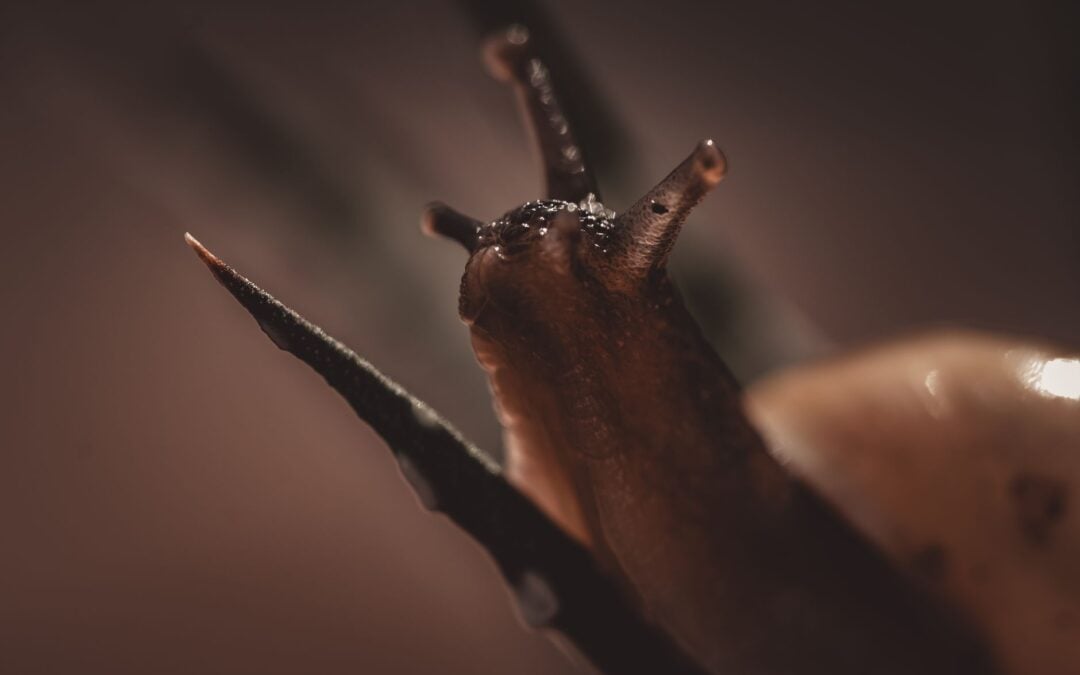
Snails don’t have teeth in the way humans do. Instead they have a radula — a flexible, ribbon-like feeding organ covered in thousands of microscopic, tooth-like structures made of chitin. A common garden snail carries roughly 14,000 of them, and some species have more than 25,000. The teeth of the limpet, a marine relative, are the strongest biological material ever measured: 3.0–6.5 gigapascals of tensile strength, stronger than spider silk and rivaling high-performance carbon fiber. They are not, however, harder than diamond — a distinction the internet frequently gets wrong.
Key Takeaways
- Snail “teeth” sit on a radula, a chitinous ribbon that works like a conveyor-belt file for scraping food.
- A garden snail has around 14,000 radula teeth; counts across species range from about 2,000 to over 25,000.
- Limpet teeth are reinforced with goethite, an iron-based mineral, and hold the record for tensile strength in the biological world.
- “Stronger than diamond” is a misconception: limpet teeth beat diamond on tensile strength, but diamond is far harder. Strength and hardness are different properties.
- Snails continuously replace worn teeth. Humans get exactly two sets — which is why protecting the second one matters.
Do Snails Actually Have Teeth?
Yes and no — which is why this question keeps trending. Snails don’t have teeth in the sense of individual structures rooted in a jaw. What they have is a radula: a flexible, tongue-like ribbon covered in row after row of tiny, hardened projections. Biologists call those projections teeth, but they’re built on an entirely different plan from ours.
The radula works like a cheese grater or a rasping file. The snail extends it over a surface — a leaf, algae on a rock — and drags it back, scraping off tiny particles of food. Nearly all gastropods have one, and the shape of the teeth varies enormously depending on what a species eats.
The most important difference from human teeth: the radula is a conveyor belt. As the teeth at the front wear down from feeding, new rows form at the back and gradually move forward to replace them. A snail is in a permanent state of tooth renewal.
How Many Teeth Do Snails Have: 14,000 or 25,000?
Both numbers circulate widely, and both are roughly right — they just describe different species.
| Species type | Approximate radula teeth |
|---|---|
| Common garden snail | ~14,000 |
| Many marine and freshwater snails | 2,000 – 15,000 |
| Some species (certain sea slugs and marine snails) | 25,000+ |
| Limpet (marine relative) | Several thousand, in tightly ordered rows |
So when you see “snails have 14,000 teeth,” that’s the garden snail figure. “Over 25,000” refers to the upper end across gastropod species. Neither is wrong; they’re just different animals.
For scale: an adult human has 32 permanent teeth, including wisdom teeth. A single garden snail carries more than 400 times that number.
What Are Snail Teeth Made Of?
Not enamel — this is where snail teeth diverge most sharply from ours.
Snail radula teeth are built primarily from chitin, the same tough structural polysaccharide found in insect exoskeletons and crab shells. Many species reinforce that chitin with minerals, and this is where things get remarkable.
Limpets, marine gastropods that cling to rocks, mineralize their teeth with goethite — an iron oxyhydroxide. The goethite forms as extremely fine nanofibres embedded in a chitin-protein matrix, and the fibres are thin enough to sit below the size threshold at which structural defects would weaken them. That nanoscale architecture is the reason limpet teeth are as strong as they are.
Human teeth take the opposite approach: our enamel is a calcium phosphate mineral (hydroxyapatite), roughly 96% mineral by weight, making it the hardest substance in the human body. Different material, different strategy, different failure modes.
Are Snail Teeth Really the Strongest Material in Nature?
Yes — with an important qualification about what “strongest” means.
A 2015 study by Asa Barber, Dun Lu and Nicola Pugno, published in the Journal of the Royal Society Interface (Extreme strength observed in limpet teeth), measured the tensile strength of common limpet (Patella vulgata) tooth material using atomic force microscopy. The result: 3.0 to 6.5 gigapascals.
That figure displaced spider silk as the strongest known biological material. For context:
| Material | Approximate tensile strength |
|---|---|
| Limpet tooth | 3.0 – 6.5 GPa |
| Spider silk (dragline) | ~1.3 – 4.5 GPa |
| Kevlar | ~3.0 – 3.5 GPa |
| Human tooth enamel | ~0.01 – 0.04 GPa |
The researchers noted the strength was independent of sample size, suggesting the structure operates near the theoretical limit for that material. Engineers have since looked at the design for applications in aerospace materials, boat hulls, and — fittingly — dental restorations.
Snail Teeth vs. Diamond: Clearing Up the Myth
This is the claim that spreads fastest and is most often garbled: snail teeth are stronger than diamond.
The accurate version requires separating two properties that get conflated:
- Tensile strength is resistance to being pulled apart. Limpet teeth excel here — better than spider silk, comparable to the strongest man-made fibres.
- Hardness is resistance to being scratched or indented. Diamond is the reigning champion, at 10 on the Mohs scale. Goethite, the mineral in limpet teeth, sits at roughly 5.0 to 5.5 — about the same as human tooth enamel, and nowhere near diamond.
So: limpet teeth are the strongest biological material by tensile strength. Diamond is dramatically harder. A diamond will scratch a limpet tooth without difficulty; pulling a limpet tooth apart takes extraordinary force. Both facts are true, and they aren’t in conflict.
Headlines that flatten this into “stronger than diamond” are describing a real finding inaccurately.
What Do Snail Teeth Look Like Under a Microscope?
Under an electron microscope, a radula looks startlingly manufactured — like industrial abrasive tape. The teeth appear as regular, repeating rows of curved, hooked projections in precise geometric alignment across the ribbon, often hundreds of rows deep. Individual limpet teeth are less than a millimetre long and curve like tiny claws.
The regularity is the surprising part. There’s nothing haphazard about it; the structure looks engineered, which is exactly why materials scientists took an interest.
Could Snail Teeth Inspire Better Dental Materials?
This is where the research gets directly relevant to dentistry. When the limpet tooth findings were published, lead author Asa Barber pointed to three potential applications for the structure: aircraft, boat hulls, and dental fillings.
The appeal is obvious once you see the numbers. A filling or crown has to survive decades of chewing forces, thermal cycling from hot and cold food, and an acidic, bacteria-rich environment — the same combination of demands a limpet tooth handles while rasping algae off rock in seawater. Nature solved a version of the problem we’re still engineering around.
Researchers have since gone further than analysis. A 2022 study demonstrated biomimetic replication of limpet tooth material outside the animal: the team analyzed which genes drive chitin and iron processing in the developing radula, grew isolated radula cells in culture, and produced bioinspired material by mineralizing electrospun chitin with media conditioned by those cells.
None of this is in your dentist’s operatory yet, and it may never arrive in exactly this form. But it’s a genuine example of biomimetics with dental applications in view — and a reminder that the materials science behind restorations keeps advancing. Meanwhile, the most advanced dental material available to you today is still the enamel you were born with.
How Do Animal Teeth Compare? A Quick Tour
| Animal | Tooth count / type | Notable feature |
|---|---|---|
| Garden snail | ~14,000 radula teeth | Chitin-based; continuously replaced from the back |
| Limpet | Several thousand radula teeth | Goethite-reinforced; strongest biological material measured |
| Great white shark | ~300 at any time; thousands over a lifetime | New rows erupt every 1–2 weeks; old teeth shed |
| Crocodile | ~80 teeth; can go through 3,000 in a lifetime | Continuous replacement throughout life |
| Elephant | 6 sets of molars over a lifetime | Sets move forward conveyor-style; when the last wears out, the elephant can no longer chew |
| Narwhal | Usually one visible “tusk” | The tusk is a single canine tooth growing through the lip |
| Human adult | 32 permanent teeth | Only one replacement set, ever — enamel doesn’t regrow |
What Animal Tooth Science Tells Us About Human Teeth
Here’s where the biology connects to your actual mouth. Scientists classify tooth-replacement strategies into two broad categories. Polyphyodonts — sharks, crocodiles, most reptiles and fish — grow new teeth repeatedly, sometimes dozens of times over. Diphyodonts — humans and most mammals — get exactly two sets: a primary set and a permanent set. That’s it.
Why did mammals evolve this way? The leading explanation is that warm-blooded, complex chewing requires precisely fitted teeth — the kind of tight occlusion that lets you grind and shear efficiently. Continuously regrowing teeth would disrupt that precision. It’s a trade-off: extreme accuracy in exchange for a fixed number of replacements.
Across every species studied, teeth fail for the same three reasons:
- Acid erosion. Limpet teeth resist acid well thanks to their mineral composition. Human enamel is far more vulnerable — acidic foods and drinks, and stomach acid from reflux, dissolve it over time. Unlike a snail, you can’t grow it back.
- Mechanical wear. Elephants chew through six sets of molars. We have one set to last 80+ years. Grinding (bruxism) accelerates that wear dramatically, which is why a custom night guard can add years of life to your teeth.
- Bacterial infection. Sharks famously don’t get cavities. Humans have enamel that’s susceptible to acids produced by oral bacteria, which makes brushing, flossing, and regular preventive dentistry genuinely non-negotiable.
The animal kingdom makes one thing clear: most creatures either get endless replacements or one precision-engineered, irreplaceable set. We’re firmly in the second group. The teeth you’re brushing tonight are, in all likelihood, the last ones you’ll grow naturally.
At Vaksman Dental Group in South San Francisco, that’s the whole logic behind how our team approaches every visit — prevention first, catching small problems before they become big ones. If you haven’t had a checkup recently, there’s no better time.
Frequently Asked Questions
Is it true that snails have 14,000 teeth?
Yes, approximately. A common garden snail has roughly 14,000 microscopic teeth arranged in rows on its radula, a flexible ribbon-like feeding organ. The exact count varies by species and by individual, and some gastropods carry more than 25,000. These aren’t teeth in the human sense — they’re chitin projections that scrape food rather than bite or chew it.
Do snails have 25,000 teeth?
Some species do. The 25,000+ figure refers to the upper end of the range across gastropods, including certain marine snails and sea slugs. The commonly cited 14,000 figure describes the ordinary garden snail. Both numbers appear in reputable sources because they describe different animals.
Do any snails have teeth?
Effectively all snails do, though not the kind we’d recognize. Every gastropod with a radula — which is nearly all of them — carries thousands of microscopic, tooth-like chitin structures on that ribbon. They’re used for rasping and scraping food, not for biting or chewing.
Are snail teeth the strongest material?
Limpet teeth hold the record for tensile strength among biological materials: 3.0 to 6.5 gigapascals, measured in a 2015 Royal Society Interface study. That surpasses spider silk, the previous record-holder, and approaches the strength of the toughest man-made fibres. Their strength comes from goethite nanofibres set in a chitin matrix.
Are snail teeth stronger than diamond?
Not in the way that phrase suggests. Limpet teeth exceed diamond in tensile strength — resistance to being pulled apart — but diamond is far harder. Diamond rates 10 on the Mohs hardness scale; goethite, the mineral in limpet teeth, rates about 5.0 to 5.5, similar to human enamel. Strength and hardness are different properties, and headlines often conflate them.
What are snail teeth made of?
Primarily chitin, the same tough polysaccharide found in insect exoskeletons and crustacean shells. Many species reinforce it with minerals: limpets use goethite, an iron oxyhydroxide, formed as ultra-fine nanofibres within a chitin-protein matrix. Human teeth, by contrast, are covered in enamel made of hydroxyapatite, a calcium phosphate mineral.
Are snail teeth being used to make dental materials?
Not yet in clinical practice, but the research is active. When limpet tooth strength was first measured, the lead author identified dental fillings as a target application alongside aerospace and marine materials. A 2022 study went further, replicating limpet tooth structure outside the animal by mineralizing electrospun chitin using media from cultured radula cells. It remains laboratory work, not an available treatment.
Do snail teeth grow back?
Continuously. The radula operates like a conveyor belt — as front-row teeth wear down from feeding, new rows form at the back and advance forward to replace them. Humans are diphyodonts: we get one baby set and one permanent set, and lost enamel never regenerates.
Why can’t humans grow new teeth like snails or sharks?
Humans are diphyodonts, meaning we evolved to grow exactly two sets of teeth. The trade-off is precision: complex mammalian chewing requires tightly fitted bite alignment that continuous tooth replacement would disrupt. Early-stage research into tooth-regrowth drugs for humans is ongoing, but no clinically available treatment exists yet.
Written by the Vaksman Dental Group team and medically reviewed by Dr. Irena Vaksman, DDS, South San Francisco.