
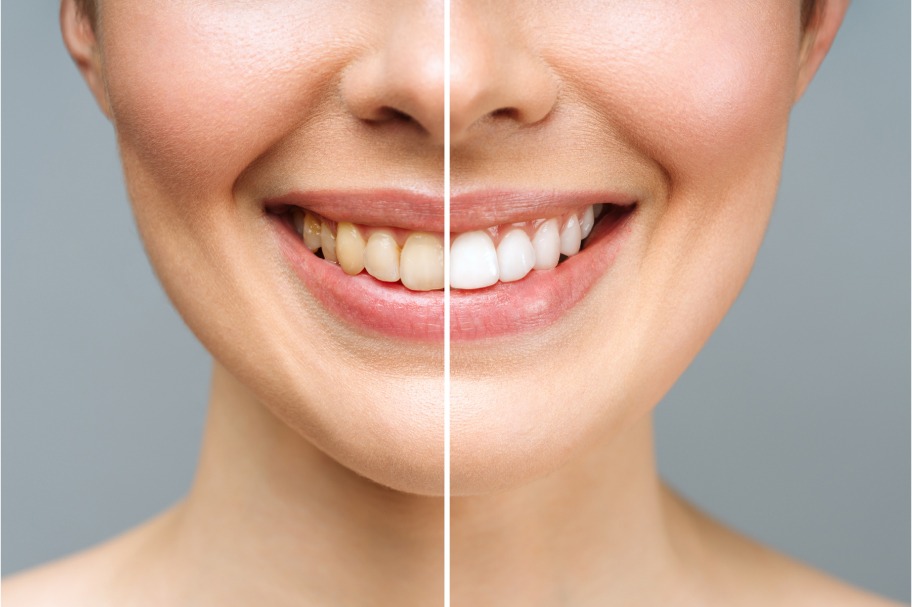
Professional teeth whitening typically costs about $300–$800 in-office, while dentist-supplied take-home kits run roughly $200–$400 and over-the-counter strips cost about $20–$60. You pay more for professional treatment because it whitens faster, lasts longer, and is supervised for safety.
Whiter teeth are one of the most requested cosmetic upgrades — but with so many options, it’s hard to know what’s worth it. Here’s a clear breakdown of teeth whitening costs and how the methods compare on speed, results, and safety.
How Much Does Teeth Whitening Cost?
Prices vary by region, provider, and the strength of the treatment. As a general U.S. ballpark:
| Whitening Option | Typical Cost | Speed | Results Last |
|---|---|---|---|
| In-office professional | $300–$800 | One visit (~1 hour) | ~6–12 months |
| Dentist take-home kit | $200–$400 | 1–2 weeks | ~6–12 months |
| Over-the-counter strips/gels | $20–$60 | 2–4 weeks | A few months |
These are national ranges, not a specific quote. For an exact price tailored to your smile, contact our teeth whitening team in South San Francisco.
Professional vs. At-Home Whitening: What’s the Difference?
In-Office Professional Whitening
Done in the dental chair, in-office whitening uses a stronger, professional-grade gel — sometimes activated by light — to produce dramatic results in a single visit. It’s the fastest and most effective option, and your gums and lips are protected throughout. Ideal if you want noticeable results before an event.
Dentist Take-Home Kits
These kits include custom-fitted trays molded to your teeth plus professional-strength gel to use at home over one to two weeks. They deliver results close to in-office treatment for less, with the safety of a dentist-designed plan. A great middle-ground choice.
Over-the-Counter Whitening
Drugstore strips, gels, and trays are the cheapest route, but they use weaker bleaching agents and one-size-fits-all trays. Results are more modest, take longer, and fade faster. Poorly fitting trays can also let gel irritate the gums.
Why Is Professional Whitening More Effective and Safer?
- Stronger, controlled formulas remove deeper stains that strips can’t reach.
- Custom trays keep the gel on your teeth and off your gums, reducing irritation.
- A dental exam first rules out cavities or gum issues that whitening could aggravate.
- Even, predictable results — no streaking or patchy spots.
- Guidance on sensitivity so you stay comfortable throughout.
Whitening also works best on natural teeth. It won’t change the color of crowns, fillings, or veneers — so if you have those, your dentist can help you plan a uniform look.
How Long Do Whitening Results Last?
Professional whitening results generally last 6 to 12 months, depending on your habits. Coffee, tea, red wine, and tobacco speed up staining. You can extend your results by:
- Rinsing or brushing after dark-colored drinks
- Using a straw for staining beverages
- Keeping up with regular cleanings
- Using occasional take-home touch-ups
If you’re after a longer-lasting smile makeover, you might also explore cosmetic dentistry options or porcelain veneers, which can address shape and deep discoloration that whitening alone can’t fix.
Which Whitening Option Is Right for You?
If you want the fastest, most dramatic results, in-office whitening is the way to go. If you prefer to whiten gradually at home with professional guidance, a take-home kit balances cost and quality. Over-the-counter products can offer a slight brightening on a budget, but for safe, reliable results, professional care wins. The best first step is a quick conversation with your dentist about your goals and an exact price.
Frequently Asked Questions
Is professional teeth whitening worth the cost?
For most people, yes. Professional whitening is faster, produces more dramatic and even results, lasts longer, and is supervised for safety — advantages that over-the-counter products can’t match.
Does teeth whitening damage enamel?
When done correctly, professional whitening is safe and does not harm enamel. A dentist screens your teeth first and adjusts the treatment to manage any sensitivity, which is why supervised whitening is safer than unguided over-the-counter use.
Why are over-the-counter strips so much cheaper?
OTC strips use weaker bleaching agents and generic trays, so they cost less but also work more slowly, produce milder results, and fade faster than professional treatments.
How much does whitening cost at your office?
Pricing depends on the option you choose and your individual needs. Contact our South San Francisco office for an exact quote tailored to your smile.
Ready for your next visit to a South San Francisco dentist?
Book Now