
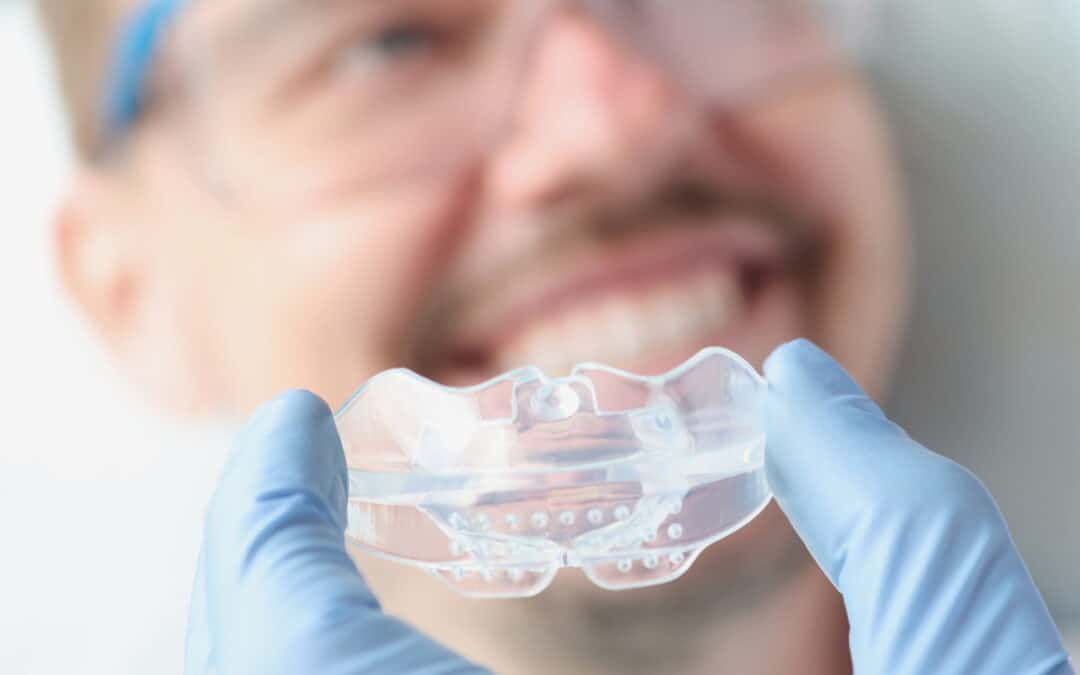
If you wake up with a sore jaw, dull headaches, or tooth sensitivity, you may be grinding your teeth at night — a condition called bruxism. A custom night guard is the most reliable way to protect your teeth from the damage grinding causes.
- Bruxism (teeth grinding) often happens during sleep, so most people don’t know they have it — morning jaw soreness, headaches, and worn or sensitive teeth are the key warning signs.
- Left untreated, bruxism can permanently erode enamel, crack teeth, damage dental work, and strain the jaw joint (TMJ).
- A custom night guard doesn’t stop grinding but protects teeth from its damage and is significantly more effective than drugstore alternatives due to its precise fit.
- Bruxism is typically triggered by a combination of factors — including stress, sleep issues, bite problems, and lifestyle habits — so addressing root causes alongside wearing a guard produces the best results.
- See a dentist promptly if grinding symptoms persist, as early detection can prevent minor wear from turning into costly dental repairs.
Most people who grind their teeth don’t realize it, because it usually happens during sleep. Left unchecked, bruxism can wear down enamel, crack teeth, and strain the jaw. Here’s how to recognize the signs and what actually helps.
What is teeth grinding (bruxism)?
Bruxism is the medical term for clenching or grinding your teeth. It can happen during the day (often stress-related) or at night during sleep, where it’s harder to control. The forces involved are surprisingly strong, which is why ongoing grinding can damage both the teeth and the jaw joint over time. The American Dental Association’s MouthHealthy resource notes that many people grind without ever being aware of it.
Signs you may be grinding your teeth at night
Because it happens while you sleep, the clues usually show up in the morning or at a dental exam. Watch for:
- A sore, tired, or tight jaw — especially when you wake up
- Dull headaches that start at the temples
- Increased tooth sensitivity or aching teeth
- Flattened, chipped, or worn-looking teeth
- Clicking or tenderness in the jaw joint
- Disrupted sleep — yours or a partner who hears grinding
- Indentations on the side of your tongue or a tight feeling in the cheeks
If several of these sound familiar, it’s worth mentioning at your next visit so your dentist can check your teeth for the telltale wear pattern.
What damage can teeth grinding cause?
Occasional grinding may not hurt anything. But frequent, forceful bruxism can lead to real, costly problems:
- Worn enamel — once gone, it doesn’t grow back, leaving teeth sensitive and prone to decay.
- Cracked or fractured teeth — which may need a crown or other restoration.
- Jaw pain and TMJ strain — grinding is a common contributor to TMJ/TMD symptoms like clicking and facial tension.
- Damaged dental work — grinding can shorten the life of fillings, crowns, and veneers.
How a custom night guard helps
A night guard is a thin, custom-fitted appliance you wear while sleeping. It creates a protective cushion between your upper and lower teeth, absorbing the force of grinding so your enamel and dental work don’t take the hit. A custom night guard from your dentist is molded to your exact bite, which makes it more comfortable, more durable, and more protective than anything off the shelf.
| Option | Fit | Durability | Protection |
|---|---|---|---|
| Custom (dentist-made) | Molded to your bite | Years | Best — even, full-coverage |
| Boil-and-bite (drugstore) | Approximate | Months | Moderate; can feel bulky |
| Stock / one-size | Generic | Short | Minimal; may worsen comfort |
The American Dental Association offers general guidance on mouthguards, but a poorly fitting guard can actually shift your bite — which is why a professional fitting matters.
What causes teeth grinding?
Bruxism usually has more than one trigger. Common contributors include stress and anxiety, an uneven bite, sleep issues such as snoring or sleep apnea, certain medications, caffeine or alcohol, and tobacco use. Because the causes vary, the best results come from pairing a night guard with addressing what’s driving the grinding.
When to see a dentist
Book a visit if you notice persistent jaw soreness, frequent morning headaches, increased tooth sensitivity, or visibly worn or chipped teeth. Your dentist can confirm whether grinding is the cause, check for damage early, and fit a night guard before small problems become expensive ones.
Frequently Asked Questions
How do I know if I grind my teeth in my sleep?
Common clues are a sore jaw or headache on waking, tooth sensitivity, and flattened or chipped teeth. A partner may also hear grinding. A dentist can confirm it by spotting the characteristic wear on your teeth.
Is a custom night guard worth it over a drugstore one?
Usually, yes. Custom guards are molded to your exact bite, so they’re more comfortable, last far longer, and protect more evenly. Ill-fitting store-bought guards can be bulky and may even affect your bite.
Can teeth grinding cause jaw pain?
Yes. Grinding and clenching strain the jaw muscles and joint and are a frequent contributor to TMJ/TMD symptoms such as clicking, tightness, and facial pain.
Does a night guard stop grinding?
A night guard doesn’t stop the grinding habit itself, but it protects your teeth from the damage and can ease jaw strain. Addressing causes like stress or sleep issues helps reduce the grinding.
Worried about grinding? Get checked at a South San Francisco dentist.
Book Now