
Plaque is one of those things everybody has, everybody hears about at every cleaning, and almost nobody fully understands. It forms constantly, it causes the two most common dental diseases on the planet, and the good news is that removing it is not complicated — once you know what actually works. Our dental team at Vaksman Dental Group hears the same questions about plaque over and over. Here are the honest answers.
What exactly is plaque, and why does it keep coming back?
Plaque is a soft, sticky film of bacteria that forms on your teeth throughout the day. It is not dirt in the conventional sense. It is a living community of hundreds of bacterial species that naturally colonize your mouth, feed on the sugars and starches in your diet, and release acids as a byproduct. Those acids are what attack enamel and irritate gum tissue.
It comes back because your mouth never stops producing saliva and you never stop eating, so the bacteria are always being refueled. Within about 20 minutes after eating, bacteria start metabolizing sugars and producing acid. Plaque itself can begin re-forming on a clean tooth surface within a few hours. That is not a hygiene failure — it is just biology. The goal is to remove it consistently enough that it never gets a chance to do serious damage.
The American Dental Association’s MouthHealthy resource describes plaque as the main driver of both tooth decay and gum disease, which is why consistent removal is the single most impactful thing most people can do for their long-term oral health.
What is the difference between plaque and tartar?
This is one of the most common points of confusion. Plaque is soft and removable at home. Tartar (also called calculus) is what happens when plaque is not removed and mineralizes — basically hardens — using the calcium and phosphate naturally present in your saliva. That process can begin in as little as 24 to 72 hours.
Once plaque becomes tartar, a toothbrush and floss cannot remove it. The surface becomes rough and porous, which makes it even easier for new plaque to stick. Tartar has to be removed by a dental professional using special instruments — it is the main reason professional dental cleaning is not optional even for people who brush and floss every single day. The professional tools physically chip and scrape hardened deposits off the tooth surface in a way no home tool can replicate.
Does brushing actually work, or am I just going through the motions?
Brushing works very well when it is done correctly — and most people are not doing it correctly. The two most common issues we see are brushing too fast and pressing too hard.
Two minutes, twice a day is the baseline. That sounds simple, but the average person actually brushes for about 45 seconds. Use a soft-bristled brush (medium and hard bristles are unnecessarily abrasive on enamel and gums), angle it at about 45 degrees toward the gum line, and use gentle circular or short back-and-forth strokes rather than a scrubbing motion.
Electric toothbrushes are genuinely better at reducing plaque for most people. A Cochrane Review of 29 randomized controlled trials found that powered toothbrushes with an oscillating-rotating action reduced plaque by 11% more and gingivitis by 6% more than manual brushing over the short term. For people who have ever been told their gum tissue looks irritated or who tend to rush, an electric brush is worth the investment.
One more thing: brush your tongue. Bacteria colonize the tongue surface and redeposit on teeth quickly.
Is flossing really necessary if I brush well?
Yes. A toothbrush physically cannot reach the contact points between teeth — the tight spaces where two tooth surfaces touch. Plaque builds up there just as reliably as anywhere else, and that is where a lot of cavities and the earliest stages of gum disease begin.
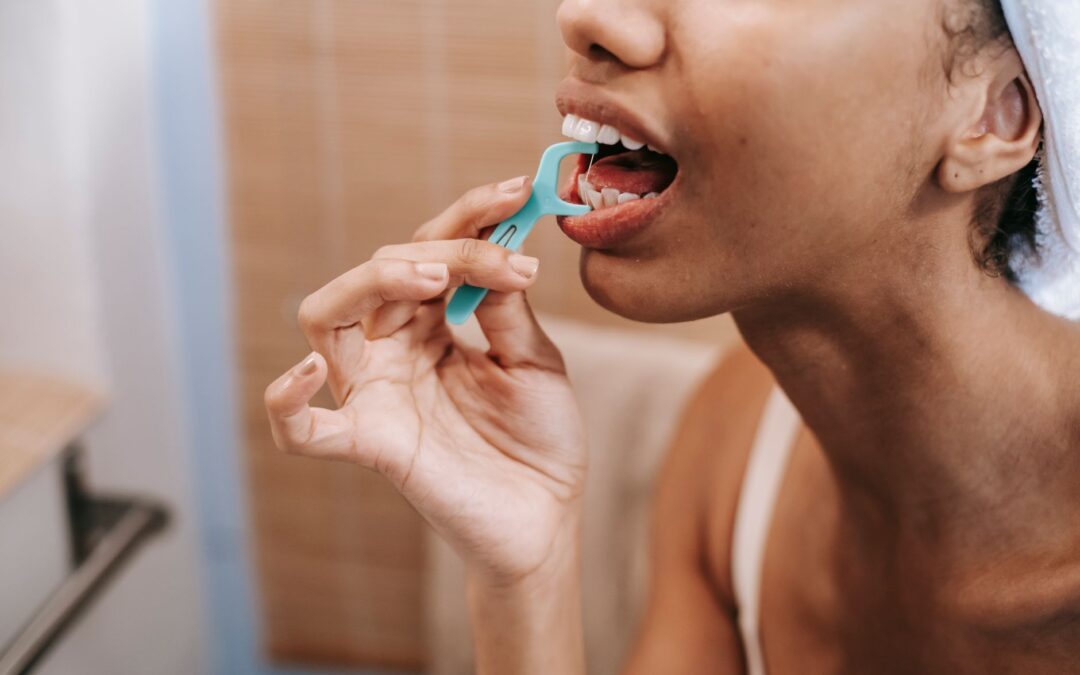
Flossing once a day breaks up and removes plaque from those interproximal surfaces. The technique matters: slide the floss gently between teeth, curve it into a C-shape against one tooth, and move it up and down along the tooth surface (and just under the gum line) before moving to the next tooth. Snapping it down like a guillotine misses most of the plaque and can injure gum tissue.
If standard floss is hard to manage, floss picks, water flossers, and interdental brushes are all reasonable alternatives. Our dentists at Vaksman Dental Group often recommend water flossers for patients with braces, bridges, or implants where standard floss is difficult to thread. The best flossing tool is the one you will actually use consistently.
Does mouthwash remove plaque?
This is a case where marketing and reality diverge a bit. Antimicrobial mouthwashes — particularly those containing chlorhexidine or cetylpyridinium chloride — can reduce the bacterial load in your mouth and slow plaque regrowth between brushing sessions. Some studies support a modest reduction in plaque and gingivitis scores when mouthwash is used as an adjunct to brushing and flossing.
But mouthwash is an adjunct, not a replacement. It does not physically dislodge the biofilm the way mechanical action (brushing and flossing) does. Think of it as a complement to your routine, not a shortcut through it. Fluoride rinses in particular are useful for cavity prevention because they strengthen enamel, but they are not doing meaningful plaque removal on their own.
Prescription-strength chlorhexidine rinses are sometimes recommended after certain gum treatments or for patients who are at high risk for gum disease — but those are short-term, targeted uses, not an everyday routine.
Are there foods or drinks that make plaque worse?
Yes, and the culprits are predictable: sugary foods and drinks, refined carbohydrates (white bread, crackers, chips), and anything acidic. Sugar and starch are the primary fuel source for the bacteria that produce plaque acids, so the more frequently you expose your teeth to them, the more acid production you are sustaining across the day.
Frequency matters at least as much as quantity. Sipping a sugary drink slowly over two hours is harder on your teeth than drinking it quickly with a meal. Continuous snacking throughout the day keeps the bacterial metabolism running hot. Rinsing with plain water after eating or drinking can help dilute acids and sugars between brushing sessions.
Fibrous foods like apples, carrots, and celery have a mild mechanical cleaning effect and stimulate saliva production, which naturally buffers acids and washes away food debris. Dairy products like cheese and plain yogurt can help because the calcium and phosphate in them support enamel remineralization. None of these replace brushing, but they are genuinely helpful additions.
Can I scrape off tartar at home? What about baking soda, oil pulling, or charcoal?
Let us take each of these in order, because they come up constantly.
Home tartar scrapers: We strongly advise against these. The metal scalers used in a dental office look simple, but using them without training risks gouging enamel, creating surface scratches that attract more plaque, and injuring the gum tissue. Some patients have caused significant damage trying to scrape their own teeth. If you have visible tartar buildup, a professional cleaning is the safe and effective answer.
Baking soda: This one has some genuine merit. Baking soda (sodium bicarbonate) is a mild abrasive that can help remove surface stains and soft plaque, and it neutralizes acids in the mouth. Toothpastes containing baking soda have solid evidence behind them. Using plain baking soda as an occasional addition to your brushing routine is fine for most people. It will not remove tartar, but it is not harmful and does help with plaque.
Oil pulling: The research here is weak. A few small studies have shown modest reductions in plaque and bacteria counts, but the evidence is not strong enough for the ADA to recommend it as a primary practice. It is not dangerous, but treating it as a replacement for brushing and flossing would be a mistake.
Activated charcoal toothpaste: This is popular on social media and the evidence is genuinely not good. Charcoal is abrasive, and many charcoal products are too abrasive for regular use — they can wear down enamel over time. The ADA does not endorse activated charcoal products. Our team’s honest take: skip this one.
How often do I actually need a professional cleaning to stay on top of plaque and tartar?
For most adults, twice a year is the standard recommendation, and that number exists for good reason. Professional cleanings remove the tartar that daily brushing and flossing leave behind, and they give your dental team a chance to catch early problems — a small cavity, early gum inflammation, a cracked surface — before they become larger (and more expensive) ones.
Some patients need more frequent visits. If you have a history of gum disease, a tendency to build tartar quickly, diabetes (which is closely linked to gum disease risk), or are going through pregnancy, your dentist may recommend cleanings every three to four months. That is not a sign something is wrong; it is a proactive decision based on your individual risk.
At our South San Francisco office, our dental team uses dental exams alongside cleanings to get a complete picture of what is happening at and below the gum line. We also use Pearl AI, an FDA-cleared artificial intelligence system that reviews X-ray findings to help our dentists catch early issues more consistently — the kind of thing that can make a real difference when plaque has been doing quiet work between visits.
If it has been more than a year since your last cleaning, no judgment — just book the appointment. The earlier you address buildup, the easier (and less involved) the cleaning will be.
Written by the Vaksman Dental Group team and medically reviewed by Dr. Irena Vaksman, DDS — South San Francisco. Last reviewed September 2026.