
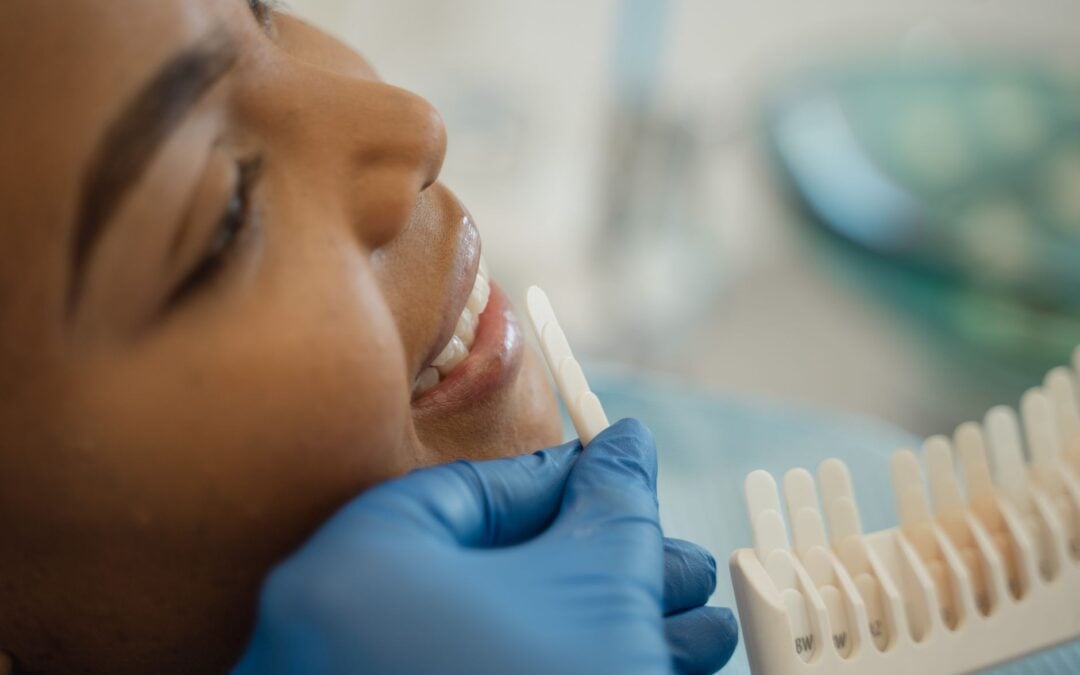
Veneers are one of the most-searched cosmetic dental topics right now, and the number-one question people type in is simple: how much are veneers per tooth? The honest, direct answer is that porcelain veneers typically range from $900 to $2,500 or more per tooth in the United States in 2026, with composite veneers generally running $250–$1,500 per tooth. But that wide range is real, not vague — seven specific factors move the price inside that window, and knowing them helps you plan with your eyes open.
Below, our team at Vaksman Dental Group in South San Francisco walks you through each one.
Note: the national ranges cited here are not our office’s prices. Your actual cost depends on a personalized evaluation.
1. The Type of Veneer Material You Choose
Material is the single biggest cost driver. The main options are:
- Traditional porcelain veneers (feldspathic or layered porcelain): crafted by a dental lab from thin ceramic shells. Strong, highly lifelike light-play. Generally $1,200–$2,500+ per tooth nationally.
- Pressed ceramic veneers (e.max / IPS e.max): made from lithium disilicate, which is very strong and translucent. Popular choice for durability. Usually $1,000–$2,000+ per tooth.
- Composite resin veneers: applied directly in the chair by a dentist sculpting and bonding tooth-colored resin. Faster, less costly ($250–$1,500 per tooth), but they wear and stain more quickly than porcelain and typically need refinishing or replacement sooner.
- Prepless/minimal-prep veneers (such as Lumineers): ultra-thin porcelain placed with little or no enamel removal. Price is comparable to traditional porcelain — roughly $800–$2,000+ per tooth — but they aren’t right for every smile situation.
The American Dental Association’s MouthHealthy resource on veneers gives a solid overview of how these options compare clinically.
2. How Many Teeth Are Being Treated
Most patients veneer anywhere from 2 to 10 teeth at once (the “smile zone” visible when you talk and laugh). A larger case takes more lab time and chair time, so total cost rises. However, per-tooth pricing sometimes works out slightly better on larger cases because setup costs are spread across more units. A single veneer on one chipped front tooth, by contrast, costs less overall but might feel expensive for just one tooth.
Common case sizes:
- 2–4 teeth: fixing a few front teeth, typically $1,800–$10,000 total range nationally
- 6–8 teeth: a full smile-zone makeover, $5,400–$20,000+ range nationally
- 10–12 teeth: comprehensive upper arch, $9,000–$30,000+ range nationally
These are national ballpark estimates only, not our office’s prices.
3. Your Geographic Location
Dental costs track closely with local cost of living. In major metro areas like the San Francisco Bay Area, prices tend to sit near or above the top of national ranges. Practices in suburban areas outside a big city — like South San Francisco, San Bruno, or Daly City — may offer somewhat different pricing than downtown SF, though the Bay Area premium is real compared to, say, the Midwest or Southeast.
This is one reason searches for “veneers cost in Texas” or “veneers Charlotte NC” look so different from Bay Area pricing pages. Location really does matter.
4. The Complexity of Your Smile Situation
A veneer on a tooth that is already well-shaped, lightly discolored, and properly aligned is straightforward. A tooth that is severely crowded, significantly worn, has old restorations underneath, or needs bite adjustments requires more prep time, possibly more lab communication, and sometimes preliminary treatment — all of which add to the cost.
Some patients need to address gum health or alignment issues before veneers even make clinical sense. Our dentists at Vaksman Dental Group will flag anything like that in your consultation, so there are no surprises down the road.
5. Whether a Dental Lab or In-Office Technology Does the Work
Traditional porcelain veneers are made at an external dental lab, which adds lab fees to the case. At Vaksman Dental Group, we use CEREC in-office CAD/CAM technology for certain ceramic restorations, which lets us design and mill some restorations in the office itself. For veneers specifically, whether an in-office or lab-fabricated workflow applies depends on the case, so our team will walk you through what’s planned and why.
In-office fabrication can sometimes reduce the number of appointments (and potentially some lab costs), while a traditional lab workflow allows for highly customized, hand-layered ceramics that some aesthetically complex cases call for. Neither is universally “better” — it comes down to what your specific smile needs.
6. Whether You Need Any Preparatory Dental Work
Veneers work best on a healthy foundation. If our dentists find cavities that need treatment or gum issues that should be addressed before cosmetic work, those are separate procedures with their own costs. This isn’t upselling — it’s genuinely necessary, because placing veneers over an unhealthy tooth shortens how long they’ll last.
Likewise, if significant crowding or bite problems are present, your dentist may recommend Invisalign to correct alignment before veneer placement, because properly aligned teeth mean veneers experience less stress and last longer.
7. Dental Insurance and Financing
Most dental insurance plans classify veneers as cosmetic and do not cover them. There are exceptions — if a veneer is replacing a broken, decayed, or structurally compromised tooth, some plans may provide partial coverage under a restorative benefit. It is always worth asking our team to check your specific plan, because the codes matter.
For patients who are paying out of pocket, many practices (including ours) offer financing options that let you spread the cost over time. If cost is a consideration, bring it up during your consultation — there is almost always a way to structure a treatment plan that works for your budget, whether that means starting with a few teeth or phasing a larger case.
For a deeper look at the full picture of cosmetic veneer pricing, the NIH’s published research on ceramic veneer longevity and outcomes is useful context for understanding why material quality and technique matter so much to long-term value.
So, Is the Cost Worth It?
That depends on your goals. Veneers are one of the most durable cosmetic options in dentistry — porcelain veneers can last 10–20 years with proper care, according to the American Academy of Cosmetic Dentistry. For patients who have been bothered by chips, staining that doesn’t respond to whitening, gaps, or irregular shape for years, the outcome is often genuinely life-changing. For someone with healthy, well-shaped teeth who just wants a brighter shade, professional teeth whitening is far less costly and often the better starting point.
Our team at Vaksman Dental Group offers a full range of cosmetic dentistry in South San Francisco — from whitening to bonding to porcelain veneers — so you get an honest recommendation for what will actually deliver the result you’re after, not just the most expensive option.
Frequently Asked Questions
How much are veneers per tooth in the SF Bay Area?
Bay Area veneer prices tend to sit near or above the top of national ranges because of the local cost of living. Porcelain veneers in the San Francisco Bay Area commonly range from roughly $1,500 to $2,500 or more per tooth, though the exact number depends on your case complexity, material, and how many teeth are involved. For an accurate quote, a consultation is needed. These are general market estimates, not our office’s prices.
Are composite veneers a good alternative to porcelain?
Composite veneers cost less up front ($250–$1,500 per tooth nationally) and can be placed in a single visit. The trade-off is that composite resin doesn’t resist staining as well as porcelain and typically needs touch-ups or replacement sooner — often within 5–7 years compared to 10–20 years for quality porcelain. For minor shape or color corrections, composite can be a smart, affordable starting point. For bigger changes or longer-lasting results, porcelain generally wins.
Does insurance ever cover veneers?
Purely cosmetic veneers are almost never covered. However, if a tooth is fractured or structurally compromised, some plans may pay a partial restorative benefit toward a ceramic restoration. Your dental team can review your benefits and submit the appropriate code, but it’s best to go in expecting to pay out of pocket and be pleasantly surprised rather than the reverse.
How long do veneers last?
With good home care and regular cleanings, quality porcelain veneers can last 10–20 years or longer. The biggest factors are: avoiding habits that put excessive force on front teeth (chewing ice, using teeth as tools), wearing a night guard if you grind your teeth, and keeping up with professional cleanings. Composite veneers typically last 5–7 years before they need refinishing or replacement.
Ready to find out what your smile transformation would actually cost? Our team will walk you through material options, timing, and a clear price estimate at your consultation — no pressure, just honest answers.
Schedule a Veneer Consultation
Written by the Vaksman Dental Group team and medically reviewed by Dr. Irena Vaksman, DDS — South San Francisco. Last reviewed October 2026.