
A tooth growing out of an eye socket sounds like something from a science fiction story, but it made headlines this month after researchers documented the first confirmed case of a tooth erupting inside a human eye socket. The short answer to what’s happening: ectopic teeth are teeth that develop in the wrong location in the body, and while most cases are far less dramatic than that viral headline, they’re more common than you’d think. Here’s what patients actually want to know.
1. What “Ectopic Tooth” Actually Means
The word “ectopic” comes from the Greek for “out of place.” In dentistry, it simply means a tooth that develops or erupts somewhere other than its normal position. That can be mild, like a canine tooth that drifts toward the roof of the mouth instead of erupting into the dental arch, or genuinely rare, like the eye-socket case that set the internet buzzing.
The American Dental Association’s MouthHealthy resource describes impacted teeth (a related and very common category) as teeth that are blocked from fully erupting. Ectopic teeth take that concept a step further: the tooth is not just blocked but is actively growing in the wrong direction or the wrong anatomical region entirely.
Most ectopic teeth are found in the jaw, the nasal cavity, or the sinuses. The eye-socket case was exceptional precisely because it had never been confirmed before.
2. The Eye-Socket Case: What the Research Actually Shows
The case published in late 2026 described a patient who had persistent symptoms near the eye, and imaging revealed a fully formed tooth inside the orbital socket. Researchers noted this appears to be the first documented instance of its kind. The tooth was surgically removed, and the patient recovered.
This matters not because it’s likely to happen to you (it almost certainly won’t) but because it illustrates a core principle of dental science: teeth develop from specialized cells called tooth buds. Under unusual circumstances, those cells can migrate during fetal development and end up far from the mouth. Once there, they can, in rare cases, form a complete tooth.
For a deeper look at the science, The Conversation’s breakdown of the ectopic teeth research is worth a read. It explains the embryology clearly without requiring a medical degree.
3. The Much More Common Versions You Should Know About
While an orbital tooth is extraordinary, these ectopic scenarios show up regularly in dental offices:
- Ectopic canines: The upper canines (your “eye teeth”) are the most frequently impacted ectopic teeth. They can end up pushing toward the palate or angled toward the nose. Orthodontic treatment, sometimes combined with minor oral surgery, can guide them into the right place.
- Transposed teeth: Two adjacent teeth swap positions during development. A canine and a premolar, for instance, may erupt in each other’s spots.
- Nasal teeth: A tooth erupts into the nasal cavity, causing congestion or a strange sensation. Uncommon, but documented.
- Sinus teeth: A root tip or whole tooth extends into the maxillary sinus, which sits just above your upper back teeth. This can cause chronic sinus issues that seem completely unrelated to dental health.
- Natal and neonatal teeth: Babies occasionally erupt one or more teeth at birth (natal) or within the first month of life (neonatal). These are ectopic in the sense that they arrive far ahead of schedule.
Our dental team in South San Francisco sees ectopic canines a few times a year. They’re almost always caught during routine X-rays, which is one of the most straightforward arguments for keeping up with regular dental exams.
4. How Ectopic Teeth Are Found (and Why X-Rays Matter So Much)
Most ectopic teeth cause no pain in their early stages. A child loses a baby tooth, the permanent replacement never appears, and a parent assumes it’s just “running late.” In reality, the incoming tooth may be angled in completely the wrong direction.
Routine dental X-rays catch the majority of these cases before they cause real problems. At our office, we use digital X-rays that produce clear, detailed images at a fraction of the radiation of older film technology. We also use Pearl AI, an FDA-cleared artificial intelligence system that reviews X-ray images alongside our dentists to help flag findings that might otherwise be easy to miss on a quick scan. That second set of eyes (so to speak) adds a meaningful layer of confidence, especially for subtle positional issues.
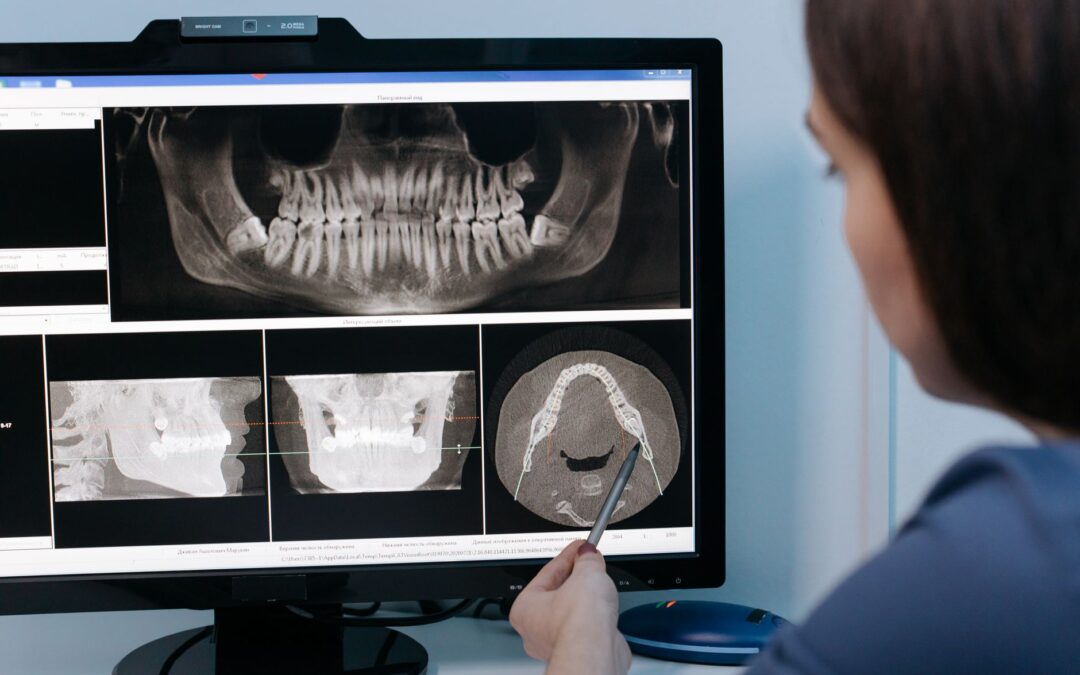
If there’s a suspicion of a deeper ectopic tooth, a cone-beam CT scan gives a three-dimensional view of the jaw, sinuses, and surrounding structures. That’s how the orbital case was identified: imaging that looked beyond the teeth revealed something that didn’t belong.
5. What Happens If an Ectopic Tooth Is Left Untreated
Treatment urgency depends entirely on where the tooth is and what it’s doing. A mildly angled tooth that isn’t causing any damage may be monitored rather than immediately treated. But ectopic teeth that are ignored can:
- Resorb (dissolve) the roots of neighboring teeth, permanently damaging them
- Create cysts or benign tumors in the jaw
- Cause crowding, bite problems, or pain
- Lead to bone loss in the surrounding jaw
- Contribute to recurring sinus infections when a tooth root extends into the maxillary sinus
The research on ectopic canine teeth published in the National Library of Medicine confirms that early detection and treatment leads to significantly better outcomes than waiting. Root resorption of adjacent teeth, in particular, can be irreversible once it advances.
6. Treatment Options Depend on the Location and the Tooth
There’s no one-size-fits-all fix for an ectopic tooth. Treatment is highly individual, and the plan depends on which tooth is affected, where it ended up, and how much space and bone are available. Common approaches include:
- Orthodontic traction: A small bracket is attached to the ectopic tooth (after a brief surgical procedure to expose it), and gentle force is applied over several months to guide it into the correct position. This works well for ectopic canines in the palate when caught before the mid-teens.
- Extraction: If the tooth is too deeply displaced, has caused significant damage to neighbors, or is in a location like the nasal cavity or sinuses where guiding it is impossible, removal is usually the right call.
- Monitoring: For older patients, some ectopic teeth that aren’t causing harm are simply watched over time with periodic imaging.
- Replacement after extraction: If a tooth needs to come out, options like dental implants or dental bridges can restore the space and keep surrounding teeth from shifting.
Coordination between a dentist and an orthodontist is common for cases that involve guided eruption. Our team can help assess the situation and refer to the right specialist when needed.
The Bottom Line
An ectopic tooth growing inside an eye socket is the kind of headline that makes everyone do a double-take. But the underlying biology, tooth buds developing in the wrong place, is the same process behind the far more common ectopic canines and sinus teeth that dentists deal with routinely. The real takeaway is simple: most ectopic teeth are caught early because someone kept up with their dental X-rays. The ones that cause serious problems usually had years of undetected, uneventful growth before anyone knew they were there. Regular checkups and imaging are still the best tool dentistry has.
Frequently Asked Questions About Ectopic Teeth
Can an ectopic tooth fix itself without treatment?
Occasionally a mildly displaced tooth will drift into an acceptable position on its own, especially in young children with growing jaws. More often, ectopic teeth do not self-correct, and the longer they stay out of position, the more likely they are to damage neighboring teeth or bone. A dentist can monitor the situation with X-rays and advise whether to wait or intervene.
Are ectopic teeth hereditary?
There is a genetic component to some cases, particularly ectopic upper canines, which tend to run in families. Other causes include overcrowded teeth, retained baby teeth that block the permanent tooth’s path, and abnormal tooth development with no clear family pattern. If a parent had an ectopic tooth, it’s worth mentioning it to your child’s dentist so they can monitor development closely.
At what age should a child be checked for ectopic teeth?
The American Academy of Pediatric Dentistry recommends a first dental visit by age one and routine X-rays starting around age six to seven, when the permanent teeth begin to erupt. By age ten to twelve, a dentist can usually tell whether the canines are tracking normally. Interceptive orthodontic evaluation around age seven catches many positional problems early, when they’re easiest to address.
What does treatment for an ectopic canine cost?
Costs vary widely depending on the approach. Orthodontic traction combined with a surgical exposure procedure can range from several hundred to a few thousand dollars nationally (those are not our office’s prices). Insurance coverage also varies. A consultation with your dentist and, if needed, an orthodontist will give you a clearer picture for your specific situation.
Schedule a Checkup at Vaksman Dental Group
Written by the Vaksman Dental Group team and medically reviewed by Dr. Irena Vaksman, DDS — South San Francisco. Last reviewed October 2026.