
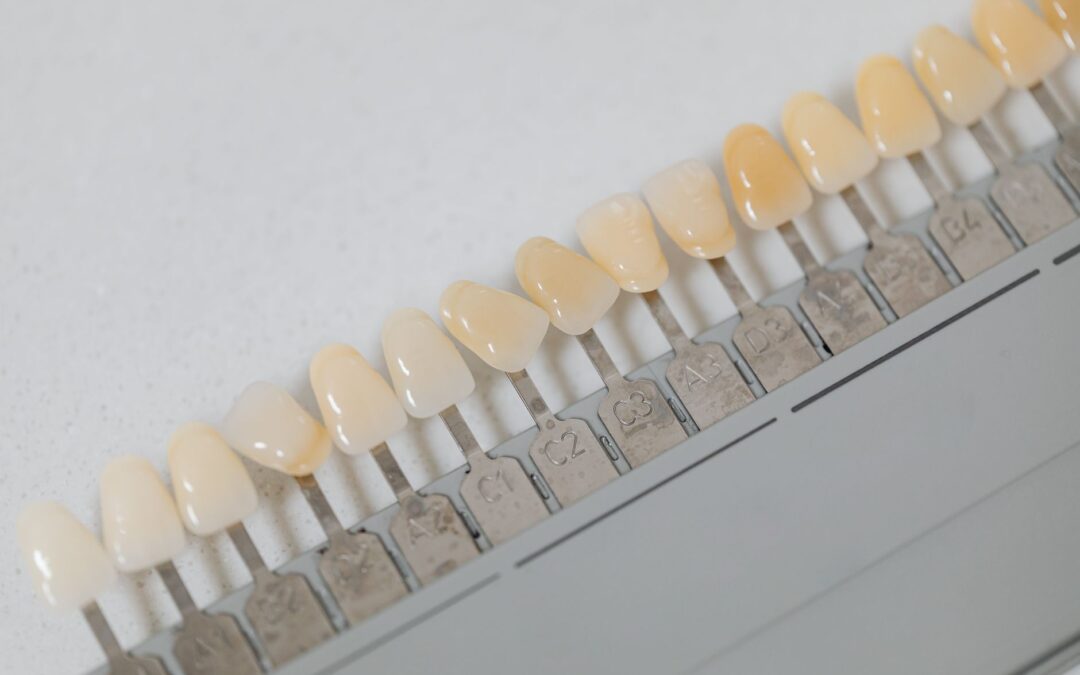
Both composite veneers and porcelain veneers can genuinely transform a smile. The right one for you depends on your budget, how much tooth structure you want to preserve, and how long you want the result to last. Here is an honest, side-by-side look at how they differ so you can walk into a consultation knowing exactly what to ask.
Composite vs. Porcelain Veneers: The Quick Comparison
| Feature | Composite Veneers | Porcelain Veneers |
|---|---|---|
| Material | Tooth-colored resin (same as dental bonding) | Fired ceramic or glass-ceramic (e.g., eMax, zirconia-reinforced) |
| Typical cost per tooth (national ballpark — not our office prices) | $250–$1,500 | $900–$2,500+ |
| Appointments needed | Usually 1 visit; sculpted directly on your tooth | Usually 2–3 visits; fabricated in a lab (or same-day with CEREC technology) |
| Tooth prep required | Minimal to none in most cases | Thin layer of enamel usually removed (irreversible) |
| Typical lifespan | 5–7 years with good care | 10–20 years with good care |
| Stain resistance | Moderate — can discolor over time | High — glazed surface resists staining well |
| Natural appearance | Very good; skill-dependent | Excellent; closest to natural enamel translucency |
| Repairability | Easy — chipped resin is repairable chairside | A cracked porcelain veneer typically needs full replacement |
| Reversibility | Generally reversible if no prep was done | Not reversible — enamel removal is permanent |
What Composite Veneers Actually Are
Composite veneers use the same tooth-colored resin material that dentists apply for cosmetic dental bonding in South San Francisco. The difference is scale: instead of filling a small chip or gap, the resin is layered and sculpted across the visible surface of a tooth to change its shape, length, color, or texture.
The whole thing usually happens in a single appointment. Your dentist etches the tooth surface, applies bonding agent, builds up the resin in thin layers, shapes it, and polishes it to a shine. No lab. No temporaries. You leave with a changed smile the same day.
What composite veneers do well
- Quick turnaround when you want results fast
- Lower upfront cost, which makes multiple teeth more accessible
- Easy to repair if a small chip happens
- Minimal or no enamel removal, so the process is largely reversible
- A good “test drive” for patients who want to see a shape change before committing to porcelain
Where composite veneers fall short
- Resin is more porous than glazed ceramic, so coffee, tea, and red wine can cause gradual staining
- The material isn’t as hard as porcelain and can chip under biting pressure
- Results depend heavily on the skill of the dentist doing the sculpting
- You’ll likely need replacement or touch-ups sooner than you would with porcelain
What Porcelain Veneers Actually Are
Porcelain veneers are thin ceramic shells custom-made to bond to the front surface of a tooth. The ceramic is fired at high temperature and glazed, giving it a hard, glassy surface that mimics the light-scattering properties of natural enamel. That translucency is why porcelain veneers so often look indistinguishable from natural teeth.
The traditional process involves two or three visits: one to prepare the tooth and take impressions (or digital scans), a short period with temporary veneers, and a second visit to bond the permanent shells. At tech-forward offices, same-day ceramic restorations are possible with CEREC CAD/CAM technology, though CEREC is more commonly used for crowns and larger restorations than for full veneer sets.
The trade-off for all that beauty and durability is permanence. Preparing a tooth for porcelain veneers usually requires removing a thin layer of enamel, typically around 0.3–0.7 mm, according to the American Dental Association’s MouthHealthy resource on veneers. Because enamel doesn’t grow back, the tooth will always need a veneer or crown to protect it. That is not a reason to avoid porcelain — for many patients it is absolutely the right call — but it is a reason to go in informed.
What porcelain veneers do well
- Unmatched natural appearance, especially in how they catch and reflect light
- Superior stain resistance because of the glazed ceramic surface
- Long-term durability: 10–20 years is realistic with good home care and regular checkups
- A stable, consistent result that doesn’t shift in color over time
- Ability to make dramatic changes (shade, shape, length, alignment) in one coordinated plan
Where porcelain veneers fall short
- Higher cost per tooth, especially when multiple teeth are involved
- The process is irreversible once enamel is removed
- A chipped or cracked porcelain veneer typically can’t be patched — it usually needs full replacement
- Requires more planning and appointments in the traditional workflow
- Not a great fit if you grind your teeth at night without a night guard in place
Which Is Right for You? A Decision Guide
There is no universal winner here. Composite or porcelain is a decision that should reflect your specific teeth, your goals, your budget, and your timeline. A few scenarios to consider:
Composite veneers might be the better fit if you…
- Want to change one or two teeth without a big investment
- Need the result quickly and can’t do multiple appointments
- Want to “preview” a new smile shape before committing permanently
- Have a smaller cosmetic concern (a chip, a slight gap, mild discoloration) rather than a full smile redesign
- Prioritize keeping your natural tooth structure as intact as possible
Porcelain veneers might be the better fit if you…
- Want the most natural-looking, longest-lasting result
- Are doing a full smile makeover across multiple teeth
- Have more severe discoloration that doesn’t respond well to whitening
- Are committed to the long-term relationship: wear a night guard if needed, keep up with cleanings, protect your investment
- Have the budget for a higher upfront cost in exchange for lower maintenance over the next decade-plus
A note on composite as a stepping stone
Some patients start with composite veneers, live with the result for a year or two, and then transition to porcelain once they know exactly what shape and length they love. Cosmetic dentists sometimes call this a “mock-up” or “trial smile.” It is a genuinely smart way to spend money if you’re not 100% sure what you want, because redoing composite costs far less than replacing a porcelain set you don’t love.
What About Prepless and Minimal-Prep Options?
Some patients hear “porcelain veneer” and immediately worry about enamel removal. Worth knowing: not every case requires significant prep. Prepless or minimal-prep porcelain veneers (like Lumineers) are ultra-thin and designed for teeth where there is enough natural tooth structure to bond to without removal. They are not right for every case, but they expand the conversation. Our dentists at Vaksman Dental Group can walk through which option preserves the most tooth structure for your specific situation. You can also explore our porcelain dental veneers service page and Lumineers at our South San Francisco office to get a sense of what each involves before your consultation.
A Quick Word on Cost
The national ballpark figures in the table above are averages. They are not our office’s prices, and the gap between composite and porcelain can be smaller or larger depending on how many teeth you’re treating, the complexity of your case, and local market rates in the Bay Area. The best way to get an accurate number is a consultation where a dentist can actually see your teeth.
One framing that sometimes helps: composite veneers at $600 per tooth that need replacement in six years cost more in the long run than porcelain veneers at $1,800 per tooth that last eighteen. That math doesn’t always make porcelain the answer — budget is real — but it’s worth factoring into the decision.
Frequently Asked Questions
Do composite veneers look fake?
Not when they are done well. A skilled dentist can layer and polish composite resin to look quite natural. The main limitation compared to porcelain is translucency: resin doesn’t scatter light quite the way ceramic does, so under certain lighting, composite can look slightly more opaque. Most people won’t notice, but dental professionals often can.
Can I whiten my teeth after getting veneers?
Whitening products work on natural enamel but don’t change the color of either composite or porcelain. If you plan to whiten, do it before your veneers are placed so your dentist can match the shade to your newly brightened teeth. Whitening afterward creates a mismatch between your natural teeth and your veneers.
Do veneers hurt?
The prep process for porcelain veneers can involve some sensitivity, especially if enamel is removed, but your dentist will use local anesthesia for that step. Composite application generally involves little to no discomfort because it usually requires minimal or no drilling. Some temporary sensitivity is possible after placement of either type, but it typically settles within a few days.
How do I take care of veneers to make them last?
Treat them like your natural teeth: brush twice a day, floss daily, and come in for regular professional dental cleanings in South San Francisco. Avoid using your veneered teeth to bite nails, open packages, or crack hard foods. If you grind at night, wearing a custom night guard is especially important because grinding puts significant pressure on veneers and can shorten their lifespan considerably. Your dentist can check for grinding signs at every exam.
Schedule a Veneer Consultation
Written by the Vaksman Dental Group team and medically reviewed by Dr. Irena Vaksman, DDS — South San Francisco. Last reviewed August 2026.