
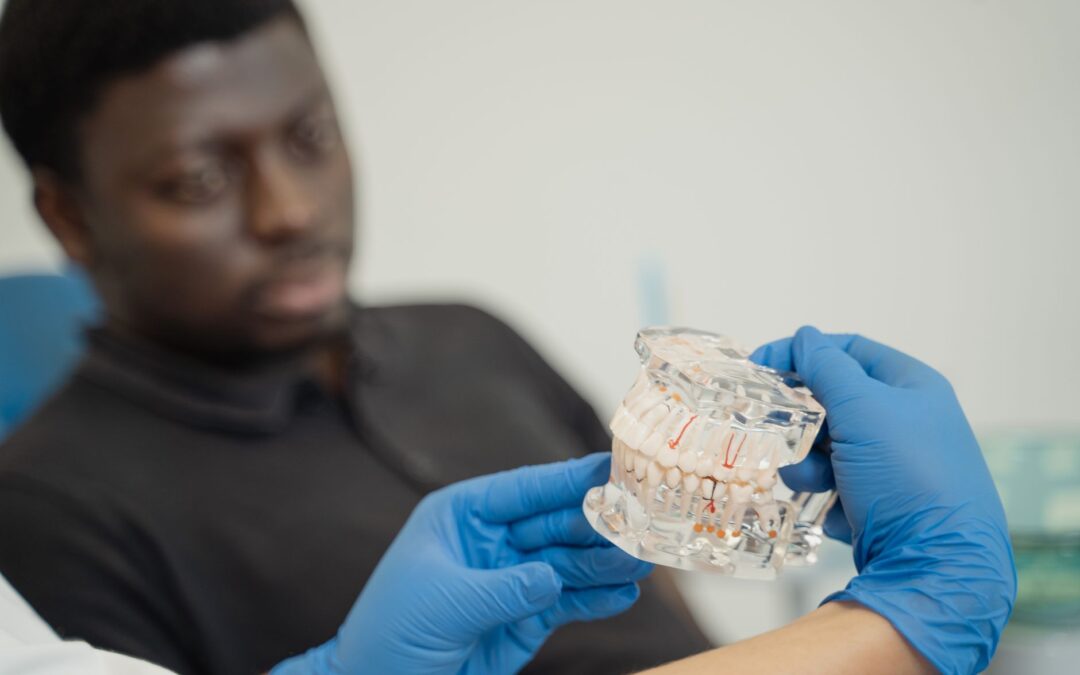
You have a missing tooth. Your dentist has mentioned two solid options: a dental implant or a dental bridge. Both can restore your smile and your ability to chew. Both look natural. And the question everyone asks next is: which one is actually better for me?
The honest answer is that it depends on your bone health, your budget, how many teeth are missing, and what your mouth looks like on either side of the gap. This guide lays out every real difference so you can walk into your next appointment ready to have that conversation.
Implant vs. Bridge at a Glance
| Factor | Dental Implant | Dental Bridge |
|---|---|---|
| What it is | A titanium post anchored into the jawbone, topped with a crown | A false tooth held in place by crowns cemented onto the two neighboring teeth |
| How many visits | Multiple appointments over 3–9 months (healing time required) | Typically 2–3 visits over a few weeks |
| Lifespan | 15–25+ years; implants can last a lifetime with good care | 10–15 years on average before replacement is likely |
| Bone preservation | Yes. The titanium post stimulates the jawbone the way a natural root does | No. Bone beneath the missing tooth continues to resorb over time |
| Impact on neighboring teeth | None. Adjacent teeth are left completely untouched | The two anchor teeth must be ground down and permanently crowned |
| Flossing/cleaning | Brush and floss normally around the implant crown | Requires a floss threader or water flosser to clean under the bridge |
| Approximate cost (national range) | $3,000–$6,000 per single implant (not our office’s prices) | $2,500–$6,000 for a three-unit bridge (not our office’s prices) |
| Insurance coverage | Often limited; some plans cover the crown, rarely the implant itself | More commonly covered, at least partially, as a restorative procedure |
| Bone/gum requirements | Needs adequate bone density; a bone graft may be needed first | Requires healthy anchor teeth on both sides of the gap |
| Feel and function | Closest to a natural tooth; no movement, no special food restrictions | Very close to natural; some patients notice a slight sensation difference |
The Case for a Dental Implant
An implant replaces the whole tooth, root and all. That matters more than most people realize.
When a tooth root is gone, the jawbone beneath it starts to shrink. This process, called resorption, can change the shape of your face over years and make future dental work harder. A titanium implant post sits inside the bone and mimics the natural stimulation a root provides, which tells the bone to keep rebuilding itself. No other tooth-replacement option does that.
The other big advantage is that your neighboring teeth stay completely untouched. With a bridge, the two healthy teeth on either side of the gap have to be permanently altered. With an implant, those teeth never enter the picture.
Implants also win on longevity. The American Dental Association notes that dental implants are designed to be a long-term solution, with many lasting 20 years or more when cared for properly. A bridge, by contrast, typically needs to be replaced after 10–15 years, and each replacement means more work on the anchor teeth.
Implants are especially strong candidates when:
- You have one or two isolated missing teeth
- The neighboring teeth are healthy and cavity-free
- You have enough bone density in your jaw (or are willing to do a bone graft)
- You want the longest-lasting solution and can manage the longer treatment timeline
The Case for a Dental Bridge
A bridge can be the smarter choice in plenty of real-world situations. The procedure is faster, the upfront cost is usually lower, and many dental insurance plans cover it at least partially as a standard restorative procedure.
If the teeth on either side of your gap already need crowns anyway (say, they have large old fillings or existing damage), a bridge can accomplish three things at once: restore the missing tooth while strengthening the two anchor teeth at the same time. That changes the math considerably.
Bridges also work well when bone loss has progressed to the point where an implant would require extensive grafting. For older patients or those with certain health conditions that slow healing, the lower surgical demand of a bridge can tip the decision.
Bridges are worth a serious look when:
- The anchor teeth on either side already need crowns or significant work
- Bone loss makes implant placement more complicated
- You want a faster timeline (weeks, not months)
- Your dental insurance covers bridges but not implants
- You have a health condition that affects bone healing
What About the Cost Difference?
On paper, a bridge often looks cheaper. A three-unit bridge (two anchor crowns plus the false tooth in the middle) may run $2,500–$6,000 nationally. A single implant with its crown can run $3,000–$6,000, and that’s before any bone grafting is factored in.
But the total-cost picture over time can flip. A bridge typically needs replacement every 10–15 years, and each replacement adds more wear to the anchor teeth. An implant done well may never need replacement. When you run the math over 20–30 years, implants often come out ahead financially, while also preserving bone that a bridge cannot.
Insurance is the other variable. Traditional bridges have been around for decades, so many plans classify them as a covered restorative procedure. Implant coverage has been improving but is still inconsistent. Checking your specific plan before making a decision is worth the phone call.
At Vaksman Dental Group, our team can walk you through what your insurance covers and give you a clear cost estimate for both options before you commit to anything.
The Bone Loss Question Is Bigger Than People Think
This deserves its own section because it surprises a lot of patients. After a tooth is lost, the bone that once surrounded its root begins to slowly dissolve. Within the first year, you can lose up to 25% of the bone width in that area. Over several years, that bone loss becomes visible as a subtle hollowing of the jaw, which can affect the fit of a bridge and the appearance of the surrounding gum tissue.
According to research published in the Journal of International Oral Health, implants significantly reduce bone resorption compared to other tooth-replacement methods, because the implant post actively stimulates the bone the way a natural root does.
If you have already been living with a gap for a year or more, a bone graft may be needed before an implant is placed. This adds time and cost, but it also creates a stronger foundation. Our dentists at Vaksman Dental Group can take a look at your current bone level with a dental exam and X-rays and tell you honestly what you’re working with.
Which Is Right for You? A Decision Guide
If you are still unsure after all of this, here is a simple way to think it through:
Choose an implant if: your neighboring teeth are healthy, you have adequate bone, you are in good general health, and you want the most tooth-like, long-lasting result with the least impact on adjacent teeth.
Choose a bridge if: your anchor teeth already need crowns, you want a faster and potentially less expensive solution right now, your bone situation makes implant surgery complicated, or your insurance covers bridges and not implants.
Talk to your dentist first if: you smoke, have uncontrolled diabetes, have been living with the gap for more than a year, or have had gum disease in the past. All of these factors affect which option is safer and more likely to succeed for you specifically. The ADA’s MouthHealthy resource on missing teeth is also a good starting point for understanding your options.
Neither implants nor bridges are “the best” in all situations. The right answer is personal, and the only way to know for sure is a one-on-one conversation with your dental team, looking at your actual X-rays and your actual mouth.
At our South San Francisco office, our dentists take their time with this conversation. There is no pressure toward one option or the other. Our goal is to make sure you understand what you are choosing and why it makes sense for you.
Frequently Asked Questions
Can I get an implant after having a bridge?
Yes, in many cases. If your bridge wears out or fails, an implant can often replace it, though additional bone grafting may be needed if bone has resorbed under the bridge span over the years. Your dentist will evaluate your bone level before recommending next steps.
Does getting a dental implant hurt?
The procedure itself is done under local anesthesia, so most patients feel pressure but not sharp pain during placement. Post-surgery soreness is common for a few days and is usually managed with over-the-counter pain relievers. Many patients say the experience was easier than they expected.
How long does a dental bridge last?
Most bridges last 10–15 years with good oral hygiene. Keeping the area clean under the bridge with a floss threader or water flosser is especially important, as the anchor teeth become more vulnerable to decay at the crown margins over time.
Will my insurance cover a dental implant?
Coverage varies widely. Some plans cover the implant crown but not the post itself. Others exclude implants altogether. Dental bridges are more consistently covered as a restorative procedure. It is worth calling your insurance provider before your consultation so you know what you are working with.
Ready to find out which option makes sense for your smile? Our team at Vaksman Dental Group in South San Francisco is happy to look at your specific situation, review your X-rays, and give you a straight answer with no pressure.
Written by the Vaksman Dental Group team and medically reviewed by Dr. Irena Vaksman, DDS — South San Francisco. Last reviewed November 2026.