
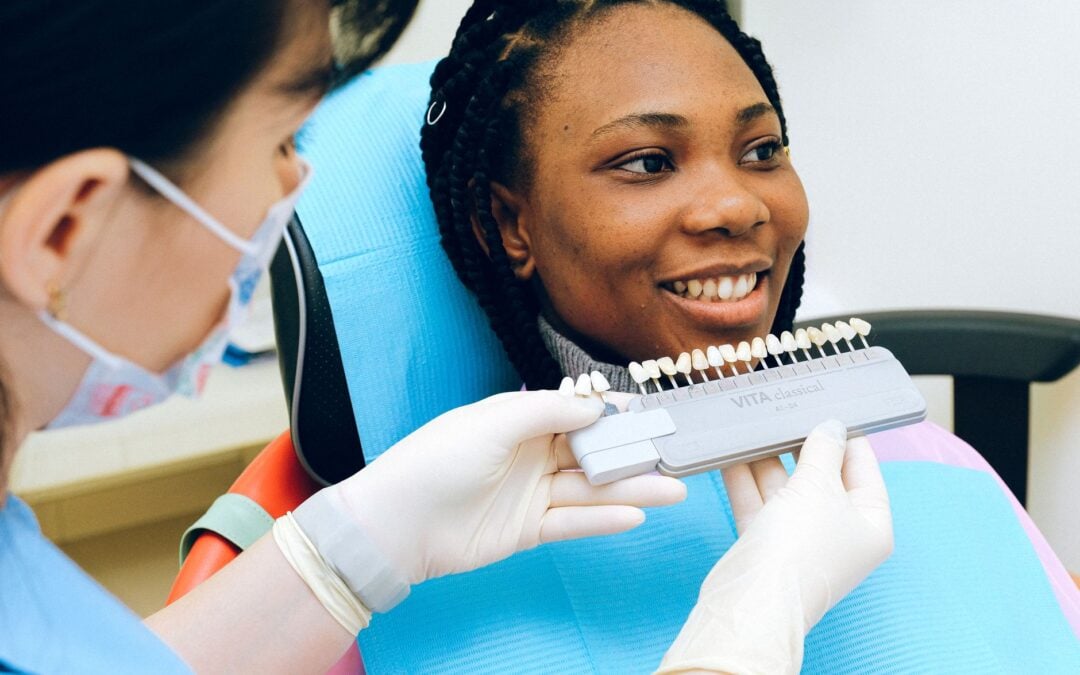
A full set of veneers typically costs between $8,000 and $40,000 in the United States, depending on how many teeth you’re covering, the material you choose, and where you’re treated. The wide range isn’t a pricing mystery — it comes down to a handful of factors that are worth understanding before you schedule a consultation.
- A “full set” usually means 8 to 10 upper front teeth; some patients do 12 or more for a wider smile.
- Porcelain veneers run $1,000–$2,500 per tooth nationally; composite veneers are $250–$1,500 per tooth.
- Material, tooth count, your dentist’s experience, and your local market are the four biggest price drivers.
- Most dental insurance does not cover veneers, but financing plans can spread the cost over time.
- The SF Bay Area typically runs at the higher end of national ranges — plan accordingly.
What Does a “Full Set” of Veneers Actually Mean?
There’s no single definition. In most cases, cosmetic dentists treat the “smile zone” — the teeth visible when you smile — which is usually the upper 8 to 10 teeth. Some patients with a broader smile go up to 12 upper teeth, and others add matching lower veneers, pushing the count higher.
The number matters enormously for cost. Here’s a simple way to think about it:
| Tooth Count | Porcelain (national avg.) | Composite (national avg.) |
|---|---|---|
| 6 teeth | $6,000 – $15,000 | $1,500 – $9,000 |
| 8 teeth | $8,000 – $20,000 | $2,000 – $12,000 |
| 10 teeth | $10,000 – $25,000 | $2,500 – $15,000 |
| 12 teeth | $12,000 – $30,000+ | $3,000 – $18,000 |
These are national ballpark ranges, not prices at our office. Your actual quote will depend on your specific case.
What Are the Main Materials — and How Do They Affect Price?
Veneer material is the single biggest lever on cost.
Porcelain veneers are thin ceramic shells custom-made in a dental lab. They look and feel the most natural, resist staining very well, and typically last 10–20 years with good care. Because they require lab fabrication and two or more appointments, they cost more per tooth — usually $1,000 to $2,500 nationally, sometimes higher in major metro areas like the Bay Area.
Composite veneers (also called direct or resin veneers) are sculpted chair-side from tooth-colored composite resin — the same material used for white fillings. They can often be completed in a single visit, cost significantly less, and are reversible in some cases. The trade-off: composite stains more easily and may not last as long as porcelain. National averages run $250 to $1,500 per tooth.
Prepless or no-prep veneers (like Lumineers) are ultra-thin porcelain shells that require little to no tooth reduction. Not every smile qualifies for them — your tooth shape and bite matter — but for candidates, they’re a conservative choice. Cost is similar to standard porcelain.
The American Dental Association’s MouthHealthy resource on veneers offers a solid overview of materials and what to expect from the process.
What Else Drives the Price Up (or Down)?
Material is just one piece. Here are the other real cost factors:
Your dentist’s experience and location. A cosmetic dentist with advanced training and years of full-smile cases in San Francisco or the Peninsula will typically charge more than a general dentist in a lower-cost market. You’re partly paying for the judgment calls — shade selection, shaping, how each veneer relates to the others — that make the final result look natural.
The dental lab (for porcelain). High-quality ceramists charge more. Practices that use premium domestic labs or work closely with specific technicians often produce better aesthetic results — and pass some of that cost along.
Any preparatory work needed. If you have existing cavities, gum issues, or an uneven bite, those need addressing before veneers go on. Pre-treatment work (fillings, scaling and root planing in South San Francisco, etc.) adds to your total.
Temporary veneers during the process. For most porcelain cases, you’ll wear temporaries while the permanent veneers are made. This is built into most comprehensive quotes, but worth confirming.
Imaging and diagnostics. A thorough consultation often includes photos, X-rays, and sometimes digital smile design mock-ups. Some practices charge for these separately; others include them.
Does Dental Insurance Cover a Full Set of Veneers?
Usually, no. Most insurance plans classify veneers as a cosmetic procedure and exclude them from coverage. There’s a narrow exception: if a veneer replaces a broken or structurally compromised tooth that would otherwise need a crown, some plans may contribute a portion. Your dentist’s team can check your specific benefits before you commit.
What does help: many dental practices offer in-house financing or work with third-party lenders like CareCredit or Lending Club Patient Solutions, which let you spread payments over 12–60 months, sometimes at 0% promotional interest.
How Long Do Veneers Actually Last?
This question comes up constantly, and for good reason — durability is a core part of the value calculation.
Porcelain veneers, with proper care, commonly last 10–20 years before needing replacement. Some last even longer. Composite veneers typically need replacement or refinishing within 5–7 years under normal wear.
What shortens veneer lifespan: grinding or clenching your teeth (bruxism), biting hard objects like ice or fingernails, and inconsistent oral hygiene. Patients who grind at night are generally advised to wear a custom dental mouth guard to protect their investment.
A 2022 systematic review in the Journal of Prosthetic Dentistry found that the 10-year survival rate for ceramic veneers was approximately 89–94%, confirming they’re a durable long-term option when properly placed and maintained.
What’s the Real Cost in the SF Bay Area?
The Bay Area is an above-average market for dental fees. Expect porcelain veneers to run at the higher end of national ranges — $1,500 to $2,500 per tooth is common in South San Francisco, San Bruno, and the broader Peninsula. That means a complete 8-tooth upper set could realistically cost $12,000 to $20,000 or more from an experienced cosmetic dentist here.
That said, the consultation is where the real number gets established. Our team at Vaksman Dental Group in South San Francisco will review your specific goals, your existing tooth structure, and your bite before quoting anything. The price you’re quoted for your smile is the price for your case — not a one-size number.
Are Veneers Worth It?
That’s a personal call, and our job is to give you accurate information so you can make it confidently. What we can say: for patients with healthy teeth who want to correct color, shape, size, or minor alignment issues, porcelain veneers offer one of the most durable and natural-looking results in cosmetic dentistry. The key is a thorough consultation, honest expectations, and a dentist whose cosmetic work you’ve actually seen.
If veneers feel like a stretch financially, cosmetic dental bonding in South San Francisco can address some of the same concerns at a lower upfront cost — it’s worth asking about both at your consultation so you can compare.
Frequently Asked Questions
How much does a full set of veneers cost?
Nationally, a full set of 8–10 porcelain veneers typically costs $8,000–$25,000 depending on the dentist, location, and material. Composite veneers for the same number of teeth generally run $2,000–$12,000. The SF Bay Area tends toward the higher end of these ranges. These are national ballpark figures, not prices at our office — an in-person consultation gives you an accurate quote for your specific case.
How many veneers make a “full set”?
There’s no fixed number. Most patients treat 8–10 upper front teeth to cover the visible smile zone. Patients with a wider smile may go to 12 upper teeth, and some add lower veneers too. Your dentist will evaluate your smile and recommend the number that creates a balanced, natural result.
Do veneers hurt?
The procedure itself is done under local anesthesia, so discomfort during treatment is minimal. Some patients experience sensitivity for a few days after the temporaries are placed and again after the permanents are bonded. This typically resolves within a week. Prepless veneers may involve even less post-treatment sensitivity.
Can you get a payment plan for veneers?
Yes. Many dental practices, including ours, work with financing options that let you spread payments over time. Options like CareCredit or in-house plans can make a larger smile investment more manageable. Ask about financing at your consultation — it’s a completely normal question and we’re happy to walk you through what’s available.
Ready to find out what a smile makeover would actually look like for you? Schedule a consultation with our team in South San Francisco — we’ll walk you through your options and give you a clear, honest picture of costs and timing.
Written by the Vaksman Dental Group team and medically reviewed by Dr. Irena Vaksman, DDS — South San Francisco. Last reviewed October 2026.